Beyond Dashboards
Governments have never counted more and decided less clearly. A review of 108 dashboard studies, and a stark gap between how officials and residents see public AI, suggest the chart of mentions is the wrong instrument.
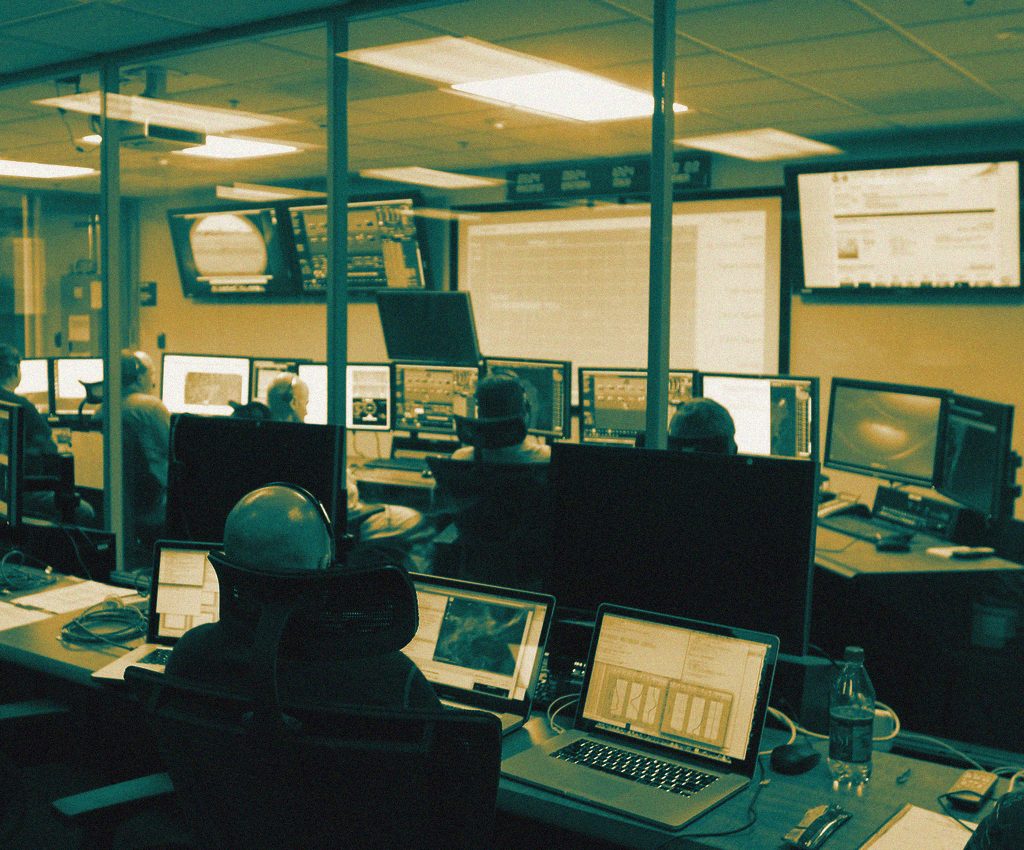
In most capitals there is a room with a wall of screens. Lines rise and fall. Maps glow in shades of red. A counter in the corner ticks up the number of times a minister’s name has been mentioned since midnight. Visitors are shown the room, and they leave impressed. The screens suggest a government that sees everything. What they rarely show is what anyone should do next.
This essay makes a simple argument that is unwelcome in a data-hungry age: counting is not deciding. Monitoring tells you that something is being talked about. It does not tell you whether it matters, who is responsible, what the options are or how long you have. A government can be perfectly informed about the volume of a conversation and entirely unprepared for its consequences.
What the evidence says about dashboards
The question of whether dashboards actually improve public decisions has now been studied with some care. A scoping review published in AI & Society in June 2026 examined 108 studies of public dashboards. Its findings deserve wider attention in government than they have so far received.
The review found that dashboards are usually presented in terms of transparency and accountability, as a way of showing the public and decision-makers what is happening. In practice, weak data availability and poor integration into organisations leave many of them as “stand-alone or ad hoc tools”. They sit beside the decision-making process rather than inside it. Where artificial intelligence is involved, the review found it is mostly used for analysis, not for interpretation or for engaging with the people affected.
That last point is the important one. Analysis is the part of the job that machines do well and that dashboards display well: sorting, counting, clustering, charting. Interpretation is the part that turns a pattern into a judgement: this matters, this does not, this is ours to fix, this belongs to another department, this needs an answer by Thursday. The review suggests that the investment has gone mostly into the first half of the problem and the institutional connections into the second half have been left to chance.
A dashboard that is not wired into a decision process is an expensive window. It lets you watch. It does not make you act.
Volume is not importance
The basic unit of most monitoring is the mention: a post, an article, a broadcast segment, a search. Mentions are easy to count, so they get counted, and what gets counted soon gets treated as if it matters most.
But volume and importance are different properties. Consider what drives volume. Celebrity, conflict, novelty and outrage generate attention far out of proportion to the number of people affected. A gaffe at a press conference can produce more mentions in an hour than a slow failure in a pensions system produces in a year. The gaffe will be forgotten in a week. The pensions failure will cost real people real money for years and will end in an inquiry.
Importance depends on things that a mention count cannot see: how many people are affected and how badly; whether the harm can be reversed; whether the issue engages a legal duty; whether it is growing; whether it is concentrated among people who are least able to complain loudly. Often the most important problems are quiet precisely because those affected have the least access to the channels that dashboards measure.
The decision-maker’s question is not “what is loud?” but “what is loud and important, what is loud and unimportant, and what is important but quiet?” A chart of mentions answers none of these.
The copy-paste chorus
There is a second problem with counting, which is that the count can be manufactured.
Coordinated amplification is a familiar feature of modern information environments. A single message is pasted, lightly edited or reposted by many accounts in a short period. Some of those accounts are automated; some are real people following instructions; some are enthusiasts who believe what they are sharing. To a system that counts mentions, a thousand copies of one message look like a thousand voices. To a decision-maker looking at the resulting spike, it looks like public opinion.
Continue reading, free.
Create a free AI & GPP account to finish this Long Read and every other one — plus The Cable in your inbox.
Discussion
No comments yet. Start the conversation.