Mexico Wants One AI Law. Its States Got There First
Mexico's Congress is moving towards a general AI law, starting with a constitutional amendment to give itself the power to pass one. Several states have already legislated, and experts warn the country still lacks a national strategy.
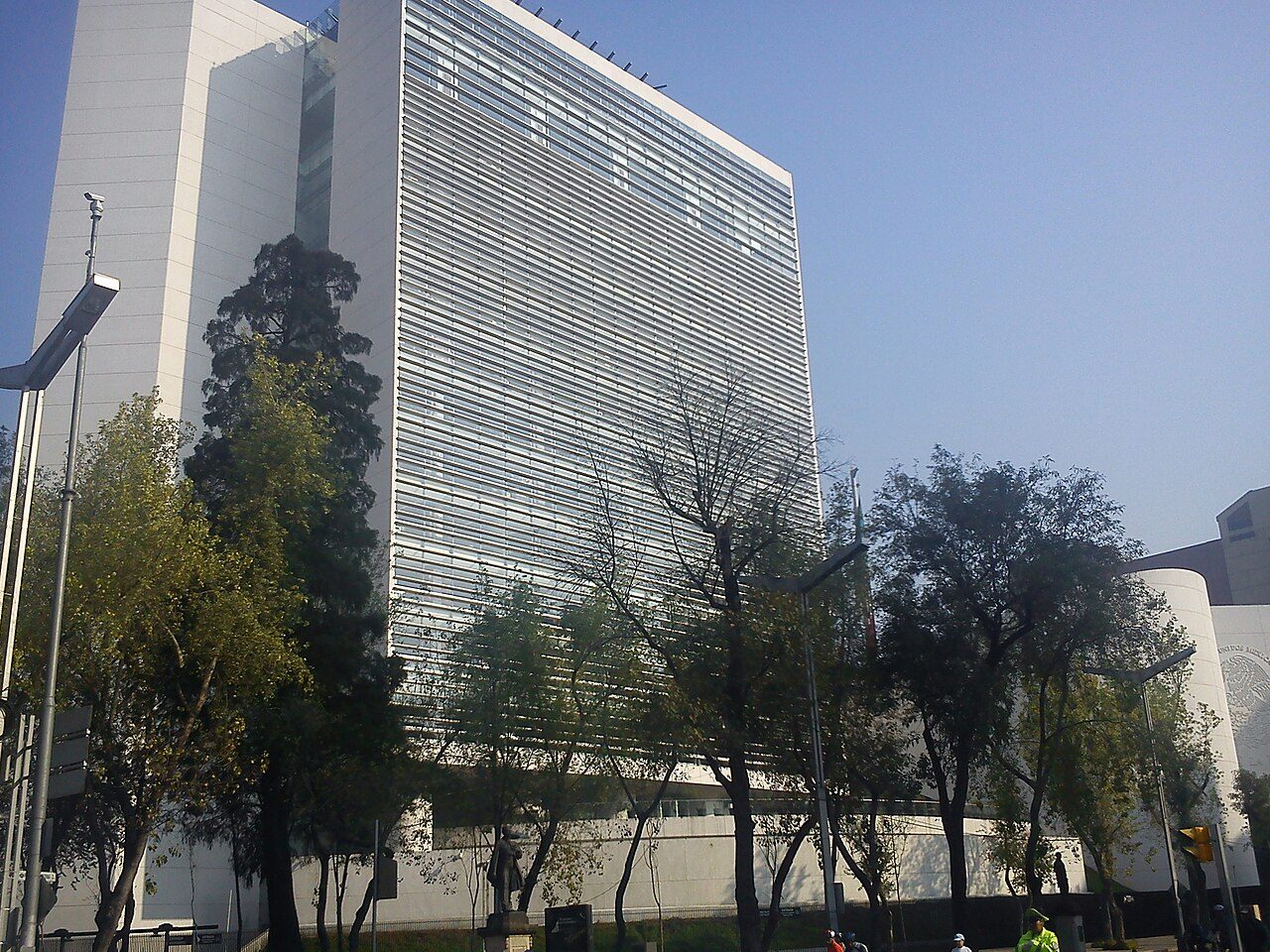
Mexico has plenty of proposals for regulating artificial intelligence and very little law. According to figures from Universidad Anáhuac cited by Ecosistema Startup in July, 85 AI-related initiatives have been presented in Congress since April 2023, and 67 were still pending. The new legislative session, which opened in September, is expected to change that. At a panel at the National Autonomous University of Mexico (UNAM) on 22 September, legislators said a general AI law could be ready by the end of the year.
Why the constitution comes first
The premise of the current push is that Mexico’s federal Congress lacks an explicit constitutional power to legislate on AI as a whole. In August, Gabriela Jiménez Godoy, vice-coordinator of the ruling Morena party’s caucus in the Chamber of Deputies, announced an initiative to amend Article 73 of the constitution, which sets out Congress’s powers, to add artificial intelligence. Similar proposals had been tabled in both chambers in April.
The stated aim, as reported by Infobae, is a single federal framework rather than 32 parallel regimes. That is not a hypothetical risk. States including the State of Mexico, Jalisco, Querétaro, Michoacán, Oaxaca, Sinaloa and San Luis Potosí have already passed their own AI rules. With Morena’s majority, the amendment is expected to advance, but a general law can follow only once the power to pass it exists.
For companies operating across Mexico, the real compliance map is currently drawn by state legislatures, sectoral reforms and pending bills, not by a single statute.
What is already law
Federal rules are arriving sector by sector. On 14 May the Official Gazette published reforms to the Federal Labour Law and the Federal Copyright Law that protect performers’ voices and images against AI reproduction. According to a summary by the law firm Garrigues, contracts with artists must now set out the conditions and payment for any AI use of their image or voice, explicit consent is required, and violations can draw fines of up to 40,000 days of minimum wage. Parody and satire remain exempt if they do not displace the artist commercially.
Other proposals are in the queue. A Senate initiative from February would require transparency for high-risk systems and authentication of generated media in telecommunications and broadcasting. A labour proposal from April would oblige employers to tell workers when AI is used to assign tasks or evaluate performance, and require human intervention in decisions affecting labour rights. A Chamber proposal dated 24 July sets out a “traffic-light” risk classification, a National AI Council and a national algorithmic audit platform, according to ITSitio.
The strategy gap
The UNAM panel showed both the momentum and the doubts. Senator Rolando Zapata Bello argued for a flexible, principles-based law that separates high-risk systems from those suited to self-regulation, and for an obligation on the state to publish a national AI strategy. Deputy Hugo Luna Vázquez backed a general law as a “flight plan”, with targeted reforms in health, education, finance and intellectual property.
Academics were more sceptical. Pablo Pruneda Gross of UNAM’s Institute of Legal Research said Mexico had come late to regulation and should learn from European, American and Chinese models without copying them. Sergio López Ayllón, also of UNAM, said officials first need to define why they want to regulate, who will enforce it and with what resources. Salma Jalife of Centro México Digital questioned writing rules before the systems are understood.
The economic backdrop sharpens the point. Economy Ministry data from June, cited by ITSitio, put AI use among Mexican manufacturers with ten or more employees at 4.8%, against an 8% average across sectors and 19.1% in OECD countries.
What to watch
Three things will determine whether Mexico ends 2026 with a coherent regime or a larger patchwork: whether the Article 73 amendment passes both chambers and enough state legislatures; whether the general law creates a genuinely independent supervisor, as several bills propose, or leaves enforcement with existing ministries; and whether state laws already on the books are pre-empted or left in place. Until then, organisations deploying AI in Mexico should track state rules and sectoral reforms as closely as the federal debate.
Sources
- Ley de IA avanza en México mientras enfrenta el reto de invertir en tecnología propia (Infobae, 23 September 2026)
- México avanza hacia una ley de IA entre alertas por falta de una estrategia nacional (Infobae/EFE, 22 September 2026)
- Diputados de Morena alistan iniciativa para otorgar al Congreso la facultad de legislar sobre IA (Infobae, 9 August 2026)
- Regulación de IA en México: todavía no hay una ley general, pero las reglas ya avanzan por sectores (ITSitio, 3 August 2026)
- Regulación IA México 2026: 85 iniciativas pendientes (Ecosistema Startup, 28 July 2026)
- México eleva el estándar de protección frente a la IA en el sector artístico (Garrigues)
- México y la regulación de inteligencia artificial en el futuro (Diario Libre, 22 September 2026)
Discussion
No comments yet. Start the conversation.