700 Complaints, Four Platform Partners, No Court Case
Nine days before South Africa votes in local elections, the Electoral Commission has logged more than 700 disinformation complaints, gazetted a code carrying R200,000 fines, and enlisted four platforms. Not one matter has reached the Electoral Court.

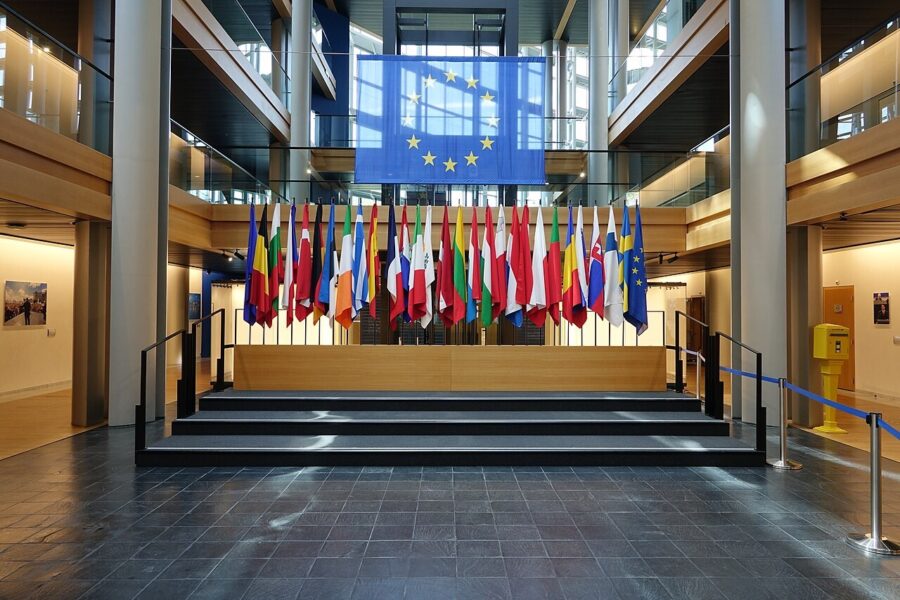
Pretoria City Hall. South Africa’s municipal councils are contested on 4 November 2026, under a disinformation code gazetted on 4 September; the photograph is illustrative.
Photo: Janek Szymanowski, CC BY-SA 3.0 · source
Key points
- The Electoral Commission of South Africa said on 20 October 2026 that it had received more than 700 complaints about election-related disinformation, most of them linked to posts on X and some involving artificial intelligence used to alter people’s photographs, and that none of it had significantly disrupted the environment in which the election is being held.
- The Electoral Code of Conduct Countering Disinformation in the Local Government Elections, gazetted on 4 September 2026 under section 88 of the Local Government: Municipal Electoral Act 27 of 2000, binds only political parties, candidates and those acting for them, and requires them to label synthetic content before distribution and to report online disinformation to Real411 within 36 hours.
- Sanction runs only through a court: section 78(2) of that Act allows a formal warning, a fine of up to R200,000, reduction of votes cast, disqualification of a candidature or cancellation of a party’s registration, and no disinformation referral to the Electoral Court has been reported nine days before the vote of 4 November 2026.
South Africa elects its municipal councils on 4 November 2026, and its election administrator has spent the run-up assembling an unusually elaborate counter-disinformation apparatus. On 20 October the Chief Electoral Officer, Sy Mamabolo, said the Electoral Commission of South Africa had received more than 700 complaints about election-related disinformation. Most, The Citizen reported, are linked to posts on X. Some involve artificial intelligence used to alter photographs: “It is basic things, like somebody has used my picture using AI,” Mamabolo said, in remarks carried by eNCA. He also said that none of it had significantly disrupted the environment in which the election is being held. That is the public record nine days out: a large complaint count, a gazetted code with criminal exposure behind it, four technology companies enlisted — and no reported referral to the Electoral Court, which imposes the Act’s civil sanctions.
The same week, the Commission published a statement on its partnership with digital platforms. Google, Meta, Microsoft and TikTok are named, alongside Moxii Africa, the non-profit that runs the Real411 reporting service. What the arrangement is formally called, and when it was concluded, cannot be established from the Commission’s own material: the statement calls it a partnership, gives no title and no date, and says only that it follows a similar framework signed with the platforms before the 2024 national and provincial elections. SAnews, the government news agency, dates the announcement to 20 October and reports it the same way; eNCA says the Commission “signed an agreement”. This piece therefore neither names nor dates it. Mamabolo said it “enables instantaneous remedial action against disinformation peddlers”.
What the 700 figure counts, and what it leaves out
The number counts reports received. It is not a count of findings, referrals or posts removed, and the Commission has published no breakdown of how many of the 700 involve synthetic media rather than ordinary falsehood. AI & GPP has set out why view counts mislead government monitors; a complaint register likewise measures what the public noticed and troubled to report, not what moved a voter.
The Commission’s guidance on reporting election disinformation directs complainants to real411.org.za or the Real411 app, in any of South Africa’s eleven official languages. Reports cannot be filed anonymously, though the complainant’s identity is kept confidential in the outcome. In scope: false claims about voting dates, venues or eligibility; fake statements attributed to the Commission; manipulated or AI-generated media; fake accounts and bot networks; unlabelled political advertising or synthetic content. Satire, opinion and fair criticism are excluded.
Assessment is handled outside the Commission, by a Digital Complaints Committee that screens for scope and a sub-committee that decides on referral — to the Commission, the police, the South African Human Rights Commission, the Press Ombud or the Electoral Court. No published timeframe attaches to any of it.
What the Code requires of parties, and the clocks inside it
The legal spine is narrower than the complaint volume suggests. The Electoral Code of Conduct Countering Disinformation in the Local Government Elections, Notice 4138 of 2026 in Government Gazette No. 55341 of 4 September 2026, is made under section 88 of the Local Government: Municipal Electoral Act 27 of 2000 and binds from publication until results are declared, as SAnews reported on its promulgation. Its addressees are political parties and candidates, including what is done on their instruction or authority, or for reward, online and offline. It does not bind members of the public, and it does not bind the platforms — even its paragraph on online platforms binds only parties and candidates.
The duties are precise and timed. Parties and candidates must check what they circulate for accuracy before they circulate it; retract and correct disinformation within 36 hours of becoming aware of it and publicly censure those responsible; report online disinformation to Real411 within 36 hours; label political advertising with the party or candidate behind it; and label synthetic content as synthetic before distribution. Paragraph 4(h) defines synthetic content as audio, image, video or text generated using artificial intelligence; paragraph 10(c) prohibits deceptive synthetic content intended to mislead. Also prohibited are knowing falsehoods, disinformation campaigns, content that could reasonably give rise to voter dissuasion or to public violence, harassment, hate speech or discrimination on a prohibited ground, improperly labelling legitimate criticism as false, falsified, fabricated, doxed or stolen material, micro-targeted falsehoods, fake accounts and bots, and cyber-bullying.
The Code sets out no penalty of its own. Paragraph 15 states only that a breach is subject to sanction as contemplated under the Act. Everything punitive therefore sits in Act 27 of 2000. The gap is structural: the Commission’s register is filling with posts, most of them on X, while the instrument that carries penalties reaches only parties, candidates and their agents. Whether the 700 complaints concern such persons has not been published.
The route from a complaint to a sanction, and who decides each step
Assembled from the gazetted Code, Act 27 of 2000 and the Commission’s own guidance, the table below is the chain a complaint must travel to become a penalty.
| Route | What starts it | Who assesses | Remedy or sanction available | Who decides | Authority |
|---|---|---|---|---|---|
| Public report | Anyone reports content at real411.org.za or on the app, in 11 languages | Real411 Digital Complaints Committee (scope), then a sub-committee | Recommendation to the Commission and the platforms; onward referral to the Commission, police, SAHRC, Press Ombud or Electoral Court | Real411 sub-committee | Commission guidance on reporting disinformation; Real411 designated at Code para. 4(e) |
| Party self-report | Party or candidate becomes aware of online disinformation | Real411, as above | As above | Real411 sub-committee | Code para. 12(a); within 36 hours |
| Self-correction | Party or candidate becomes aware of its own disinformation | The party or candidate | Public retraction and correction; censure of those responsible | The party or candidate | Code paras. 6(d) and 8(d); within 36 hours |
| Commission’s own remedy | Commission reviews a Real411 report | Electoral Commission | Flag the content as disinformation on the Commission’s channels, or issue a corrective statement | Electoral Commission | Commission guidance on reporting disinformation |
| Platform referral | Commission reviews and refers | The platform | Action under the platform’s own policies; referrals said to be prioritised | The platform | Commission statement, October 2026 |
| Civil proceedings | Chief electoral officer institutes proceedings for the Commission | A court, including the Electoral Court | Formal warning; fine up to R200,000; forfeiture of deposit; bans on public media, meetings, posters, campaign literature, advertising, and state or foreign funds; reduction of votes cast; disqualification of candidature; cancellation of a party’s registration | Electoral Court | ss. 77 and 78(2), Act 27 of 2000 |
| Criminal prosecution | Contravention of the Code under s. 66 | Prosecuting authorities, then a court | Fine, or imprisonment of up to ten years | A court, on conviction | s. 80(a), Act 27 of 2000 |
Two details in that chain are routinely reported imprecisely. The first is the custodial exposure. Press accounts give it as five to ten years; section 80 of the Act as published in fact sets two tiers, a fine or up to ten years for one list of sections and a fine or up to five years for another, and contravention of the Code — section 66, in Part 1 of Chapter 7 — falls in the ten-year tier. The second is who can start the case. Under section 77, it is the chief electoral officer, acting for the Commission, who may bring civil proceedings, in the Electoral Court or another court, to enforce the Act or the Code. The register of 700 complaints is, in that sense, a register of things only Mamabolo’s office can take to court.
A complaint can be counted in an afternoon. A sanction takes a court, and a court takes an applicant.
The Electoral Court’s powers under section 78(2), which follow a finding of breach in that same Part 1, are wide, and the R200,000 fine at (b) is the mildest of the serious ones: the court may also reduce the votes cast for a party, disqualify a candidate, or cancel a party’s registration outright, at (i) — what the press shorthands as deregistration. None of it has been invoked on a disinformation matter in this cycle. The court itself has been busy, but on candidate lists, not content: Polity reported in September that it had dismissed the African National Congress’s bid to include 181 candidate councillors submitted after the deadline, a 16 September judgment Daily Maverick also reported, and that James Aphane, the Commission’s general manager for electoral matters, told the same briefing the Commission is not a judicial body and that penalties are for the Electoral Court, calling on the parties themselves to self-correct.
The platform most complained about is not a partner
The asymmetry is not a failure of enforcement but a gap in architecture. The complaints are mostly about X, which is not among the four companies named in the Commission’s October statement; no equivalent direct channel to it has been announced. Nothing in the Code or the Act obliges a platform to cooperate: the partnership is voluntary, and the Act’s sanctions run against parties and candidates, not the services. Where a referral route exists it is quick and informal; where it does not, there is a corrective statement, or court.
This is the inverse of the route Brazil has taken, where an electoral court ordered Meta to make its AI treat rival candidates alike. South Africa’s Commission has negotiated access rather than ordered it, which is faster to set up and weaker when a company declines. AI & GPP has traced three routes to an AI rulebook across Morocco, Kenya and South Africa, and Nigeria’s commission has paired an internal AI unit with human collation of results.
The Commission’s own position deserves weight. Mamabolo’s argument is that credibility, not logistics, is now the vulnerable part of an election — “A technically flawless election can still lose public trust if citizens are overwhelmed by disinformation”, he said in the Commission’s statement — and his assessment is that nothing so far has significantly disrupted the environment. That may be exactly right. Seven hundred reports in a national campaign is not obviously a crisis, and a commission that reaches for the Electoral Court nine days before polling invites the charge that it is litigating the campaign.
Two things to watch, then. The first is whether the chief electoral officer institutes any proceedings under section 77 before 4 November, which would test whether the Code’s penalties are live instruments or declaratory ones. The second is the complaint total at the close of voting, and whether the Commission publishes alongside it how many reports were upheld, how many were referred to a platform, and how many involved synthetic content. Without that breakdown, 700 measures public vigilance, not harm — and not enforcement.
Questions this answers
What penalties can South Africa actually impose for election disinformation, and who imposes them?
The gazetted Disinformation Code sets no penalty itself; paragraph 15 makes a breach subject to sanction under the Local Government: Municipal Electoral Act 27 of 2000. Under section 78(2) of that Act the Electoral Court may issue a formal warning, fine up to R200,000, forfeit a deposit, ban campaigning activities, reduce votes cast, disqualify a candidature or cancel a party’s registration, and under section 80 contravention of the Code carries a fine or imprisonment of up to ten years on conviction.
Who do the IEC’s platform partnership and its disinformation code actually cover?
The partnership covers Google, Meta, Microsoft and TikTok, plus the non-profit Moxii Africa, and is voluntary. The Code binds political parties and candidates, including what is done on their instruction or authority — not the public and not the platforms. X, the platform most of the 700 complaints concern, is in neither group.
How does a member of the public report election disinformation in South Africa?
Through Real411, at real411.org.za or on its app, in any of the eleven official languages; reports cannot be anonymous, but the complainant’s identity is kept confidential in the outcome. The Commission’s guidance sets out that a Digital Complaints Committee screens for scope and a sub-committee decides on referral, and publishes no timeframe for either step.
Sources
- Electoral Commission and Digital Platforms Partner to Counter Disinformation and Protect Election Information Integrity in South Africa’s 2026 Local Government Elections — Electoral Commission of South Africa, October 2026 (page carries no date)
- Report Election Disinformation — Electoral Commission of South Africa, undated
- Electoral Code of Conduct Countering Disinformation in the Local Government Elections, Notice 4138 of 2026, Government Gazette No. 55341 — Electoral Commission of South Africa, via Parliamentary Monitoring Group, 4 September 2026 (PDF)
- Local Government: Municipal Electoral Act, No. 27 of 2000 — Republic of South Africa, as published in the Government Gazette, Act No. 27 of 2000 (PDF; ss. 66, 77, 78, 80 and 88)
- IEC receives more than 700 complaints over election disinformation ahead of polls — IOL, 20 October 2026 (page metadata shows 21 October 2026)
- IEC receives election misinformation complaints, enlists Google, Meta and TikTok ahead of November vote — The Citizen, 20 October 2026
- IEC receives more than 700 complaints over election-related content — eNCA, 20 October 2026
- IEC enters into partnership to counter disinformation — SAnews, South African Government News Agency, 20 October 2026
- IEC gazettes code to tackle disinformation ahead of local elections — SAnews, South African Government News Agency, 8 September 2026
- IEC prepared but cautious as local elections face legal hurdles, deepfake threats — Polity, Creamer Media, 23 September 2026
Claim ledger (piece 10)
| Claim | Source URL | Publisher | Pub. date | Accessed | Primary/Secondary | Single-source? |
|---|---|---|---|---|---|---|
| More than 700 disinformation complaints received | https://iol.co.za/news/politics/2026-10-20-iec-receives-more-than-700-complaints-over-election-disinformation-ahead-of-polls/ | IOL | 20 Oct 2026 | 25 Oct 2026 | Secondary | No (also The Citizen, eNCA) |
| Most complaints linked to posts on X | https://www.citizen.co.za/news/south-africa/elections/iec-receives-election-misinformation-complaints-enlists-google-meta-and-tiktok-ahead-of-november-vote/ | The Citizen | 20 Oct 2026 | 25 Oct 2026 | Secondary | No (also eNCA) |
| Mamabolo quote: “It is basic things, like somebody has used my picture using AI” | https://www.enca.com/news-top-stories-videos/iec-receives-more-700-complaints-over-election-related-content | eNCA | 20 Oct 2026 | 25 Oct 2026 | Secondary | Yes |
| None of it had significantly disrupted the environment in which the election is being held | https://iol.co.za/news/politics/2026-10-20-iec-receives-more-than-700-complaints-over-election-disinformation-ahead-of-polls/ | IOL | 20 Oct 2026 | 25 Oct 2026 | Secondary | No (The Citizen: none has threatened the overall election environment) |
| Partners: Google, Meta, Microsoft, TikTok, Moxii Africa | https://www.elections.org.za/content/About-Us/News/Electoral-Commission-and-Digital-Platforms-Partner-to-Counter-Disinformation-and-Protect-Election-Information-Integrity-in-South-Africa-s-2026-Local-Government-Elections/ | Electoral Commission of SA | Oct 2026 (undated) | 25 Oct 2026 | Primary | No |
| Commission’s statement calls it a partnership, no title, no date; follows a framework signed before the 2024 elections | same as above | Electoral Commission of SA | Oct 2026 (undated) | 25 Oct 2026 | Primary | No (SAnews same) |
| eNCA describes it as a signed agreement | https://www.enca.com/news-top-stories-videos/iec-receives-more-700-complaints-over-election-related-content | eNCA | 20 Oct 2026 | 25 Oct 2026 | Secondary | Yes |
| Mamabolo quotes on remedial action and on public trust | https://www.elections.org.za/content/About-Us/News/Electoral-Commission-and-Digital-Platforms-Partner-to-Counter-Disinformation-and-Protect-Election-Information-Integrity-in-South-Africa-s-2026-Local-Government-Elections/ | Electoral Commission of SA | Oct 2026 (undated) | 25 Oct 2026 | Primary | No (also IOL, SAnews) |
| Real411 channel, 11 official languages, non-anonymous, scope list, exclusions | https://www.elections.org.za/pw/Elections-And-Results/Report-Election-Disinformation | Electoral Commission of SA | undated | 25 Oct 2026 | Primary | Yes |
| Digital Complaints Committee screens scope; sub-committee decides referral to IEC, police, SAHRC, Press Ombud or Electoral Court; appeals to secretariat; no published timeframes | same as above | Electoral Commission of SA | undated | 25 Oct 2026 | Primary | Yes |
| Code gazetted 4 Sept 2026 as Notice 4138 of 2026 in Gazette No. 55341, under s. 88 of Act 27 of 2000 | https://static.pmg.org.za/55341_04-9_ElectoralCommission.pdf | Electoral Commission of SA, via PMG | 4 Sep 2026 | 25 Oct 2026 | Primary | No (SAnews confirms s. 88 and date) |
| Code binds parties and candidates (para. 2(b): directly or through a person acting on their instruction, authority or for reward), from publication until results declared; imposes no duty on platforms | same as above | Electoral Commission of SA, via PMG | 4 Sep 2026 | 25 Oct 2026 | Primary | No |
| 36-hour retraction/correction duty (paras. 6(d), 8(d)) and 36-hour reporting duty to the designated online complaints mechanism (para. 12(a)) | same as above | Electoral Commission of SA, via PMG | 4 Sep 2026 | 25 Oct 2026 | Primary | No (SAnews confirms both) |
| Synthetic content defined at para. 4(h); deceptive synthetic content prohibited at para. 10(c); labelling required at para. 12(c) | same as above | Electoral Commission of SA, via PMG | 4 Sep 2026 | 25 Oct 2026 | Primary | Yes |
| Prohibitions: knowing falsehood, campaigns, voter dissuasion, fake accounts and bots, doxed data, micro-targeting, cyberbullying | same as above | Electoral Commission of SA, via PMG | 4 Sep 2026 | 25 Oct 2026 | Primary | No |
| Para. 15: breach subject to sanction as contemplated under the Act; Code sets no penalty | same as above | Electoral Commission of SA, via PMG | 4 Sep 2026 | 25 Oct 2026 | Primary | Yes |
| Electoral Court remedies at s. 78(2) incl. warning, fine up to R200,000 at (b), forfeiture, campaigning bans, vote reduction, disqualification, cancellation of registration at (i) | https://www.gov.za/sites/default/files/gcis_document/201409/a27-000.pdf | Republic of South Africa, Government Gazette text of Act 27 of 2000 | Act of 2000 | 25 Oct 2026 | Primary | No (also Acts Online; R200,000 and deregistration corroborated by The Citizen) |
| s. 80 two-tier penalty: up to 10 years incl. s. 66 (contravention of Code); up to 5 years for a second list | https://www.gov.za/sites/default/files/gcis_document/201409/a27-000.pdf | Republic of South Africa, Government Gazette text of Act 27 of 2000 | Act of 2000 | 25 Oct 2026 | Primary | No (also Acts Online) |
| s. 66 (Contravention of Code) sits in Part 1 of Chapter 7, the Part whose breach triggers s. 78(2) | https://www.gov.za/sites/default/files/gcis_document/201409/a27-000.pdf | Republic of South Africa, Government Gazette text of Act 27 of 2000 | Act of 2000 | 25 Oct 2026 | Primary | No (also Acts Online) |
| Chief electoral officer, for the Commission, may bring civil proceedings in the Electoral Court or another court to enforce the Act or the Code (s. 77) | https://www.gov.za/sites/default/files/gcis_document/201409/a27-000.pdf | Republic of South Africa, Government Gazette text of Act 27 of 2000 | Act of 2000 | 25 Oct 2026 | Primary | No (also Acts Online) |
| Electoral Court dismissed ANC bid to include 181 candidate councillors filed after deadline | https://www.polity.org.za/article/iec-prepared-but-cautious-as-local-elections-face-legal-hurdles-deepfake-threats-2026-09-23 | Polity, Creamer Media | 23 Sep 2026 | 25 Oct 2026 | Secondary | Yes |
| Aphane: Commission not a judicial body, penalties for the Electoral Court; “We call upon the electoral court and the parties themselves to do self-correction” | same as above | Polity, Creamer Media | 23 Sep 2026 | 25 Oct 2026 | Secondary | Yes |
| Code promulgated 4 September 2026 under s. 88 of Act 27 of 2000 and effective from publication (corroboration of the gazette) | https://www.sanews.gov.za/node/84131 | SAnews | 8 Sep 2026 | 25 Oct 2026 | Secondary | No |
| Election date 4 November 2026 | https://www.sanews.gov.za/node/85074 | SAnews | 20 Oct 2026 | 25 Oct 2026 | Secondary | No (all four outlets) |
| 11. ANC to ‘exercise its legal rights’ after Electoral Court dismisses candidate list case — Daily Maverick, 16 September 2026 |
Discussion
No comments yet. Start the conversation.