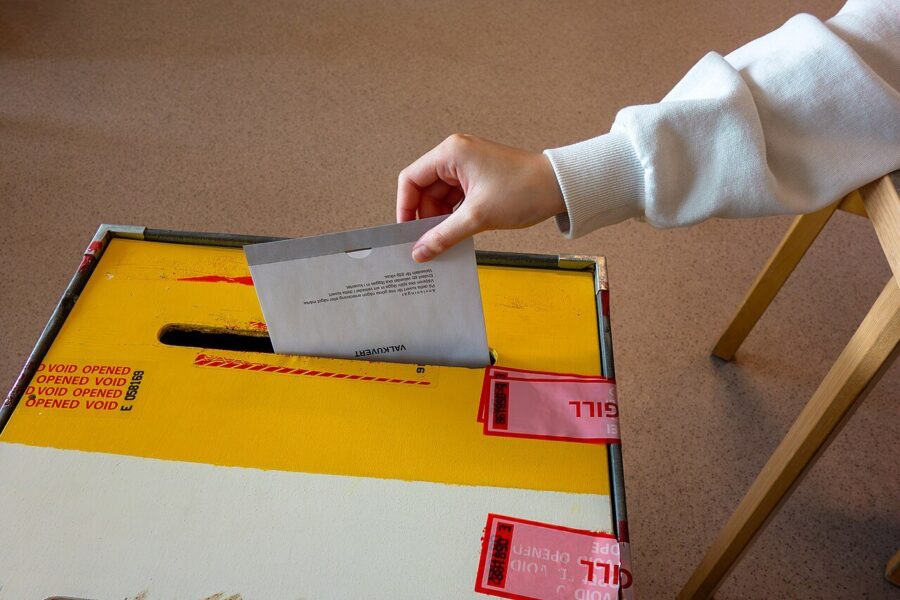
Israel Heads to the Polls Under Its First Deepfake Law
Israel votes on 27 October under a temporary law forcing campaigns to label AI-made images, video and audio. A Supreme Court justice enforces it petition by petition, and his rulings are already showing where the line falls.
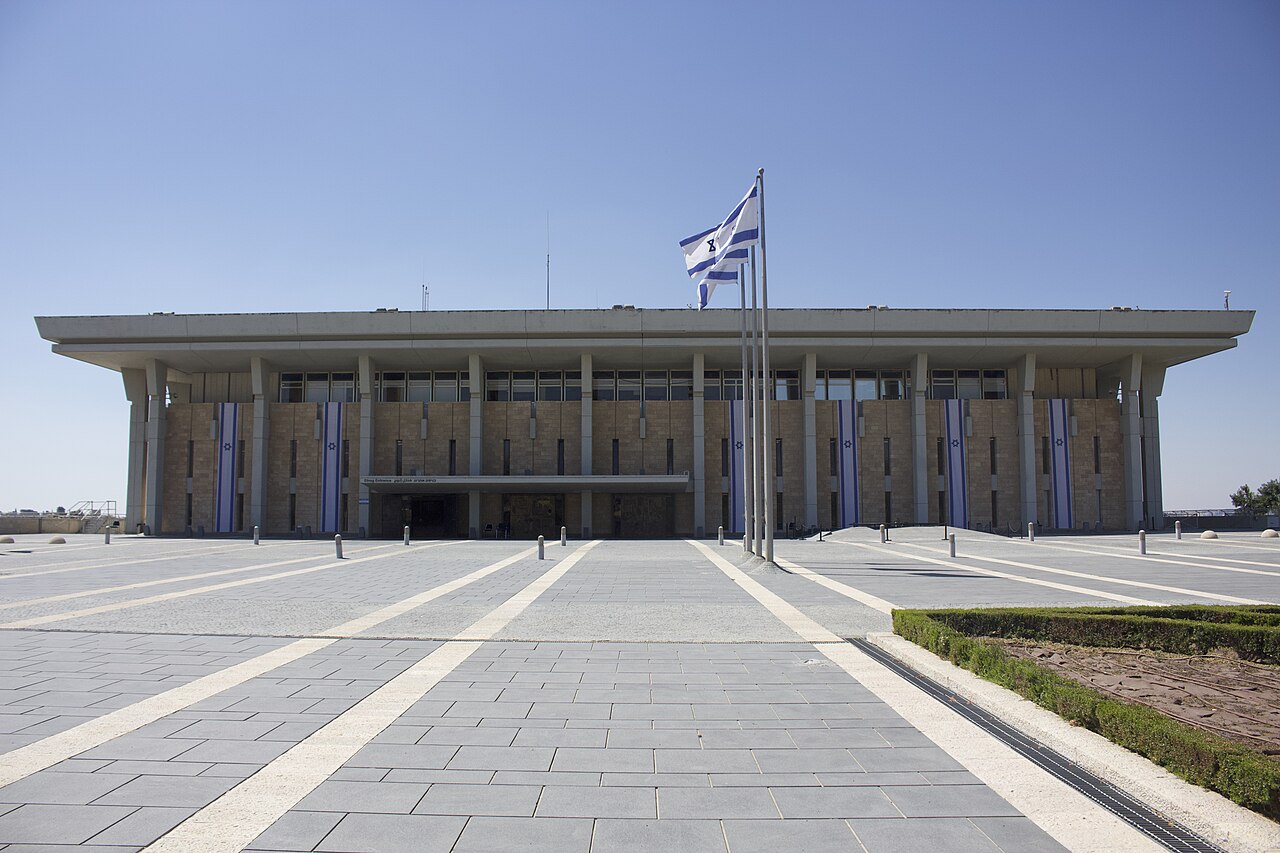
The Knesset in Jerusalem, which passed the temporary deepfake-disclosure law (illustrative).
Photo: Clema12, CC BY-SA 4.0 · source
Israelis vote for the 26th Knesset on 27 October 2026, the date fixed by the Basic Law for a full-term parliament, Globes reported. It is the first general election in which campaign material made or materially altered by AI must say so. For governments elsewhere, it tests mandatory disclosure enforced by a judge rather than a regulator.
What the Law Requires
The duty sits in a temporary provision of the Elections to the 26th Knesset Law (in Hebrew), published in the official gazette on 16 July. Anyone who publishes election propaganda that counts as a “deep fake” must attach a clear and prominent notice that the content was not recorded at source. A deep fake means visual or audio content depicting a person, place, event, document or object that could pass as authentic but was created or materially altered digitally, including by AI. The provision lapses a year after polling day.
The detail came from Noam Sohlberg, Deputy President of the Supreme Court, who chairs the Central Elections Committee. His disclosure rules (in Hebrew), gazetted on 26 July, allow either a written notice or one of two standard symbols. Notices must be prominent, high-contrast and in the content’s language. On print and stills the text must be the larger of 5 per cent of the content’s height or 10 points. On video it must stay on screen throughout. Audio-only material needs a spoken notice at the start and the end. A compliant label is presumed to satisfy the law. AI itself is not banned, and text falls outside the definition.
Enforcement by Petition
The law leaves sanctions unclear: section 2A2 names none. In June, The Times of Israel reported that breaches of the proposal could bring up to six months in prison or NIS 30,000 in fines, noting that in February the committee had ordered Likud to remove a manipulated image of Naftali Bennett and Yair Lapid. In practice, rivals petition the chair, who can order removal and costs.
An early ruling exposed the limits of labels. On 26 July Justice Sohlberg ordered Religious Zionism leader Bezalel Smotrich to take down an AI clip of Yashar party leader Gadi Eisenkot shaking hands with Palestinian Authority chairman Mahmoud Abbas. A clarification added to the Facebook post’s text did not cure the risk of misleading voters, because most viewers would not see it, his decision (in Hebrew) held. He relied on an older ban on unfairly disrupting a rival’s campaign.
In August he dismissed a petition over an AI video by minister Shlomo Karhi, finding that the labelling duty does not reach party primaries, Channel 14 reported (in Hebrew). A Sohlberg decision, made public on 1 October, rejected two petitions against a Religious Zionism video depicting Supreme Court President Isaac Amit and Attorney General Gali Baharav-Miara being dragged by police. The clip, he wrote, “will stand for the judgment of the voter, not the judgment of election law”, Ynetnews reported.
Israel has chosen disclosure over prohibition, and a judge’s docket over a regulator’s dashboard.
Platforms and Critics
“We deal with the big platforms,” Dean Livne, the committee’s acting director-general, told The Jerusalem Post, adding that the committee can seek removal of false material and warn voters. TikTok requires realistic AI content to be labelled and says it will remove fabricated content that misleads voters even when labelled, The Jerusalem Post reported.
Even supporters of labelling see gaps. The Israel Democracy Institute’s opinion (in Hebrew) to the Knesset called a labelling duty essential but judged the draft too broad and vague to enforce, warned it could catch innocent users who share content, and urged technically detectable marking. Orly Adas, then the committee’s outgoing director, called a full clean-up of online fakes “not feasible”, The Times of Israel reported.
What to Watch Before 27 October
A convincing fake dropped in the final 48 hours would test whether petition-based enforcement can outpace a share button. Watch for disputes over label placement, for fakes from unaffiliated accounts, and for whether the next Knesset makes the temporary regime permanent. The lesson for officials elsewhere: a label is only as strong as the body empowered to act when one is missing.
Sources
- Date set for Knesset elections — Globes — 12 July 2026
- Elections to the 26th Knesset Law (Special Provisions and Legislative Amendments), 5786-2026, Sefer HaChukim 3546 — Reshumot (official gazette), Knesset copy — 16 July 2026; (PDF) (in Hebrew)
- Elections (Propaganda Methods) Rules (Compliance with the Disclosure Duty for Election Propaganda that is a Deep Fake), 5786-2026, Kovetz HaTakanot 12484 — Reshumot (official gazette), copy hosted by law.co.il — 26 July 2026; (PDF) (in Hebrew)
- Election officials push to label AI-generated political campaign materials — The Times of Israel — 22 June 2026
- Decision in Election Petitions 73/26 and 74/26 (Bocharim BeIsrael and Yashar party v. Religious Zionism and Minister Bezalel Smotrich) — Central Elections Committee for the 26th Knesset — 26 July 2026; (PDF) (in Hebrew)
- Sohlberg rejected petition against Karhi: the AI video did not breach election law — Channel 14 — 11 August 2026; (in Hebrew)
- Solberg on AI video published by Smotrich: ‘Distasteful and bitter – but no grounds for disqualification’ — Ynetnews — 1 October 2026
- AI, fraud, and cyberattacks: What security threats face Israel’s 2026 election? — The Jerusalem Post — 2 October 2026
- TikTok publishes new guidelines for politicians, content creators ahead of Knesset elections — The Jerusalem Post — 30 July 2026
- Opinion on the Knesset Elections Bill (26th Knesset) to the Constitution, Law and Justice Committee — Israel Democracy Institute — 21 June 2026; (PDF) (in Hebrew)
Discussion
No comments yet. Start the conversation.