A Mandela Deepfake Tests South Africa’s Election Machinery
Special votes open today under a gazetted Disinformation Code that has yet to reach the Electoral Court. A fake Mandela video shows what the state can actually do in election week: report, correct, and test detection tools that are still being built.
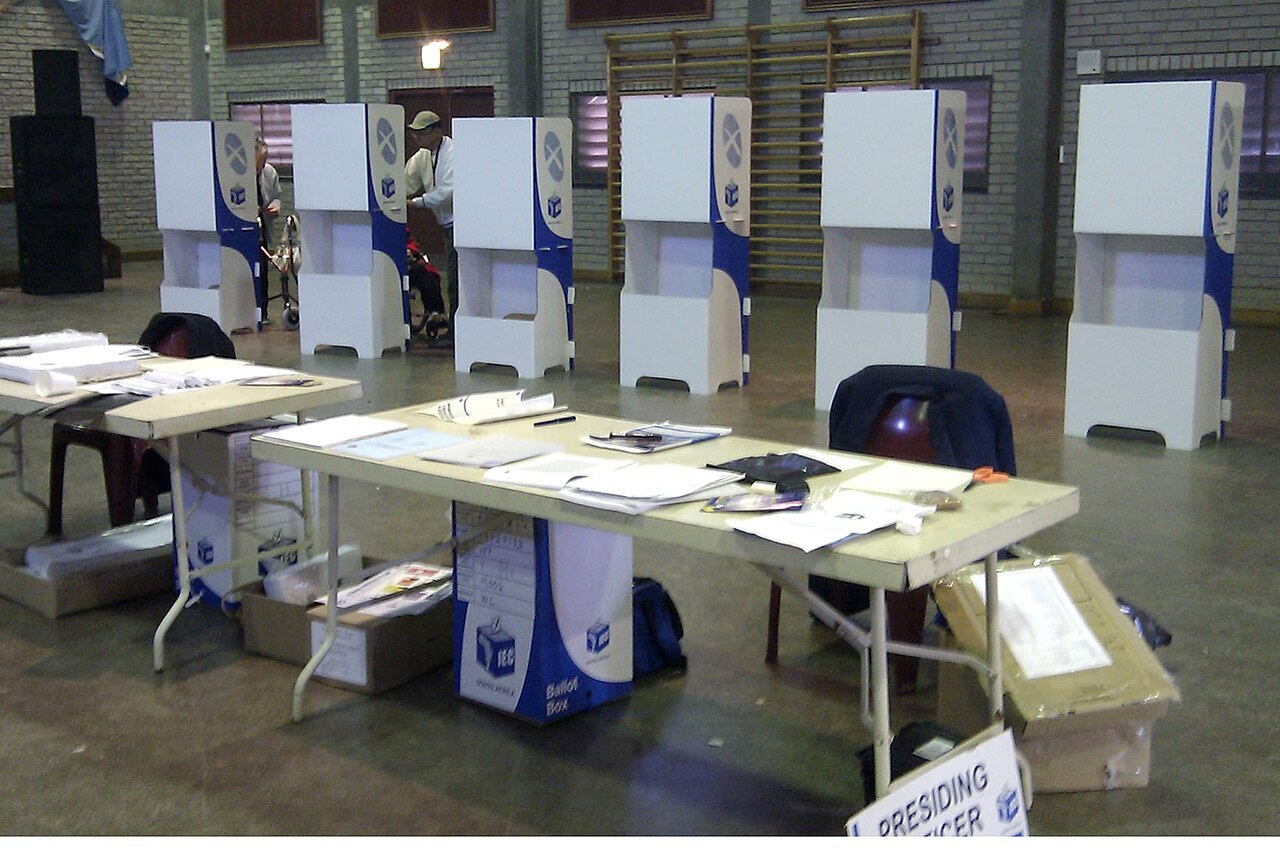
South Africa’s special votes open at 8:00 am SAST on Monday 2 November 2026; the municipal polls follow on 4 November. The Electoral Commission of South Africa’s (IEC) readiness release of 2 November counts 2,655,067 approved special voters and 127,000 officials and says nothing about disinformation or AI. Yet the week began with the first synthetic-media test of its rulebook: an AI-generated video in which a simulated Nelson Mandela tells viewers to “stop voting for the ANC”. Its handling shows where state power stops.
What the IEC did with the Mandela video
EWN reported on 29 October that the IEC had itself lodged a complaint about the video with Real411, its designated complaints platform. EWN also described a viral clip in which a 94-year-old woman appeared to take it as genuine. IEC spokesperson Kate Bapela, quoted by The Citizen on 30 October, said that “satire, parody, political commentary and criticism” are protected under the Code and that it “requires political parties and candidates to ensure that AI-generated content is clearly labelled”; the IEC, the paper added, would consider the matter through its legal processes. By 2 November no Electoral Court referral, platform removal or party attribution had been announced; the IEC newsroom carried no statement.
Whom the Code binds, and whom it cannot reach
The Electoral Code of Conduct Countering Disinformation, gazetted on 4 September 2026 as Notice 4138 under section 88 of the Local Government: Municipal Electoral Act, 2000, applies to election-related communications by parties and candidates, whether made directly or through anyone acting “on their instruction, authority or for reward”, until the results are declared. It defines “synthetic content” as AI-generated audio, image, video or text, requires parties to label it before distribution, forbids “deceptive content, including synthetic content, intended to mislead”, and gives parties 36 hours to report suspected disinformation to Real411 and retract their own. Item 3 protects satire and parody. Nothing in it binds an anonymous account: unless a video is traced to a party or candidate, sanctions do not apply, hence a complaint rather than a referral.
What the sanctions are, and why none has been used
A breach “is subject to sanction as contemplated under the Act” (item 15). Section 78 lets the Electoral Court impose a warning, “a fine not exceeding R200 000”, campaigning bans, candidate disqualification or party deregistration; under section 80, a person or party bound by the Code and convicted of contravening it faces a fine or imprisonment “not exceeding 10 years”. None has been used on AI content. As AI & GPP’s analysis of 26 October, 700 complaints, four platform partners and no court case, set out, the IEC’s disinformation page says that after a Real411 assessment it does “one of two things”: correct the record on its own channels, or recommend the matter to the Electoral Court.
| Instrument | Who it reaches | Used on AI content by 2 November 2026 |
|---|---|---|
| Disinformation Code, Notice 4138 (binding until results declared) | Parties and candidates, including communications made through those acting for them | Mandela video reported to Real411; no attribution to a party |
| Electoral Court sanctions, s.78; criminal penalties, s.80 | Persons and parties bound by the Code | No referral or prosecution announced |
| Platform partnership of 19 October (Google, Meta, Microsoft, TikTok, Moxii Africa) | Content on partner platforms | No removal figures published |
| IEC statements and voter guidance | The public | Statement of 29–30 October |
| CSIR detection tooling | Fact-checkers and analysts | In testing; “a work in progress” |
What the state is building instead
On 28 October the Council for Scientific and Industrial Research (CSIR) hosted a roundtable on elections and AI with the Government Communication and Information System (GCIS). SAnews reported that Avi Moodley, the CSIR’s acting natural-language-processing group leader, said advances in AI had to some extent industrialised the spread of false information. The CSIR runs social-media posts on campaign keywords through “misinformation and unrest detection systems” feeding shared dashboards; its Informed Fake News Advisor is “not necessarily intended for everyday use by ordinary South Africans” but for fact-checkers. It “is still a work in progress”, Moodley said, to be tested in these elections before the next national vote.
Africa Check’s deputy chief editor, Cayley Clifford, reported by Inside Metros, said the disinformation problem was “doing just fine, thriving even, without AI”: most false content is real images shared out of context. Michael Curran, deputy director-general at GCIS, said government must “strengthen our ability to identify emerging narratives earlier in the process”. Tom Gshlain of the Centre for Analytics and Behavioural Change, quoted by ITWeb, noted the reverse risk: “anyone caught on a clip can say it was AI”.
What decides whether the Code is more than a signature
Three things will show, before the Code lapses, whether the regime is more than the signing ceremony examined in Africa’s ballot-box AI rules and their first tests. The first is attribution: a referral needs a party or candidate behind the content; none has been named. The second is disclosure: neither the IEC nor Real411 has said how many complaints concern synthetic media, or what platforms removed. The third is the CSIR’s test results, which will tell the next national election, and neighbours such as Nigeria’s INEC, which has promised human collation, what detection at scale costs. A code aimed at parties leaves anonymous synthetic content to platforms, correction and literacy; the tools that might close that gap are being built during the vote, not before it.
Sources
- Electoral Commission ready for successful Special Voting and Election Days 2 to 4 November 2026 — Electoral Commission of South Africa, 2 November 2026
- Electoral Code of Conduct Countering Disinformation in the Local Government Elections, Notice 4138, Government Gazette No. 55341 — Electoral Commission of South Africa, via Parliamentary Monitoring Group, 4 September 2026 (PDF)
- Report Election Disinformation — Electoral Commission of South Africa, undated, accessed 2 November 2026
- Local Government: Municipal Electoral Act, 2000, section 78: Jurisdiction and powers of Electoral Court — Acts Online, accessed 2 November 2026
- Local Government: Municipal Electoral Act, 2000, section 80: Penalties — Acts Online, accessed 2 November 2026
- IEC warns voters about AI-generated election disinformation after Mandela deepfake — Eyewitness News, 29 October 2026
- IEC flags AI-generated Nelson Mandela video ahead of local government elections — The Citizen, 30 October 2026
- CSIR seeks partners to combat AI-driven misinformation — SAnews, 28 October 2026
- AI-generated fake news raises concerns ahead of local government elections — Inside Metros, 28 October 2026
- AI exacerbates election disinformation, say experts — ITWeb, 30 October 2026
Discussion
No comments yet. Start the conversation.