Israel’s Fake-Footage Rules Meet Their Election Test
Israelis vote on 27 October under rules that oblige campaigns to label AI fakes that could pass for real footage. The election chair's rulings since July show where the line sits, and how little a label settles on its own.
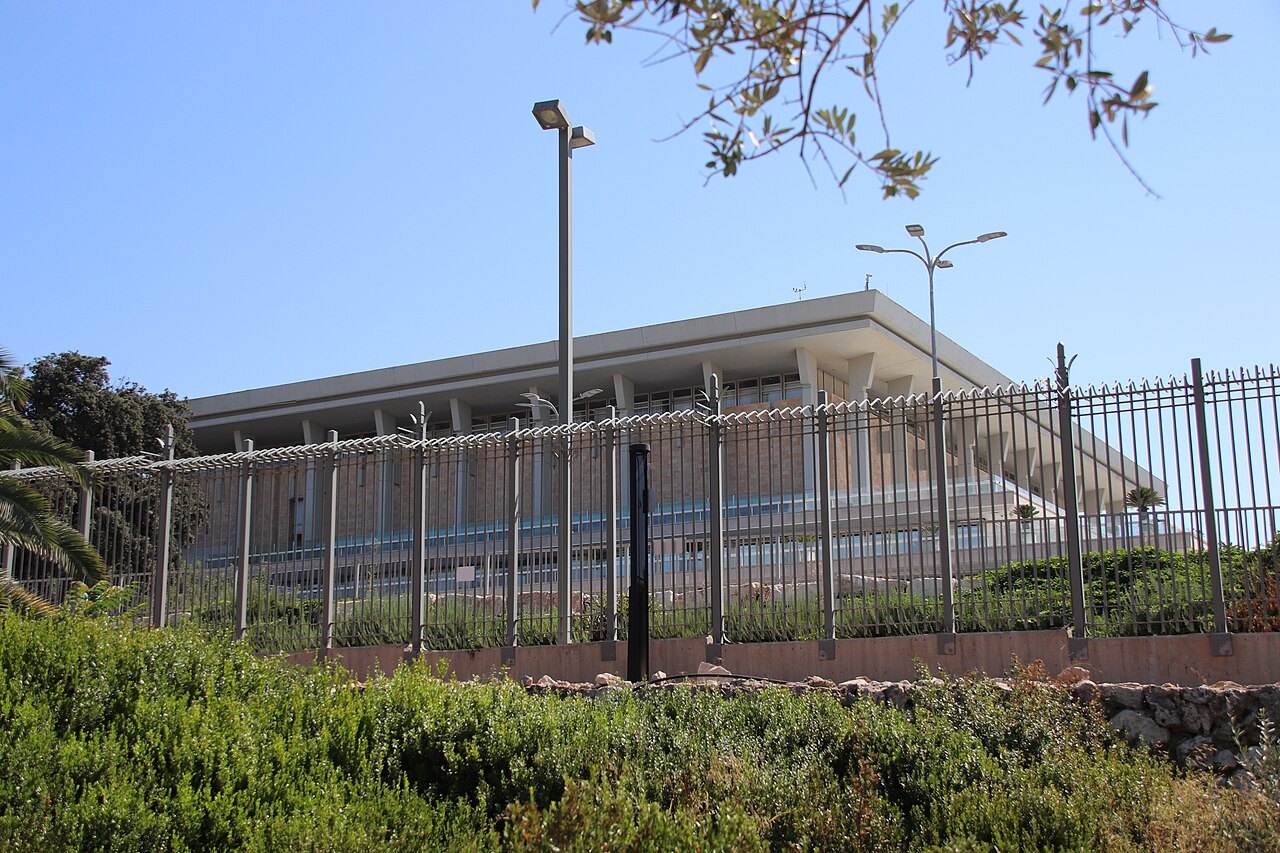
Israel’s election for the 26th Knesset on 27 October is the country’s first national vote under a legal duty to disclose AI-made campaign material, and some ballots are already cast. In about 30 hours of voting that ended on 16 October, 4,218 envoys, diplomatic staff and their families voted at 101 polling stations in 99 embassies and consulates, a turnout of 86.7 per cent against 69.6 per cent in 2022, according to a Central Elections Committee (CEC) statement reported by The Times of Israel. Soldiers begin early voting on the evening of 20 October, the paper added. The rules now govern the final eight days of a campaign in which, by the count of the Open University’s “Ze Be AI” project cited by The New Arab, 13 per cent of material published by politicians and parties was made with AI, and 70 per cent of that came from Likud.
The duty covers fakes that could pass as real, and runs out after a year
The obligation sits in section 2A2 of the Elections (Propaganda Methods) Law, 5719-1959, a temporary provision for this election. According to the CEC’s 26 July letter to Knesset factions and registered parties, signed by acting director-general Dean Livne, disclosure applies when material made or substantially edited with advanced digital tools, AI included, shows a person, place, event, document or object that might look genuinely recorded. The provision expires one year after polling day.
The mechanics are in the Elections (Propaganda Methods) (Compliance with the Disclosure Duty for Deep-Semblance Election Propaganda) Rules, 5786-2026, published in Kovetz HaTakanot 12484 on 26 July and signed by Justice Noam Sohlberg, Deputy President of the Supreme Court and CEC chair. A label is a written statement that the content, or a named part, was digitally generated or materially altered, or a prescribed symbol. On images it must be at least 5 per cent of the content’s height or 10 points, whichever is larger; in video it stays on screen throughout; audio must announce itself at start and end. A compliant label is presumed to satisfy the law. The rules apply to material first published on or after 26 July and set no penalty; enforcement so far has run through petitions to the chair.
Four rulings show where the chair draws the line
- 26 July. In Election Petitions 73/26 and 74/26, Sohlberg ordered minister Bezalel Smotrich and his Religious Zionism party to delete a 20-second clip containing an AI scene of Gadi Eisenkot shaking hands with Mahmoud Abbas, with NIS 5,000 costs to each petitioner. The clip predated section 2A2, so the ruling rested on the older ban on unfair interference. A caption disclaimer failed: on phones it sat behind a “more” tap, unseen by most viewers.
- 6 August. On a Likud petition, he ordered Eisenkot to remove a video using AI-generated IDF soldiers, under the permanent bar on using public assets in campaigning, Ynetnews reported.
- 11 August. He dismissed a petition against minister Shlomo Karhi, holding that the labelling duty does not extend to party primaries and that a drawing of judges was plainly not a real record, according to Channel 14.
- 1 October. He rejected two petitions against a Religious Zionism video depicting Supreme Court President Isaac Amit and Attorney General Gali Baharav-Miara being dragged by police. He called it “distasteful and bitter” but wrote that “the video will stand for the judgment of the voter, not the judgment of election law,” Ynetnews reported.
The pattern: realistic fabrications and misuse of state assets come down; obvious caricature stays up, however offensive; a buried disclosure cures nothing. No later AI ruling had been reported in English or Hebrew coverage checked to 18 October.
Speed, not the label, is the weak point
The 26 July order came a month after the Smotrich clip was posted on 23 June. Speaking generally about AI content that spreads before any ruling, Reichman University political analyst Tal Elovits told The New Arab: “So the damage was already done even before the committee was able to discuss if it’s illegal.” Asked about a hypothetical fake of a candidate withdrawing, released shortly before polling day, Livne told The Jerusalem Post: “We deal with the big platforms.” The committee, he said, works with the security authorities and the Cyber Agency, can seek removal of false material, and can warn voters.
What to watch before and after 27 October
Watch how fast final-week petitions are decided, and whether a polling-day fake tests Livne’s platform channel. After the count, the question is whether the Knesset makes section 2A2 permanent before it lapses. For other election bodies, Israel offers a compact model: a narrow trigger, measurable label specifications and a judge empowered to order removal. Its limits are visible too: enforcement depends on rivals petitioning, and rulings can trail the spread. Brazil’s electoral court has made a similar move from bans towards disclosure. For the law’s background, see AI & GPP’s earlier explainer on Israel’s first deepfake law.
Sources
- Israeli emissaries abroad end voting, with turnout 17 percentage points higher than 2022 — The Times of Israel, 16 October 2026
- How AI is becoming a new battleground in Israel’s election — The New Arab, 29 September 2026
- Rules on labelling election propaganda created or edited with technological means and AI (letter to factions and parties, ref. 2026-000214) — Central Elections Committee for the 26th Knesset, 26 July 2026 (PDF; in Hebrew; translation by AI & GPP)
- Elections (Propaganda Methods) (Compliance with the Disclosure Duty for Deep-Semblance Election Propaganda) Rules, 5786-2026, Kovetz HaTakanot 12484 — Reshumot (Official Gazette), via the Central Elections Committee, 26 July 2026 (PDF; in Hebrew; translation by AI & GPP)
- Decision in Election Petitions 73/26 and 74/26 — Chairman of the Central Elections Committee for the 26th Knesset, 26 July 2026 (PDF; in Hebrew; translation by AI & GPP)
- Sohlberg accepts Likud’s petition: orders Eisenkot to remove AI-generated video featuring soldiers — Ynetnews, 6 August 2026
- Solberg rejects petition against Karhi: AI video did not violate election law — Channel 14, 11 August 2026 (in Hebrew; translation by AI & GPP)
- Solberg on AI video published by Smotrich: ‘Distasteful and bitter – but no grounds for disqualification’ — Ynetnews, 1 October 2026
- AI, fraud, and cyberattacks: What security threats face Israel’s 2026 election? — The Jerusalem Post, 2 October 2026
Elections & Democracy desk · 19 October 2026
Discussion
No comments yet. Start the conversation.