Brasília Holds Its Server-Farm Tax Break Until the Run-Off
Brazil enacted its Redata tax break for data centres in September, then stopped. With the regulating decree reportedly held up by the 25 October run-off, part of the incentive's own clock is already running down.
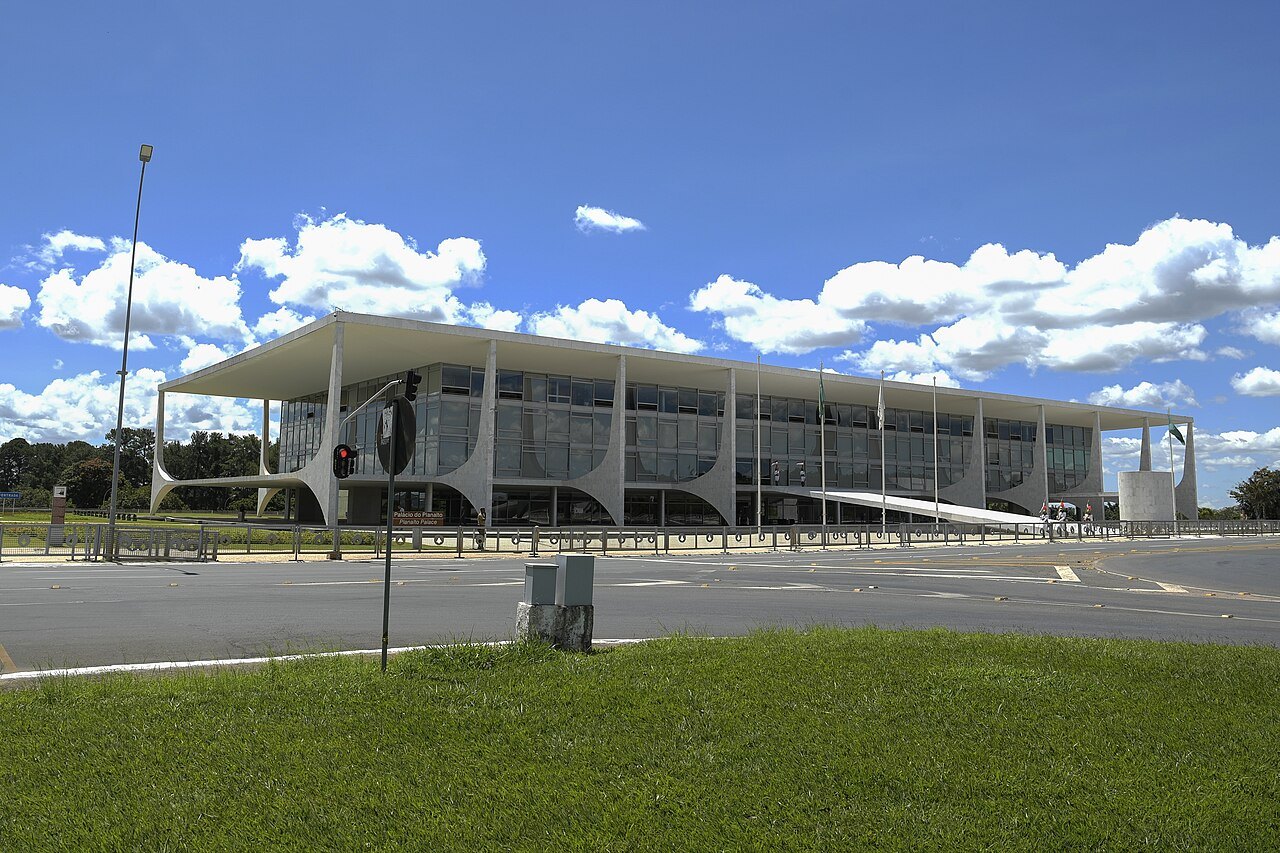
On 15 September 2026 Brazil’s president signed Lei nº 15.504, creating the Special Tax Regime for Datacenter Services (Redata). A month later no company can use it, because the law leaves almost every operative detail to an unpublished regulation. NeoFeed reported on 15 October that the decree is stuck in the Casa Civil, the presidency’s co-ordinating ministry, while the government fights the run-off between Luiz Inácio Lula da Silva and Senator Flávio Bolsonaro, due on 25 October. The same day, 32 business associations and nine parliamentary fronts published an open letter, “Presidente Lula, é hora de regulamentar o Redata”, demanding it.
What the law grants, and what it leaves to the decree
The statute suspends PIS/Cofins, IPI and import duty on ICT equipment bought by an approved data-centre operator. In return the operator must offer at least 10 per cent of its capacity to the domestic market (or invest a further 10 per cent in research), keep water-usage effectiveness at or below 0.05 litres per kWh, invest 2 per cent of the relieved goods’ value in research, and draw all its electricity from “fontes renováveis ou de baixa emissão” (renewable or low-emission sources), as the regulation will define. Eligible goods are set by executive act, and once issued that list can only be extended.
Gas is the fault line inside the government
On signing day, Rogério Ceron, executive secretary of the Ministry of Finance, said an interministerial ordinance would settle what “low-emission” covers and that a first decree would follow that week, Poder360 reported. It did not. Finance then promised the decree for the end of September, according to NeoFeed; the Mines and Energy and Development ministries favour letting natural gas qualify, while Finance wants only clean sources such as hydro, wind and solar.
Signatories of the letter include Brasscom, Conexis Brasil Digital, ABDIB and gas and nuclear bodies such as Abegás and ABEN, according to Telesíntese. They propose publishing the core parameters now and leaving unresolved points to later acts, with gas and nuclear eligible. Narrowing supply options, they argue, would raise transmission and emergency-generation costs borne by all grid consumers, Cenário Energia reports.
What delay buys a government, and what it costs
The government earlier conceded that the R$5.2bn budgeted for the programme this year could ease the fiscal target if Congress failed to pass the bill, NeoFeed reports. A hasty goods list cannot be narrowed later. And no government wants to adjudicate gas against renewables in a campaign’s final days.
The cost is written into the statute. Article 11-J gives the incentives five years, but states that the PIS/Cofins and IPI suspensions take effect only until 31 December 2026, under Brazil’s consumption-tax reform. Since approval depends on the regulation, every week without it is a week of that window no investor can use. Executives expect sign-ups only next year, according to NeoFeed, which puts the waiting investment at about R$90bn over five years from 2027, a sector estimate. Tatiana Ribeiro of Movimento Brasil Competitivo told the outlet “O Brasil perdeu uma janela importante” (“Brazil has lost an important window”).
Mexico shows the other bottleneck: the grid
A Banamex report, carried by EFE on 14 October, projects data-centre IT load rising from 279MW installed, with 205MW under construction, to about 1,730MW by 2031; run continuously with cooling, that would draw about 18.2TWh a year, some 6 per cent of 2025 final electricity consumption. The bank says the grid operator, the Centro Nacional de Control de Energía (Cenace), acknowledges connection delays without costly developer-funded reinforcements, and that the 2025 electricity reform, which reserves at least 54 per cent of injected energy for the state, raises regulatory risk. The capacity figures match those the Mexican Data Center Association (MEXDC) gave in September on agreeing weekly technical meetings with the state utility, the Comisión Federal de Electricidad (CFE), DPL News reported, so the projection is effectively the industry’s own. President Claudia Sheinbaum said on 18 August that Mexico needs data centres for AI but need not host other regions’ data, citing power and water, Xataka México reported. Mexico is also consolidating state AI rules into one federal law.
What to watch after 25 October
Three signals matter: whether a decree reaches the Diário Oficial soon after the run-off, split or whole; how the ordinance defines “low-emission”, given Poder360’s report that conditions such as carbon-credit purchases were under discussion; and the first goods list, which sets a floor that can only rise. In Mexico, watch Cenace connection times and the three proposed CFE–MEXDC pilot projects, according to EFE. For capitals where data-centre policy trails the projects, as in Canada, the lesson is that energy terms left to regulation hand the decisive choice to whoever controls the calendar. Investors should assume little of Brazil’s 2026 PIS/Cofins and IPI window will be usable.
Sources
- Lei nº 15.504, de 15 de setembro de 2026 — Câmara dos Deputados (Legislação Informatizada), 15 September 2026 (primary; text as published in the Diário Oficial da União; in Portuguese)
- Foco eleitoral do governo trava Redata na Casa Civil e congela R$ 90 bi de investimentos em data centers — NeoFeed, 15 October 2026 (in Portuguese; translation by AI & GPP)
- Em que dia é o segundo turno entre Flávio Bolsonaro e Lula? Veja horário e quem vota — Bloomberg Línea, 5 October 2026 (in Portuguese)
- Política para data centers deixa de fora regra sobre fontes de energia — Poder360, 15 September 2026 (in Portuguese; translation by AI & GPP)
- Setores de telecom, tecnologia e energia pressionam Lula por decreto do Redata — Telesíntese, 15 October 2026 (in Portuguese)
- Redata: setor cobra decreto de Lula e defende gás natural no suprimento de data centers — Cenário Energia, 15 October 2026 (in Portuguese)
- Centros de datos en México multiplicarían por seis su demanda eléctrica, advierte Banamex — Infobae (EFE), 14 October 2026 (EFE wire; in Spanish)
- CFE y MEXDC coordinarán acciones para atender demanda eléctrica de Centros de Datos — DPL News, 11 September 2026 (in Spanish)
- Claudia Sheinbaum: “México no debe ser el centro de datos de otros países” — Xataka México, 19 August 2026 (in Spanish)
Discussion
No comments yet. Start the conversation.