Brazil Orders Meta’s AI to Treat Both Candidates Alike
Nine days before the run-off, Brazil's electoral court put Meta's ranking systems and its AI assistant under a parity duty, with a two-hour human-review clock, and wrote a test for when a WhatsApp channel belongs to a campaign.
Key points
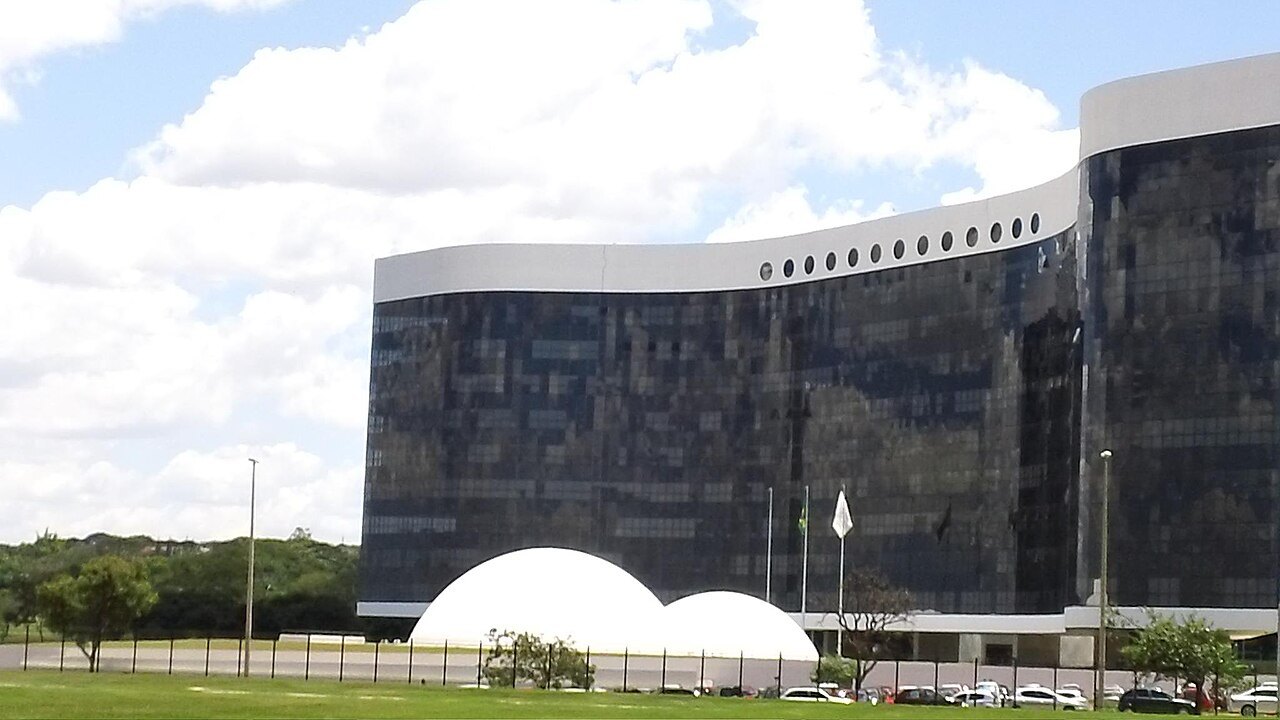
- On 16 October 2026 Brazil’s Superior Electoral Court (TSE) unanimously upheld an order requiring Meta to treat Luiz Inácio Lula da Silva and Flávio Bolsonaro identically, Meta AI included, until the 25 October run-off, under a R$500,000 daily fine.
- Meta admitted four technical faults, including a Meta AI filter gap that produced images promoting Flávio Bolsonaro while refusing similar prompts about Lula; the judge found nothing to show it was deliberate.
- The same day the TSE added Articles 33-E to 33-G to Resolution 23.610/2019, a six-criterion test for when a messaging channel belongs to a campaign, with repeat carriers of manipulated content liable to be taken offline.
Nine days before Brazil’s presidential run-off, its electoral court told a technology company that a generative-AI assistant owes candidates the same even-handedness as a news feed. On 15 October substitute minister Marco Aurélio Bellizze ordered Meta to treat the campaigns of President Lula and Senator Flávio Bolsonaro identically across its platforms and to apply strictly identical criteria to Meta AI, Gazeta do Povo reported. The next day the full court upheld the order unanimously, according to DW’s live report, republished by O Povo.
The same week the court wrote a rule for campaign-linked WhatsApp channels and removed AI-generated videos from both camps. Together they show an election authority regulating how platforms rank, block and generate political material, not only what candidates publish.
What the court told Meta to do, and on what clock
As Gazeta do Povo summarises it, the injunction bars Meta from reducing delivery, restricting search or altering metrics for either candidate’s content, except under policies published in advance and applied identically, electoral rules or court orders. Meta may not disable a run-off campaign’s ad account or block its boosts without prior human analysis; any automated restriction must be reviewed by a person within two hours. Paid boosting that Lula’s campaign bought but did not receive must be restored by 21 October. Meta AI must not generate campaign material for or against either candidate: a chatbot now carries the same parity duty as a ranking algorithm.
The order has limits. Bellizze refused to force a restoration of organic reach, holding that the law guarantees equal rules, not equal audiences. The urgency was the calendar: Agência Brasil quoted him noting that legal bars on new synthetic content and paid boosting start on 22 October, and that “eventual falha nesse intervalo não poderá ser reparada após o pleito” (any failure in that window cannot be repaired after the vote).
Meta’s four faults, and what the court did not find
Meta’s statement, reported by Exame on 16 October, lists four episodes. On 23 September Lula’s ad account was wrongly disabled for just over an hour by an anti-fraud review that Meta says ran under a 13 April 2026 agreement with the Advocacia-Geral da União (AGU), the government’s legal service. On 7 October a global fault corrupted Reels view counts; on 9 October a code update blocked boosting of existing Instagram posts. On 14 October Meta AI generated promotional images of Flávio Bolsonaro while refusing comparable requests about Lula.
That last episode is a lesson in brittle guardrails. The filters caught full names but not every pairing of a common first name with a ballot number; Meta says “Luiz” plus Lula’s number also slipped through, and that it closed the gap the same day. It denies bias, saying its systems “não classificam nem distribuem conteúdo com base em ideologia política” (do not rank or distribute content based on political ideology).
Bellizze largely accepted that. Agência Brasil reports his preliminary finding that the prompt-control tool failed but that nothing showed the failure was deliberate or systematic; the order is preventive, Exame’s explainer stresses. Lula’s coalition values its rival’s alleged excess views at a hypothetical R$7.44m and has asked electoral prosecutors and the Federal Police to investigate.
What Meta hands the court is thin. Its 12 October filing, according to Revista Fórum, had not yet supplied data on restrictions applied to Lula’s official profiles since 16 August, and examined only 35 of 255 profiles alleged to form an AI-driven network, as the full list was not supplied, deactivating seven.
A written test for when a channel belongs to a campaign
The second front is WhatsApp. TSE president Kassio Nunes Marques suspended the “Exército do Lula” channel, run by deputy André Janones (Rede-MG), on 11 October; the corregedor-geral, Ricardo Villas Bôas Cueva, provisionally restored it. On 13 October Nunes Marques suspended it again because it had not been registered as a campaign address. His decision in Petição Cível 0602791-73.2026.6.00.0000 records that the court’s disinformation unit, in the posts it could examine from 2 to 11 October, found no reposting of claims the court had already ruled on, but describes centralised direction, “missões” (missions) for followers, some with set deadlines or times, and a potential audience of about 3.3 million. It ordered WhatsApp’s Brazilian representative to monitor the channel and other large public channels identified by the campaigns for material already under removal orders, and to report within 24 hours on its detection methods and safeguards.
On 16 October the plenary turned the dispute into a rule. The Instrução, with vice-president André Mendonça as rapporteur, adds Articles 33-E to 33-G to Resolution 23.610/2019 on electoral propaganda. A channel is campaign-linked if any one of six criteria applies: campaign funds; campaign staff or habitual supply of campaign audio, video, images or scripts; campaign technical support; its link on official campaign profiles; systematic, coordinated redirection of followers to official channels; or campaign direction of content, frequency or goals. Spontaneous supporter channels and one-off mentions do not qualify, and the link must rest on an “objectively verifiable” element. Operators and linked campaigns owe a duty of care over what the channel carries, and a channel that repeatedly carries material banned by Article 9º-C, the resolution’s rule on fabricated or manipulated content, can be taken offline, the TSE explained.
On 17 October Nunes Marques let Lula’s campaign withdraw the registration it had filed under protest, saying this “não antecipa qualquer conclusão” (anticipates no conclusion) on whether the channel is linked, O Tempo reported, putting the channel’s following at 4.9 million.
Unlabelled AI content comes down, whichever side it helps
On 13 October the plenary unanimously ordered the Partido Liberal to remove an AI-made video simulating a prison handshake between Lula and an arrested former deputy, the TSE reported. The rapporteur, Estela Aranha, cited case law against tying candidates to crime without basis; Floriano de Azevedo Marques and Mendonça relied instead on Article 9º-C §1, which bars AI simulation of a candidate. “A informação aqui em si não é falsa” (the information itself is not false), Mendonça said; the illegality lay in the AI. The same day Bellizze ordered the Advogado-Geral da União, Jorge Messias, to delete an unlabelled AI-generated pro-Lula video, Poder360 reported; the post carried no label, watermark or audio warning, and a wider ban was refused.
That fits the line traced in Brazil’s Election Court Trades Bans for Disclosure and extends the shift described in Brazil’s Election Court Became Its AI Regulator: the court now writes duties for the systems that distribute and generate content, not only for those who post it.
What to watch before 25 October
| Date | Instrument | What it requires |
|---|---|---|
| 13 Oct | Presidency decision, PET 0602791-73 | Proactive monitoring of large public WhatsApp channels; report within 24 hours |
| 13 Oct | Plenary, Representação 0600695-85 | Removal of AI video simulating Lula |
| 15 Oct | Bellizze injunction | Equal criteria incl. Meta AI; human review within two hours; R$500,000 a day |
| 16 Oct | Plenary; Instrução (Arts 33-E–G) | Order upheld unanimously; six-criterion channel test |
| 21 Oct | Bellizze injunction | Lula’s undelivered boosting restored |
| 22 Oct | Statutory bars, per Bellizze | No new synthetic content or paid boosting |
| 25 Oct | Run-off | Parity order expires |
Table built by AI & GPP from TSE documents and Gazeta do Povo, Agência Brasil and Exame reporting.
Watch whether Meta certifies the 21 October restoration, how the plenary classifies Exército do Lula under Article 33-E, and whether anyone tests Article 33-G’s takedown power. Israel, voting on 27 October under its first deepfake law, is the nearest comparison. For platforms, the lesson is that name-matching is not parity: assistants need testing against nicknames, ballot numbers and both sides’ prompts before polling day, and automated ad blocks need a human able to reverse them within hours.
Questions this answers
What did Brazil’s electoral court order Meta to do before the 2026 run-off?
Identical criteria for Lula and Flávio Bolsonaro on its platforms and in Meta AI, human review of automated ad restrictions within two hours, and restoration of Lula’s undelivered boosting by 21 October, under a R$500,000 daily fine. The plenary upheld it unanimously on 16 October (Exame).
Did the TSE find that Meta deliberately favoured Flávio Bolsonaro?
No. Substitute minister Marco Aurélio Bellizze found preliminarily that Meta’s prompt-control tool failed but saw no evidence the failure was deliberate or systematic (Agência Brasil).
When does a WhatsApp channel count as part of a Brazilian campaign?
Under Article 33-E of Resolution 23.610/2019, added on 16 October, when any one of six criteria is met, from campaign funding to campaign direction of content. Spontaneous supporter channels do not qualify (TSE).
Sources
- TSE atende campanha petista e impõe regras à Meta para garantir isonomia entre Lula e Flávio — Gazeta do Povo, 15 October 2026 (in Portuguese; translation by AI & GPP)
- TSE mantém ordem para Meta garantir isonomia a Lula e Flávio nas plataformas — O Povo, 18 October 2026 (DW live blog republished by O Povo; entry of 16 October; in Portuguese; translation by AI & GPP)
- TSE determina isonomia após IA da Meta barrar imagens de Lula — Agência Brasil, 15 October 2026 (in Portuguese; translation by AI & GPP)
- Meta admite que IA liberou geração de propaganda sobre Flávio e bloqueou sobre Lula — Exame, 16 October 2026 (in Portuguese; translation by AI & GPP)
- Lula x Flávio Bolsonaro: entenda as acusações contra a Meta às vésperas do 2º turno — Exame, 17 October 2026 (in Portuguese; translation by AI & GPP)
- Meta diz ter cumprido ordem do TSE, mas admite que ainda não entregou dados sobre restrições a Lula — Revista Fórum, 13 October 2026 (in Portuguese; translation by AI & GPP)
- Decisão, Petição Cível 0602791-73.2026.6.00.0000, Min. Nunes Marques — Tribunal Superior Eleitoral, 13 October 2026 (PDF of the decision as published by Poder360; in Portuguese; translation by AI & GPP)
- Instrução nº 0600751-65.2019.6.00.0000, alteração da Resolução TSE nº 23.610/2019 (arts. 33-E a 33-G) — Tribunal Superior Eleitoral, October 2026 (PDF; in Portuguese; translation by AI & GPP)
- TSE define critérios para caracterizar canais de mensagens que devem ou não ser registrados pelas campanhas — Tribunal Superior Eleitoral, 16 October 2026 (in Portuguese; translation by AI & GPP)
- Nunes Marques autoriza Lula a desvincular canal ‘Exército do Lula’ da campanha — O Tempo, 17 October 2026 (in Portuguese; translation by AI & GPP)
- TSE determina remoção de vídeo produzido com IA que associa Lula a crime organizado — Tribunal Superior Eleitoral, 13 October 2026 (in Portuguese; translation by AI & GPP)
- TSE manda Messias apagar vídeo feito com IA a favor de Lula — Poder360, 14 October 2026 (in Portuguese; translation by AI & GPP)
Discussion
No comments yet. Start the conversation.