The 0.64 Setting: One Number Carries the Fairness Case
Britain's Immigration Enforcement will raise facial recognition alerts only at a similarity score of 0.64, and its equality case rests on that setting. The testing behind it shows what the number buys, and what it costs in missed matches.
Key points
- Version 2.3 of the Home Office’s live facial recognition policy for Immigration Enforcement, published on 8 October 2026, keeps alerts at a face-match threshold of 0.64. At that setting, National Physical Laboratory testing recorded no false positives in any demographic group.
- In the same NPL testing, the system correctly recognised watchlisted people at 79 per cent of opportunities at 0.64, against 85 per cent at 0.60 under the same settings. Neither Home Office document reports the 0.64 figure.
- The policy says Immigration Enforcement “may” publish deployment figures, including the threshold used and the false alert rate. The equality impact assessment updated on 5 October says it will publish faces processed, confirmed matches and false alerts.
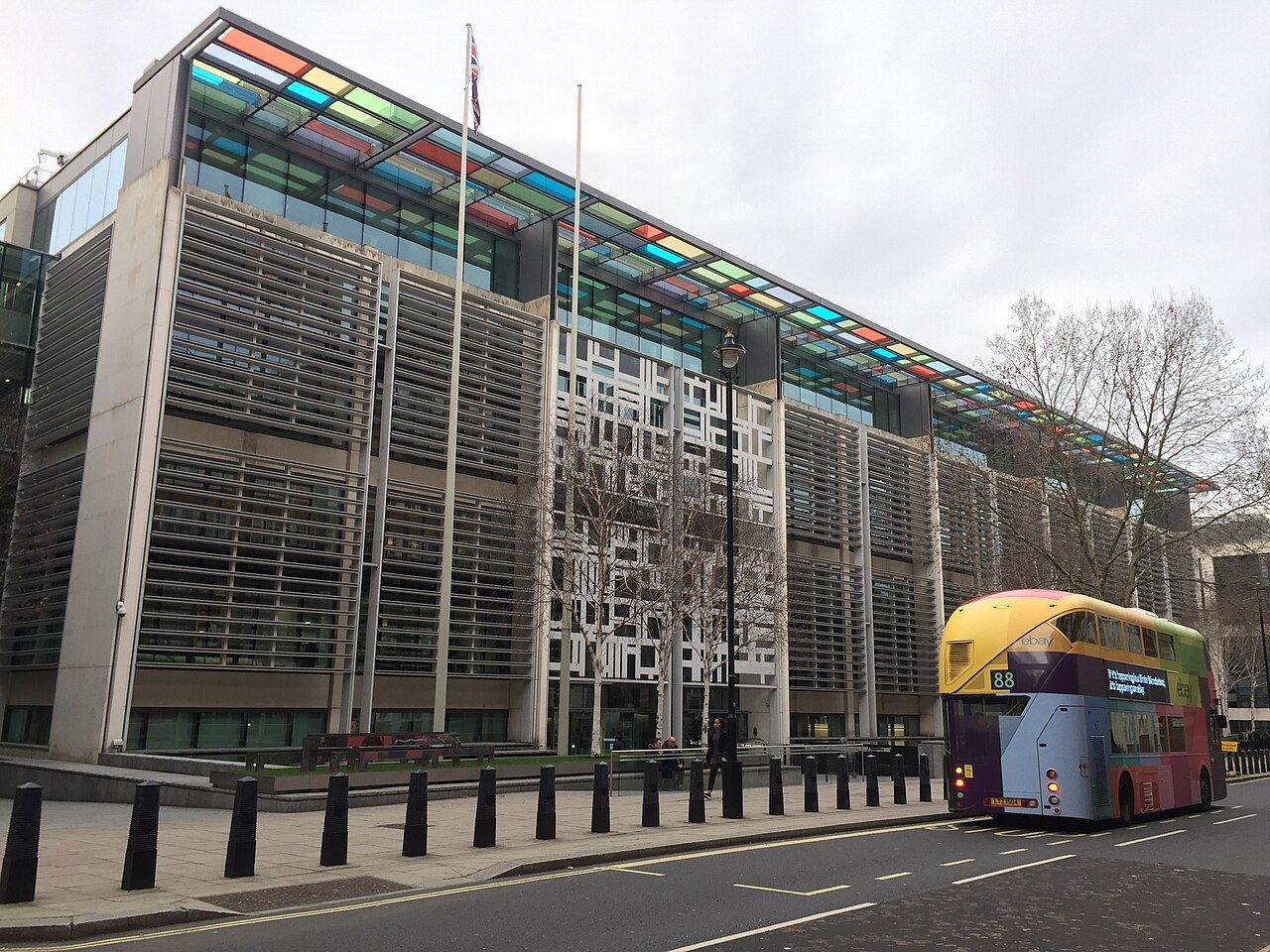
On 8 October 2026 the Home Office published version 2.3 of its Immigration Enforcement facial recognition policy, signed off by its senior responsible officer on 28 September. Three days earlier it had republished the equality impact assessment for live facial recognition. Both rest on one number. Cameras will flag a passer-by only when the software scores their face 0.64 or higher against a watchlist image, and the assessment cites that setting again and again as the answer to concerns about race, sex and age. The setting is not new: the policy says Immigration Enforcement “will continue to use a threshold of 0.64”. This piece goes back to the test report behind the number and shows what it trades away.
A threshold decides which errors the public will bear
Live facial recognition turns each face in a camera’s view into a numerical template and compares it with templates of people on a watchlist. Every comparison yields a similarity score. The threshold is the cut-off above which the system raises an alert for a human operator. The policy’s glossary says it must be set to maximise true alerts “while keeping the false alert rate to an acceptable level”.
That is a trade with two sides. Lower the threshold and more watchlisted people are flagged, but more strangers are wrongly matched. Raise it and false alerts fall, but more of the people being sought walk through unflagged. No setting removes both errors; choosing one is a judgement about which mistake matters more, and for whom.
The Home Office’s choice rests on NPL Report MS 43, the Facial Recognition Technology in Law Enforcement Equitability Study. The National Physical Laboratory published it in March 2023 after testing the system the Metropolitan Police and South Wales Police use, across five deployments in 2022. NPL found that at thresholds of 0.58 and 0.56, false positives showed a statistically significant imbalance, with more Black subjects falsely matched. At 0.64 and above it observed no false positives at all. The assessment draws its conclusion directly: Immigration Enforcement “will use a setting that exceeds the NPL recommended threshold and is the same as that applied by policing.”
The cost of 0.64 sits in a table the policy does not reproduce
The policy reprints NPL’s results only at 0.60: a recognition rate of 89 per cent and an anticipated false alert rate of about one in 6,000 against a 10,000-image watchlist. NPL’s Table 5 goes further, giving rates at five thresholds, and it shows the price of the higher setting. At 0.64 the observed true positive identification rate was 79 per cent. Under the same face-detection settings it was 85 per cent at 0.60 and 94 per cent at 0.56. (The 89 per cent figure the policy quotes comes from a slightly looser face-detection setting.)
Worked example (illustrative figures). The rates below come from NPL Report MS 43, Table 5 (face-detection setting “a”, with false alert rates scaled by NPL to a 10,000-image watchlist). The volumes are invented by AI & GPP and describe no real deployment: 100,000 faces scanned, and 100 passes by people who are on the watchlist.
| Threshold | Recognition rate (NPL) | Watchlisted passes missed, of 100 | False alert rate, 10k watchlist (NPL) | False alerts, of 100,000 faces |
|---|---|---|---|---|
| 0.56 | 94% | 6 | 0.065% | about 65 |
| 0.58 | 88% | 12 | 0.027% | about 27 |
| 0.60 | 85% | 15 | 0.014% | about 14 |
| 0.62 | 82% | 18 | below 0.004% | fewer than 4 |
| 0.64 | 79% | 21 | below 0.004% | fewer than 4 (none observed in testing) |
Three things follow. First, at 0.64 roughly one recognition opportunity in five for a watchlisted person produced no alert in testing. That figure appears in neither Home Office document. Second, the step from 0.62 to 0.64 gave up three points of recognition to remove the false positives of a single test subject, who was falsely matched on two occasions. Third, “zero” is a finding about the sample, not a guarantee. NPL tested 4,000 non-mated recognition opportunities, and its table gives the anticipated rate at 0.64, for a 10,000-image watchlist, as below 0.004 per cent: an upper bound, not nil. The assessment’s “0.0 for all demographic groups” is accurate about the test, not a prediction for a busy station concourse.
The policy’s own benchmark is looser still. It says operational experience suggests the false alert rate should in most scenarios be 0.1 per cent or less, 25 times NPL’s estimated bound.
Who carries the misses is reported only at 0.60
The fairness evidence is also reported at a different setting from the one in use. NPL’s demographic breakdown of recognition rates is published at 0.60. At that threshold the rate was 83 per cent for under-20s, 89 per cent for 20 to 41-year-olds and 93 per cent for those aged 42 and over, a statistically significant gap. NPL partly attributes it to height and crowding, since shorter subjects were hidden from the camera. The equality assessment accepts that the system may be likelier to flag older watchlist subjects correctly than younger ones. Its mitigation is to run at 0.64. Yet no age breakdown at 0.64 is published, so readers cannot see whether the higher setting narrows the age gap or simply lowers every group’s rate.
Statistical significance hides a second threshold. In NPL’s Table 7, Black women had a recognition rate of 83 per cent at 0.60, against 90 per cent for the other ethnicity-gender groups, with a p-value of 0.051. That is just outside the conventional 0.05 line, so it is reported as no significant difference. Both conventions are defensible, but both are choices. The US National Institute of Standards and Technology made the general point in its 2019 study of demographic effects, NISTIR 8280. Because most systems run at a fixed threshold, it said, both error rates must be reported “for each demographic group at that threshold”. It added that the tolerable size of such differences “has never been formally specified in any biometric application”. In other words, 0.64 is a policy choice. The software cannot decide how much of each error is acceptable.
Elsewhere, the number to argue about is missing
Britain at least publishes a number. On 10 October a Delhi Police official on duty at a Jantar Mantar march was seen in a pair of Ray-Ban Meta AI glasses. The sighting was first reported by Indian Express Hindi, according to MediaNama, whose own journalist saw two officers near Connaught Place apparently wearing smart glasses at vehicle checkpoints. MediaNama’s report carries no comment from the police. The Software Freedom Law Center warned of surveillance “in the absence of public disclosures” about purpose and safeguards. Nothing in the reporting points to a published policy, threshold or assessment that outsiders could test.
Three days later the European Data Protection Board published Statement 1/2026 on smart glasses. The statement, adopted on 13 October, says a wearer using the device for “official, professional, political or other non-personal activities” counts under the GDPR as a controller, or joint controller, bound by all its obligations, “notably transparency”. It also warns that pairing the glasses with facial or voice recognition “poses a high risk to the rights and freedoms in public spaces”.
Canada shows the limits of disclosure even where it happens. On 29 September the Canadian Food Inspection Agency published an algorithmic impact assessment for its ERA-Food risk model, which has been automated since April 2021. The model sets inspection priorities by weighting 16 risk factors, and it sorts establishments into seven risk categories on a logarithmic scale, so its cut-points are thresholds too. The assessment says a pre-launch exercise set out to estimate agreement with senior inspectors, but it reports no agreement figure. Its main performance indicator measures data coverage, not accuracy. Its fairness check used one proxy, whether an establishment supplies vulnerable groups, and found no systematic difference. As AI & GPP argued in What an AI Register Should Actually Record, publishing a document is not the same as publishing the numbers that let someone check it.
What decision-makers should ask for at any threshold
The Home Office documents also disagree about publication. The policy says Immigration Enforcement “may publish summary information about deployments”, including the minimum threshold authorised and the false alert rate. The equality assessment says it will publish the number of faces processed, confirmed matches and false alerts. As Deployment Before Law: Britain’s AI Governance Gap reported on 1 October, no statute is written specifically for live facial recognition, so commitments in guidance carry more weight.
Any authority setting a similarity threshold, whether for faces, fraud or inspection risk, should publish four things: the threshold, both error rates at that threshold, the same rates broken down by demographic group at that setting, and the sample size behind any claimed zero. Watch for Immigration Enforcement’s first deployment summaries, and for whether they report missed alerts measured with its “Blue Watchlist” of volunteer staff as well as false ones. The equality assessment is due for review on 7 September 2027.
Questions this answers
What face-match threshold does UK Immigration Enforcement use for live facial recognition?
It uses 0.64. Below that similarity score, the system raises no alert. The equality impact assessment says this is above NPL’s recommended minimum of 0.6 and matches the setting police forces use.
Does a higher facial recognition threshold make the system fairer?
It removes false matches, which at lower settings fell more often on Black subjects. But it also lowers the rate at which wanted people are recognised: from 85 to 79 per cent between 0.60 and 0.64 in NPL’s testing. Demographic recognition rates at 0.64 are not published.
Will the Home Office publish facial recognition deployment results?
The policy, version 2.3, says it “may” publish summaries, including the threshold and false alert rate. The equality assessment says it will publish faces processed, confirmed matches and false alerts.
Sources
- Immigration Enforcement facial recognition policy (version 2.3) — Home Office, updated 8 October 2026
- Live facial recognition: equality impact assessment (EIA) — Home Office, updated 5 October 2026
- Facial Recognition Technology in Law Enforcement Equitability Study, NPL Report MS 43 — National Physical Laboratory, March 2023 (PDF)
- Face Recognition Vendor Test (FRVT) Part 3: Demographic Effects, NISTIR 8280 — National Institute of Standards and Technology, December 2019 (PDF)
- Delhi Police spotted with Meta AI glasses during Oct 10 protest, compounding privacy concerns — MediaNama, 12 October 2026
- EDPB publishes statement on the data protection challenges of smart glasses — European Data Protection Board, 13 October 2026
- Statement 1/2026 of the EDPB on smart glasses — European Data Protection Board, adopted 13 October 2026
- Algorithm Impact Assessment ERA Food model — Canadian Food Inspection Agency, Open Government Portal, record released 29 September 2026 (assessment dated August 2026)
Discussion
No comments yet. Start the conversation.