Washington’s $1 AI Era Is Over. Now Agencies Get the Meter
The promotional deals that put ChatGPT, Claude and Gemini on millions of federal desks for a dollar are expiring or turning into pay-per-use contracts. Agencies must now budget for AI as a running cost.
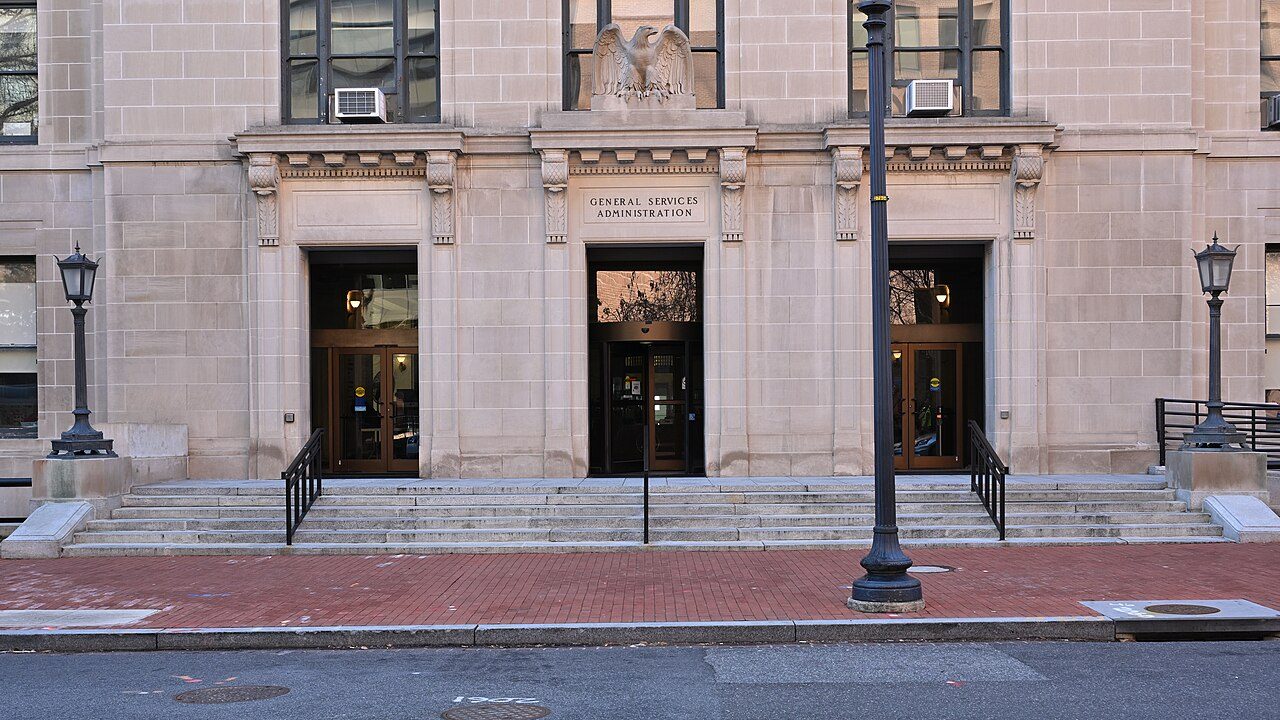
For a year, the US federal government enjoyed what may be the cheapest technology roll-out in its history. In August 2025 the General Services Administration (GSA), the government’s central buyer, struck “OneGov” agreements that gave agencies OpenAI’s ChatGPT Enterprise for $1 per agency for a year, Anthropic’s Claude for $1 across all three branches of government, and Google’s Gemini for Government for $0.47 per agency. Those offers were due to expire on 30 September 2026. The new fiscal year, which began on 1 October, marks the point at which generative AI stops being a promotion and starts being a line item.
What changed
OpenAI moved first. On 10 September GSA announced a 27-month agreement, effective from 1 October, offering a 50% discount on token-based usage across ChatGPT models, with no platform fees, minimum orders or spending commitments. Agencies pay only for what they use. The deal is also open to state, local and tribal governments.
The other two vendors bought time. Anthropic extended its $1 offer to 31 October, according to Nextgov/FCW, and Google extended Gemini at $0.47 per agency to 15 November. A GSA official told Nextgov that “OneGov is maturing from short-term promotional pricing toward direct contracts”.
GSA’s own AI platform has followed the same path. USAi, which lets agencies test and use models from several providers, launched free in August 2025. From September it carries a fixed platform fee, scaled to an agency’s size and expected workload, plus pass-through charges for model usage at cost. A GSA official told FedScoop the change lets the agency “meet the demand without relying on appropriations”. According to Nextgov, 25 agencies were using USAi as of June, with 16 more due to join by the end of 2026.
Why it matters
The scale is significant. GSA says its OneGov AI agreements have produced about $1.4bn in savings and reached roughly 3.5 million federal employees. That figure measures discounts against list prices; it does not measure what agencies will now spend.
The shift from flat fees to metered consumption changes the management problem. Under the $1 deals, adoption was effectively costless, so departments had every incentive to spread tools widely. Under token pricing, every additional query has a marginal cost, and heavy users, such as teams running large document reviews or building automated workflows, will drive bills that are hard to forecast a year ahead. Federal budget law does not allow agencies to spend beyond what Congress has appropriated, so finance officers will need usage caps, monitoring and chargeback arrangements that most did not need last year.
The cheapest phase of government AI was always going to be the first one; the expensive phase is the one in which agencies discover what they have come to depend on.
There is also a leverage question. Workflows, prompt libraries and staff habits built during a free year do not transfer cleanly between vendors. Agencies that standardised on one assistant now negotiate from a position of dependence, just as pricing moves from promotional to commercial.
What to watch
Three dates matter in the near term: Anthropic’s 31 October deadline, Google’s 15 November deadline, and whether either vendor follows OpenAI into a longer-term usage-based contract. Officials outside Washington should also note that the OpenAI terms extend to state and local governments, which may use the federal price as a benchmark in their own negotiations.
For senior leaders, the practical steps are familiar from cloud computing a decade ago: know which teams are using which models and for what, set spending ceilings before usage grows, insist on data-portability terms in new contracts, and treat a vendor’s introductory price as exactly that.
Latest, 19 October 2026: GSA's AI clause takes effect as agencies move to buy agents
Latest, 26 October 2026: The Agentic Civil Service Arrives, Rulebook Attached
Sources
- OpenAI to give federal agencies ChatGPT access at $1 per year — Nextgov/FCW
- After OpenAI, GSA strikes $1 government-wide AI deal with Anthropic — CDO Magazine
- GSA expands OneGov AI offerings with discounted, consumption-based access to OpenAI’s ChatGPT — GSA
- Anthropic extends $1 per user OneGov deal by a month — Nextgov/FCW
- Google extends Gemini OneGov deal into November — Nextgov/FCW
- Agencies now have to pay to use USAi — Nextgov/FCW
- USAi is no longer free for federal agencies, website update says — FedScoop
Discussion
No comments yet. Start the conversation.