California v Washington: The States Writing America’s AI Rules
Congress has not passed a federal AI law, and its preemption push has stalled. California is filling the gap with worker protections and auditor rules, while Colorado shows how far federal and industry pressure can roll a state back.
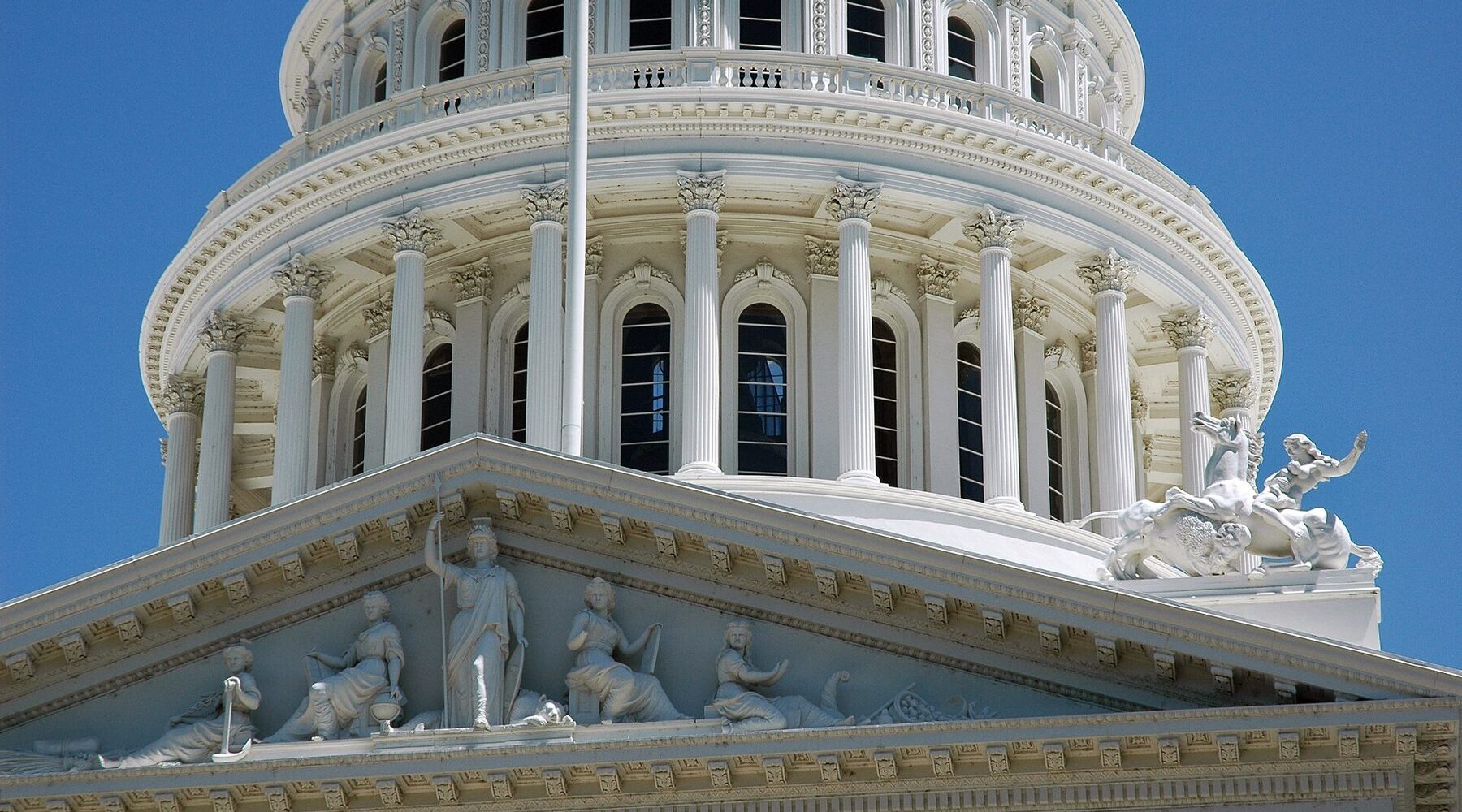
By the end of September, California’s governor had signed 13 artificial-intelligence bills in his final decisions of the 2026 legislative year. The most consequential, SB 947, known as the “No Robo Bosses Act”, bars employers from firing or disciplining workers on the strength of automated output alone and requires human review and notice. It takes effect on 1 July 2027. In Washington, meanwhile, the federal effort to stop states from doing exactly this has not produced a statute.
That asymmetry is now the defining feature of American AI governance. The rules that actually bind employers, insurers and public agencies are being written in state capitals. Federal influence is exercised through litigation, grant conditions and pressure, not through law passed by Congress.
California’s autumn package
Reporting by The Next Web and others, drawing on the governor’s announcements on 30 September, describes a package that goes well beyond SB 947. Alongside it, Gavin Newsom signed bills on emotion-recognition and neural-data surveillance in the workplace, deepfakes, digital replicas, notice of AI-driven layoffs, and AI transparency. He vetoed SB 1130, a bill on recording by smart glasses. The common thread is algorithmic decision-making about people at work, an area where California is setting the de facto national floor simply because so many employers operate there.
Earlier in the month, on 9 September, Newsom signed two bills that may prove more durable than any single prohibition. SB 813 creates “independent verification organizations” to assess AI systems for compliance with state law. AB 1405 creates a state registry of AI auditors, with standards for independence and integrity. The governor’s office described them as first-in-the-nation safeguards.
Together they sketch the beginnings of a third-party assurance market: accredited bodies that check whether a system does what its developer claims. Governments everywhere will need that kind of capacity to buy AI responsibly, and California has moved first to define who may provide it.
Washington’s preemption push
The federal response has followed a different path. In December 2025 an executive order created a Justice Department “AI Litigation Task Force” and linked broadband funding under the BEAD programme to the content of state AI laws, according to an analysis by Ropes & Gray. In June 2026 a House discussion draft, the “Great American AI Act”, proposed preempting state rules on model development for three years. It has not been formally introduced.
Opposition was quick. More than 200 state lawmakers, along with labour groups, came out against the draft in July, according to a tracker of the preemption fight. In September the Speaker of the House, Mike Johnson, was reported as saying Congress should not “panic” into AI regulation. The practical upshot is that, for now, compliance in the United States means following state law.
Colorado: the counter-example
Colorado shows what sustained pressure can achieve. Its AI Act, which targeted algorithmic discrimination, was widely seen as an “EU-style” state framework. In April 2026 xAI sued to block it, and the Justice Department intervened, in what Axios described as the first federal intervention against a state AI law. On 14 May Colorado repealed the law and replaced it with the narrower Automated Decision-Making Technology Act, SB 26-189, which centres on notice, disclosure, correction and human review. It takes effect on 1 January 2027.
Colorado is the template opponents of state AI laws will cite; California is the template its defenders will.
The case for a single national rule
The arguments for preemption deserve a fair hearing. Developers of large models sell into every state, and fifty different definitions of “high-risk” or “automated decision” impose real compliance costs, which fall hardest on smaller firms. Model development, as distinct from deployment, is difficult to regulate state by state without reaching across borders. A patchwork can also produce conflicting obligations, where satisfying one state’s transparency rule breaches another’s. Supporters of a federal approach argue that a single standard, even a lighter one, gives businesses certainty and keeps the United States competitive. The decision to target the House draft at model development, rather than at uses such as hiring, reflects that distinction.
The case for the states
State legislators answer that the federal alternative is, at present, nothing. Congress has not passed a comprehensive AI law, and a three-year freeze would leave workers and consumers without protections that states are ready to provide. States have traditionally regulated employment, insurance and consumer protection, and most of the new laws regulate those uses rather than the technology itself. California’s emphasis on human review, notice and independent audit is also, critics of preemption argue, largely procedural: it asks employers to explain and check decisions, not to stop using AI. Using grant money and litigation to discourage such laws, rather than legislating openly, raises questions about accountability of its own.
What to watch
- Whether the House draft is formally introduced, and whether its scope stays limited to model development.
- The first cases brought or joined by the Justice Department’s AI Litigation Task Force after Colorado.
- Regulations implementing California’s auditor registry, which will determine who qualifies as independent.
- Whether other states copy Colorado’s narrower model or California’s broader one before their 2027 sessions.
Sources
- US News/AP — California Gov. Gavin Newsom signs laws to protect workers from AI risks
- CNBC — Newsom AI bills
- The Next Web — No Robo Bosses Act, Newsom AI bills and smart-glasses veto
- SHRM — Newsom signs revamped No Robo Bosses Act into law
- Office of the Governor of California — First-in-the-nation AI safeguards
- Ropes & Gray — The federal push to override state AI regulation
- CASRAI — Federal AI moratorium and the state preemption fight
- Skadden — Colorado repeals and replaces its AI Act
- Axios — Justice Department joins xAI challenge to Colorado AI law
Discussion
No comments yet. Start the conversation.