Indonesia’s AI Rules Are Stuck on the President’s Desk
South-East Asia's largest economy has spent more than a year promising two presidential regulations on AI. What they contain, why they keep slipping, and the gaps critics say they leave open.
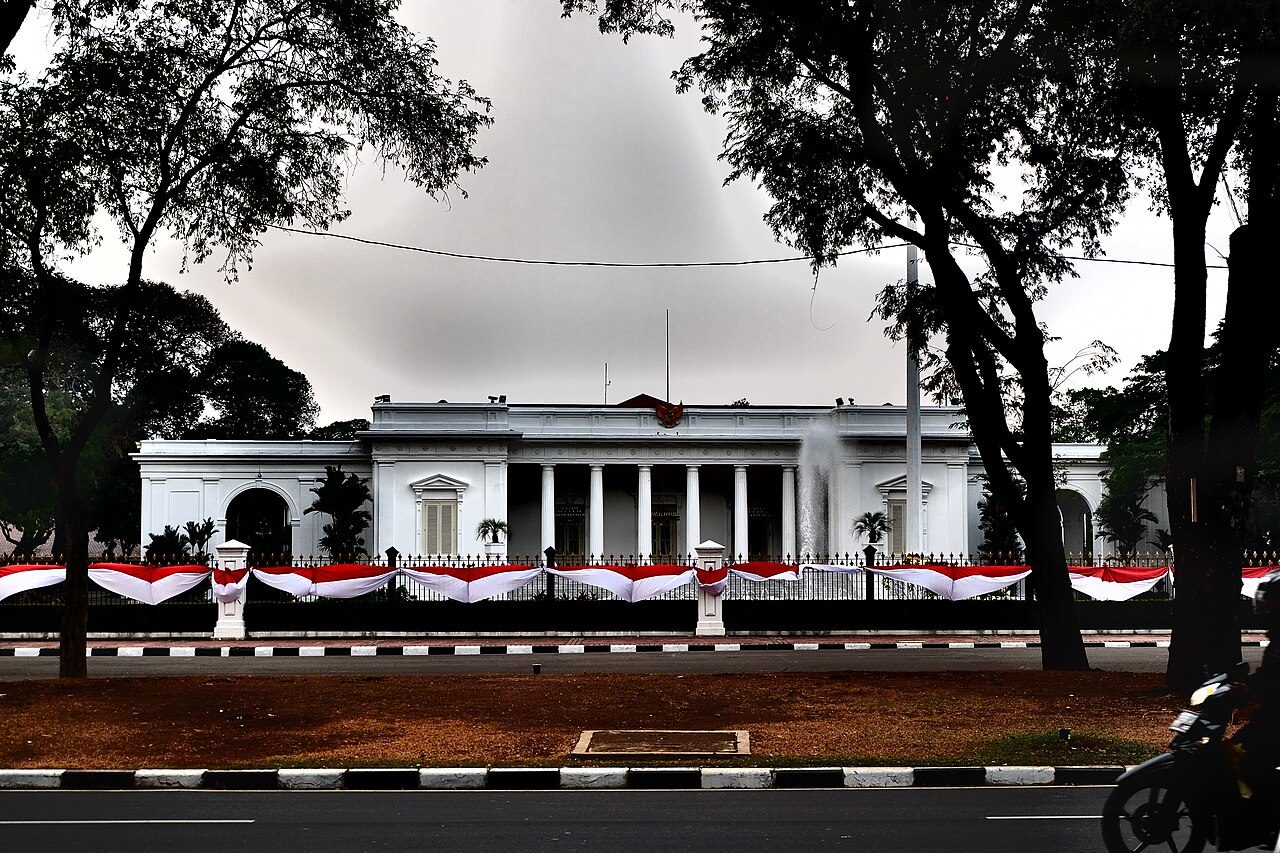
Indonesia wants to be a serious AI economy. Its rulebook keeps arriving later than promised. Two presidential regulations, one setting a national AI roadmap and one on AI ethics, have been in preparation at the Ministry of Communication and Digital Affairs (Komdigi) since 2025. In October 2025 the Jakarta Post reported that the rules had been pushed into 2026. By late July this year MLex reported that the draft had completed inter-ministerial review and was awaiting presidential approval. No signed regulation had been made public by early October, according to available reporting.
What the two regulations would do
The roadmap regulation builds on a white paper released for public consultation in August 2025. According to Komdigi’s deputy minister, Nezar Patria, speaking in July and reported by Bisnis, it focuses on four priority sectors: education, health, financial services and the public sector. It is described as a risk-based approach, with structured adoption in schools and wider access to AI tools for microfinance and remote areas.
The ethics regulation is the governance half. Said Mirza Pahlevi, Komdigi’s director for AI, told GovInsider it “will establish the basis for developing, implementing, and utilizing AI in a safe and responsible manner”. Researchers at Universitas Gadjah Mada, writing for the Tech For Good Institute in July, say the ethics guidelines borrow risk classification from the EU AI Act, but rely on self-assessment rather than heavy compliance machinery. They describe the result as a pragmatic middle path aligned with the ASEAN Guide on AI Governance and Ethics.
Neither regulation is the final word. MLex reported Mr Patria as saying the regulation would serve as an initial framework before the government drafts a comprehensive AI law. That law would be stitched into existing statutes on personal data protection and electronic transactions, and into planned cyber-security legislation.
Why it matters beyond Jakarta
The stakes are practical. The Tech For Good Institute notes plans to use AI in social-aid administration and in the national free-meals programme, from menu design to eligibility checks for cash transfers. It also records a target to lift data-centre capacity from 600 megawatts to 1.65 gigawatts by the end of 2026. Indonesia is also amending its copyright law to address AI training data.
Indonesia is building the infrastructure for state AI faster than the rules that would govern it.
For investors and public bodies working with Indonesian partners, the delay means planning against draft principles rather than settled obligations. Self-assessment will probably be the default, and the heavier statute remains years away.
The critics’ case
Not everyone thinks the drafts go far enough. Writing for East Asia Forum on 4 September, Ary Hermawan of the ISEAS–Yusof Ishak Institute argued that the framework leaves state use of AI largely unchecked. He points out that the draft ethics guidelines exclude “monitoring and evaluation” provisions for defence and national-security uses. He adds that nothing in the drafts guards against AI-powered facial recognition being used to identify protesters. He also questions whether the planned personal-data-protection agency will be autonomous enough to investigate state institutions. And he calls the electronic transactions law, on which much enforcement would rest, “notoriously draconian”.
Komdigi frames the project differently. East Asia Forum quotes its secretary-general, Ismail, as saying the regulations will set out strategies for “a sovereign and full-stack AI ecosystem”.
What to watch
Three signals will show whether Jakarta’s approach is settling. The first is the presidential signature and the final text, especially any security carve-outs. The second is the timetable and scope for the promised comprehensive AI law. The third is whether the data-protection authority emerges with real independence. Until then, South-East Asia’s largest economy is governing AI by draft.
Sources
- MLex: Indonesia to pursue AI law after presidential regulation lays groundwork
- East Asia Forum: Indonesia’s AI regulations leave state repression unchecked (4 September 2026)
- Tech For Good Institute: Consolidation without completion, Indonesia’s AI developments in 2026
- Bisnis.com: Peta jalan dan etika AI nasional masih diproses menuju Perpres (16 July 2026)
- GovInsider: Perpres Peta Jalan AI dan Etika AI sebagai panduan adopsi AI pemerintah
- The Jakarta Post: AI rules pushed to 2026 as govt charts next move
Discussion
No comments yet. Start the conversation.