Brazil’s Election Court Became Its AI Regulator. Now What?
With Brazil's AI bill stalled in the Chamber, the electoral court has written the country's most consequential AI rules. The first round showed how far court resolutions and platform injunctions can reach, and where they stop.
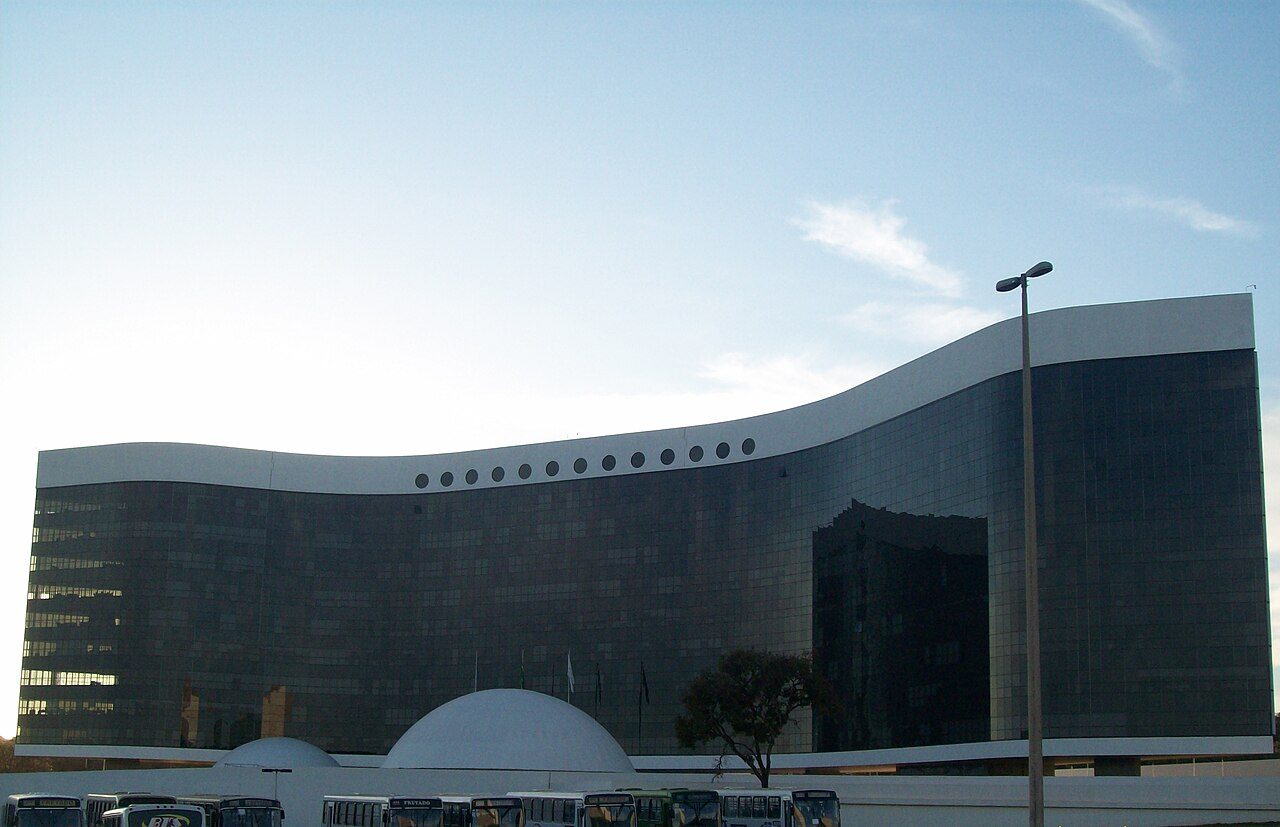
Brazil went to the polls on 4 October with some of the strictest rules on artificial intelligence in electoral politics anywhere in the world. None of them was passed by Congress. They were written by the Superior Electoral Court (TSE), refined case by case over the summer and enforced, in the final hours before voting, through injunctions against the largest platforms. The first round produced no outright winner: according to Americas Society/Council of the Americas, Flávio Bolsonaro of the Liberal Party (PL) took 47% to just over 45% for Luiz Inácio Lula da Silva, setting up a runoff on 25 October.
For anyone making decisions about AI in Brazil, the campaign has been a live demonstration of a particular regulatory model. It is fast, judge-led and aimed at platforms. It is also narrow, contested and, so far, unable to reach most of the synthetic content in circulation.
A regulator by default
The vacuum is legislative. The Senate approved PL 2338/2023, Brazil’s general AI bill, on 10 December 2024. A status review published by CASRAI on 25 September found that the Chamber of Deputies’ own record still lists the bill as “awaiting opinion”, with the latest entry dated 2 September 2026, some 21 months after it left the Senate. A special committee approved public hearings in May 2025 but has recorded no formal opinion. Newer AI bills keep being attached to the file, most recently in September, widening what any eventual report must reconcile. Nothing in the bill is in force.
The TSE has filled the gap. Resolution 23.755, approved on 2 March 2026, requires AI-generated or AI-altered campaign material to carry “explicit, prominent and accessible” labels; bans deepfakes used to help or harm a candidacy, even with the depicted person’s consent; and bars new synthetic content featuring candidates for 72 hours before each round until 24 hours after polls close. According to the Rio Times, sanctions range from removal and fines of R$5,000 to R$30,000 up to cancellation of a candidacy or loss of office. Platforms must file compliance plans, keep public ad libraries and act on removal orders within court-set deadlines.
The court has also built a technical layer through agreements rather than statute: a voice-cloning arrangement with ElevenLabs signed on 3 August, and, from 26 August, a campaign with Google letting candidates register their faces with YouTube’s likeness-detection tool. Removal is then judged under YouTube’s own privacy policy.
The line the court chose to draw
The most important decision of the campaign came on 1 September, in a case about an AI-generated video of Jair Bolsonaro, then under house arrest, appearing to endorse his son at the PL’s national convention on 25 July. By five votes to two, the TSE adopted a formal definition of a deepfake: synthetic content produced or manipulated by AI or equivalent technology, with realism or verisimilitude, that creates, reproduces or alters the image, voice or expression of a living, dead or fictitious person. But it also held that the prohibition bites only when the content qualifies as electoral propaganda.
On the specific video, the court split four to three and dismissed the complaint. The rapporteur, the TSE president Kassio Nunes Marques, reasoned that streaming a party convention online widens its audience without automatically turning every statement into a request for votes. The dissenting ministers, including Ricardo Villas Bôas Cueva and Estela Aranha, argued that synthetic content designed to favour or harm a candidacy should be caught whatever the setting.
That is a meaningful narrowing. It gives campaigns a clearer test and reduces the risk of courts policing satire. It also means that whether a realistic fake of a real person is lawful depends on a classification question that will be argued case by case, under time pressure, by lower electoral judges who are now bound by the ruling.
Brazil has shown that a court can regulate AI in weeks; it has not shown that a court can see most of what it is regulating.
What the first round revealed
The best public evidence on scale comes from VigIA, a monitoring project run by the fact-checking agency Lupa with the AI laboratory at the State University of Campinas. Between 16 August and 28 September it catalogued 920 pieces of AI-generated political media, of which 554 were deepfakes. Only 371 carried the required label. Just 29 deepfakes came from candidate or party accounts; 525 came from ordinary users, most of them anonymous. Lupa’s founder, Cristina Tardáguila, noted that the project was finding almost one AI item an hour, most of it undisclosed.
Those numbers expose the structural limit of the TSE model. Its sanctions are designed for regulated actors: candidates, parties and the platforms that host them. The bulk of the synthetic material is produced by people who are none of those things. The electoral lawyer Fernando Neisser put the detection problem bluntly, as quoted by the Rio Times: “If the user can’t identify it, the courts can’t identify it… how can we expect Instagram to detect it?” Private messaging remains a grey zone, because the resolution does not clearly say when content inside WhatsApp or Telegram becomes regulated propaganda.
The court’s answer, on the eve of the vote, was to lean harder on the platform. On 3 October the Electoral Public Prosecutor’s Office asked the TSE to order Meta to stop a recycled 2018 video falsely alleging voting-machine fraud from spreading on WhatsApp. On 4 October Nunes Marques granted the injunction, with a fine of R$100,000 per hour of non-compliance. The clip was not AI-generated; the basis was a 2022 resolution on knowingly false or seriously decontextualised content. It nonetheless shows the enforcement pattern the runoff will follow: rapid orders, hourly penalties, and platforms treated as the point of control.
What decision-makers should take from it
First, Brazil’s operative AI rulebook for the next three weeks is judicial, not legislative. The 72-hour blackout applies again before the 25 October runoff, and companies with any role in political content, from ad-tech to generative tools, should assume orders measured in hours rather than days.
Second, a definition of “deepfake” now exists in binding electoral case law, and it is likely to be borrowed in other disputes long before a statute supplies one.
Third, the gap the first round exposed sits upstream. If anonymous users with off-the-shelf tools generate most synthetic content, the logical next step for regulators is to push labelling and provenance obligations onto developers, the very area PL 2338 was meant to address.
That is where the election’s other result matters. The PL grew from 9 to 28 seats in the 81-member Senate and won 121 of 513 seats in the Chamber, according to AS/COA. The legislature that eventually decides PL 2338’s fate will look very different from the one that let it sit. Whoever wins on 25 October, the question of whether judges or legislators regulate AI in Brazil is back on the agenda.
Sources
- Brazil’s Election: Four Points to Understand the First-Round Results (AS/COA, 5 October 2026)
- Brazil’s AI Bill PL 2338: Approved, Not Law (CASRAI, 25 September 2026)
- Brazil Election AI Rules Tightened for 2026 Vote (Rio Times, 26 August 2026)
- Brazil Election AI Rules Ban Deepfakes, Leave Gaps (Rio Times)
- TSE fixa tese sobre deepfake e delimita regra para as Eleições 2026 (TSE, 1 September 2026)
- Por 4 votos a 3, TSE valida uso de vídeo de Bolsonaro feito com IA (Conjur, 2 September 2026)
- Brazil: TSE and Google Launch Deepfake Detection Shield for 2026 Candidates (Rio Times)
- Deepfakes lideram uso irregular de inteligência artificial nas eleições de 2026 (Terra, 4 October 2026)
- Brazil Fake Ballot Video: Prosecutors Ask TSE to Curb Meta (Rio Times, 4 October 2026)
- Brazil’s 2026 Elections Are Its First Real Stress Test for AI Regulation (Tech Policy Press)
Discussion
No comments yet. Start the conversation.