From Signal to Decision
Between noticing and acting lies the hardest stretch of government. On rumour, denial, silence and speed, and why the choice made at hour six should never be made on evidence fit only for hour sixty.
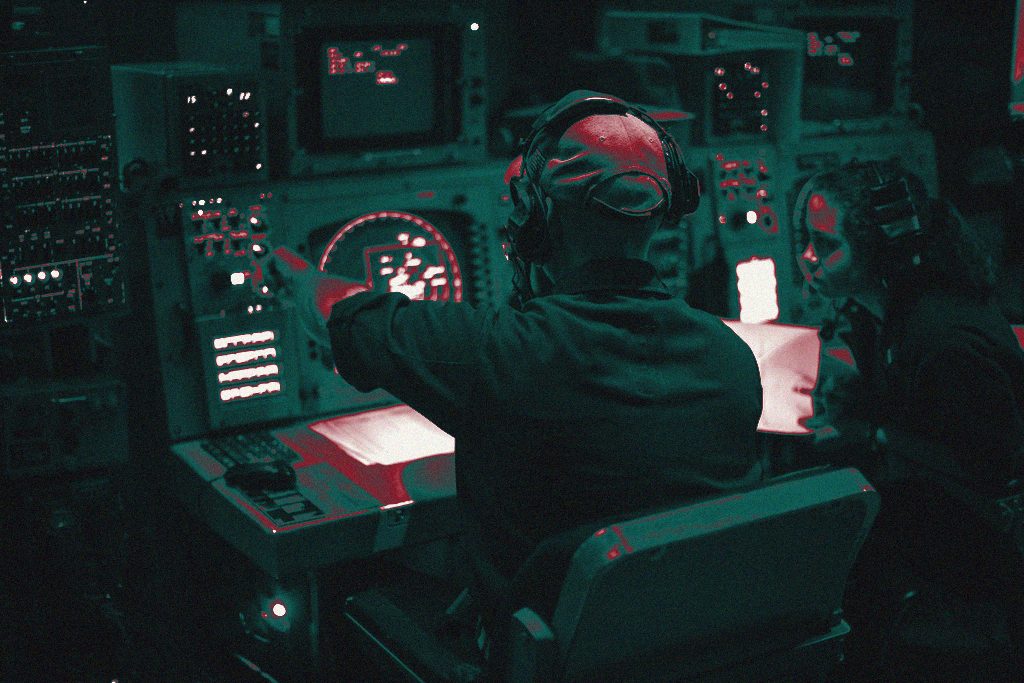
According to CNN, a special-operations analyst used an AI chatbot in assessing a Chinese vessel’s cargo, and the chatbot concluded, wrongly, that the ship’s manifest included components for nuclear weapons. The resulting report circulated before anyone caught the error, and it came close to prompting an intercept of the ship. The tool used and the date of the incident were not disclosed. What was disclosed is enough: a confident machine, a time-pressed analyst, a report that moved faster than its own verification, and a decision that nearly followed.
Nobody fired. The error was caught. But the episode, reported in September 2026 and followed up by Engadget and The Defense Post, is as clear an illustration as any of the stretch of government this essay is about: the path from noticing something to acting on it. It is the part of public decision-making that gets the least design and the most improvisation, and it is where reputations, and sometimes lives, are won or lost.
Hour six versus hour sixty
Every fast-moving situation has a basic asymmetry. In the first hours, evidence is thin, but the ability to shape events is at its height. A false claim has not yet hardened into belief; a misunderstanding has not yet become a grievance; an incident has not yet become a crisis. By hour sixty, the evidence is much better, but the room for manoeuvre has shrunk. Positions have been taken. Narratives have settled. Whatever the government says now will be read against everything that has already been said.
This is the dilemma behind most crisis decisions: act early on weak evidence, or act late on strong evidence. Neither is always right. The answer depends on what kind of action is under consideration, and that distinction is the key to handling it well.
Some actions are reversible and cheap: issuing a holding statement, acknowledging that something is being looked into, publishing what is known and what is not. These can, and usually should, be taken at hour six. Other actions are irreversible and costly: seizing a ship, naming a suspect, suspending a programme, attributing an attack to a foreign state. These need the evidence of hour sixty, or as close to it as the situation allows.
The ship near-miss is a case of the two being confused. A report produced at speed, with the confidence of a finished assessment, nearly triggered an action of the second kind. The machine was not the only problem. The process allowed a fast, unverified judgement to travel as if it were a slow, verified one.
The danger is not that a government acts at hour six. It is that it takes an hour-sixty decision on hour-six evidence and does not know it has done so.
The anatomy of a rumour
Most of the signals that demand a quick response are not intelligence reports. They are claims circulating in public: a rumour that a benefit is being withdrawn, a doctored video of a minister, a false report of an attack, a claim that an election result has been manipulated. These follow a familiar life cycle.
A claim appears. If it is emotionally charged, simple and plausible to those predisposed to believe it, it spreads. Early on it spreads through networks of people who already trust each other, which gives it a credibility that no official statement can match. At some point it reaches enough people, or a prominent enough person, that the authorities are asked to respond. The response, usually a denial, then becomes part of the story. Finally, a correction or clarification appears, which reaches fewer people than the original claim and arrives too late to undo much of its effect.
Each stage offers a decision point. The question for government is not whether to “fight misinformation” in general, but what to do at each stage for this particular claim, given what is known.
Generative AI shortens the cycle and multiplies the claims. Brazil’s electoral court has adopted some of the world’s strictest rules on AI in elections: mandatory labelling of AI campaign material, a ban on AI impersonation of candidates, and a 72-hour blackout on AI political content before the vote. Even so, the Christian Science Monitor reported that an AI-generated avatar criticising President Lula drew millions of views, and that while its main accounts were removed in May, copies persisted. Removal is a decision with a half-life. A correction has to reach the copies, not just the original.
Continue reading, free.
Create a free AI & GPP account to finish this Long Read and every other one — plus The Cable in your inbox.
Discussion
No comments yet. Start the conversation.