Humain’s Pragmatic Turn: Chinese Weights, American Chips
Saudi Arabia's state AI champion has built its flagship Arabic model on Chinese open weights, run it on American hardware and gone looking for outside capital. Sovereign AI in the Gulf is becoming a hedging strategy, with new risks for partners.
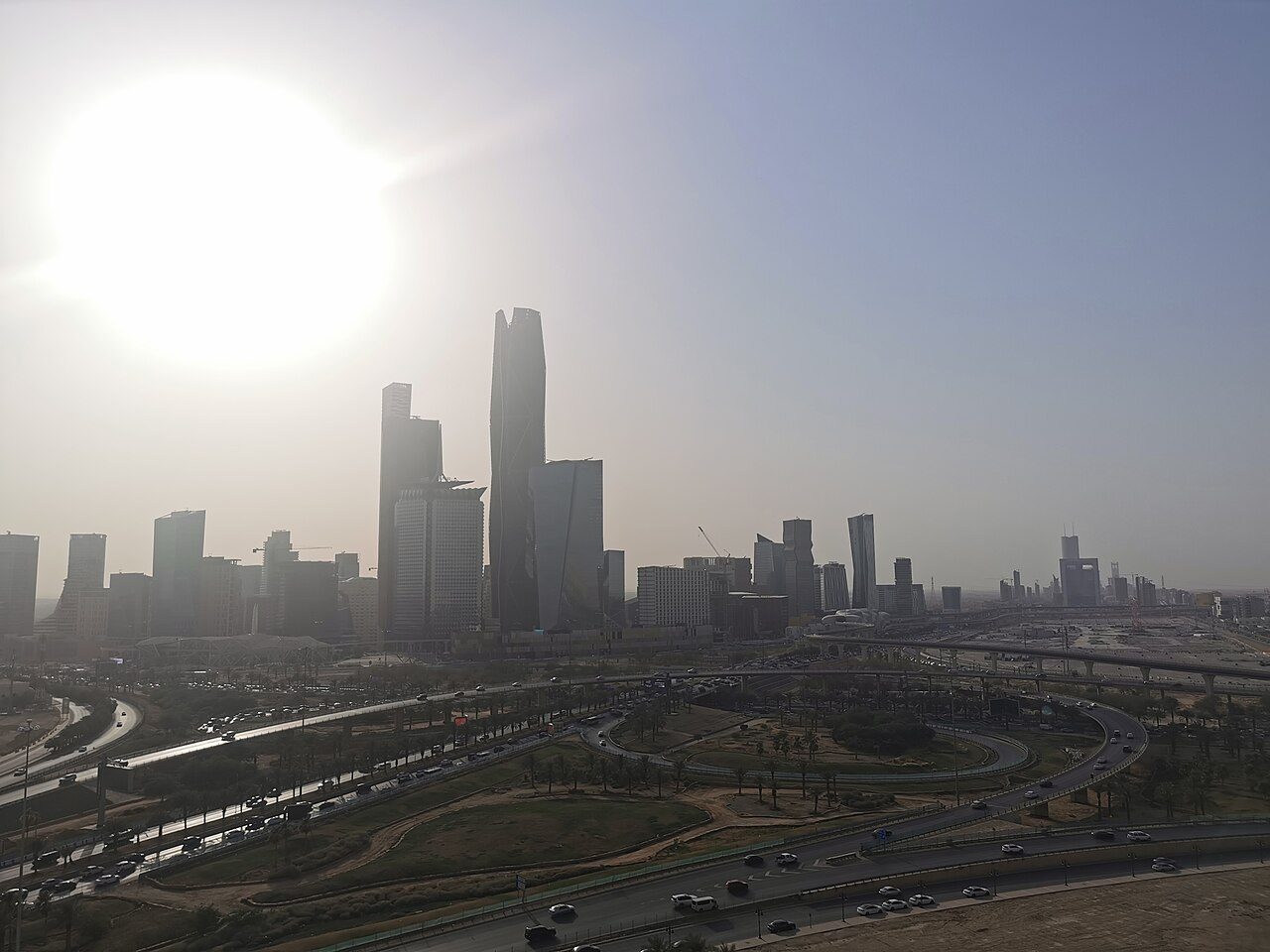
For most of its short life Humain, the artificial-intelligence company launched by Saudi Arabia’s Public Investment Fund (PIF) in May 2025, has been read as a statement of national ambition: a state-backed champion that would buy American chips at scale, build gigawatts of data centres and give the kingdom its own models. Three developments in the space of a month suggest that the ambition is intact but the method has changed. The kingdom’s AI strategy now looks less like a bid for self-sufficiency and more like a portfolio built to hedge between superpowers, and to spend somebody else’s money.
The first came on 3 September, when Humain unveiled humain-m3, which Rest of World reports was billed as the world’s most advanced Arabic-language model. Its foundations are not Saudi. According to Startup Fortune and other technical reviews, humain-m3 shares the architecture of MiniMax M3, an open-weight model released in June by the Shanghai-based start-up MiniMax: 428bn parameters in a mixture-of-experts design, with around 23bn active per token. Humain says it post-trained the system on more than a trillion tokens of Arabic-native content and that it achieved the highest average score of the frontier models tested across seven public Arabic benchmarks, a claim that has not yet been independently replicated.
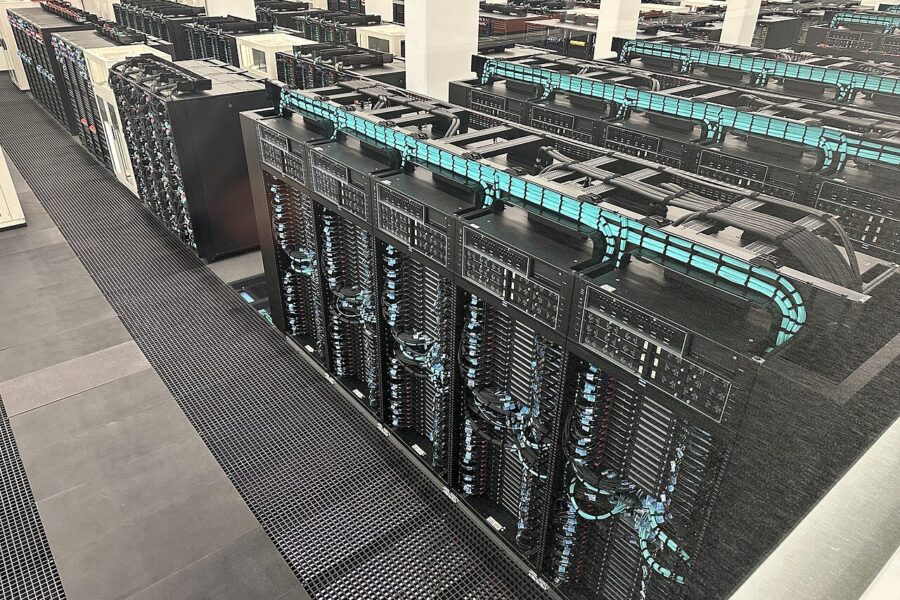
The second came days earlier. On 31 August AMD, Cisco and Humain announced that their joint venture’s AMD Instinct MI355X infrastructure had gone live in Saudi Arabia, selling GPU capacity as a service, with up to 250 megawatts planned for 2027 and an ambition of up to one gigawatt by 2030. The third arrived on 9 September, when Fortune reported that Humain was turning to outside investors as the kingdom reins in spending.
Sovereignty, redefined
Taken together, these moves describe a sovereign-AI model that is sovereign mainly at the layers a state can realistically control: where data sits, who operates the infrastructure and which customers are served. At the model layer, Saudi Arabia is adapting rather than originating. That is not new. Its earlier ALLaM model was built on Meta’s Llama 2, as Jesse Marks of the Australian National University notes in a recent analysis of Arabic AI. What has changed is the supplier. Humain’s chief executive, Tareq Amin, has described a strategy of drawing on the best available models from America, China, Europe and the open-source community, according to the same account.
The economics are hard to argue with. Building a frontier model from scratch is prohibitively expensive, and open Chinese weights offer high capability at low cost. Rest of World describes a broader pattern across the global south of countries pairing American chips with Chinese open-source models. “Many countries around the world, particularly in the Global South, want the best of both worlds,” Kyle Chan of the Brookings Institution told the publication.
Sovereign AI in the Gulf now means owning the data centre and the customer relationship, not the model’s ancestry.
The trouble is that the two halves of this arrangement are governed by different rulebooks. American export controls police hardware: who may buy advanced accelerators, and on what conditions. They say little about which weights run on those accelerators once installed. Washington is starting to notice the gap. On 29 April the House Homeland Security Committee and the Select Committee on the Chinese Communist Party opened a joint investigation into the national-security risks of Chinese AI models, naming MiniMax alongside DeepSeek, Alibaba’s Qwen and Moonshot AI. The committees cited concerns about the distillation of American models, data security and censorship. Their letters so far have gone to American firms such as Airbnb and Anysphere, not to foreign governments. But a flagship national model in a close American security partner, built on one of the named firms’ weights and running on American silicon, is exactly the kind of case such inquiries tend to reach.
Discipline at the sovereign fund
The financing shift matters as much as the model. According to Fortune, Humain is seeking about $2.5bn to fund data-centre expansion, is preparing a $10bn venture fund that could launch at a larger scale by the end of 2026, and is targeting a dual listing in Riyadh and New York by 2029. The company may need up to $42bn for AI and cloud expansion by 2030, including $32bn of debt, to reach a target of 1.9 gigawatts of capacity by 2030 and more than six gigawatts by 2034. Saudi Arabia’s installed data-centre capacity stood at 467 megawatts in the first quarter of 2026, Fortune reports.
Kurt Davis Jr of Alvarez & Marsal told Fortune that the listing approach was “a funding-discipline decision” at a time when PIF “has been explicit that portfolio companies must reduce their draw on the sovereign”. The backdrop is well documented. A PIF board meeting in December 2024 approved spending cuts of at least 20% across more than 100 portfolio companies, according to Middle East Briefing, which also cites an IMF estimate that the kingdom needs oil above $90 a barrel to balance its budget, against Brent prices that have mostly traded at $60–65. AI has been placed among the fund’s protected growth priorities, while prestige urban schemes have been scaled back. Protected, however, does not mean unlimited.
Physical risk has entered the calculation too. Fortune notes that drone strikes in March 2026 damaged Amazon Web Services data centres in the UAE and Bahrain, forcing workloads to move and leaving a prolonged recovery. For investors pricing Gulf compute, regional security is no longer a footnote.
What decision-makers should take from it
For governments and companies weighing Saudi infrastructure or Humain’s services, three practical points follow.
First, provenance is now a procurement question. A public body or regulated firm that buys “sovereign” Arabic AI should ask what the model was built on, under what licence and with what rights to modify, audit and keep running it if a foreign supplier’s terms change. The answers for humain-m3 are not yet fully public.
Second, the political risk sits in Washington as much as Riyadh. American partners supplying chips and cloud to the kingdom may find themselves asked by Congress or regulators how Chinese-derived models are being used on their platforms. Contracts should anticipate that.
Third, Humain’s commercial terms are likely to tighten, not loosen. A company that needs outside equity, debt and eventually public-market investors will price for returns rather than prestige. Its 30 September agreement with EY to build what the partners call Saudi Arabia’s first AI-native business-process outsourcing service points in that direction: towards revenue-generating enterprise services rather than headline-grabbing infrastructure alone.
None of this signals retreat. The cluster is live and the Arabic-language effort is real. But the Saudi approach now resembles the hedged, multi-supplier strategies seen elsewhere in the Gulf and the global south more than the clean, state-funded national champion its launch implied. That makes it more durable financially, and more complicated politically, for everyone who does business with it.
Sources
- Saudi’s Humain seeks external investment to fuel its AI ambitions — Fortune, 9 September 2026
- Global South merges US chips and Chinese open-source AI — Rest of World, 16 September 2026
- Saudi Arabia built its national AI model on top of China’s MiniMax — Startup Fortune
- AMD, Cisco and HUMAIN expand Saudi Arabia’s AI infrastructure as AMD Instinct systems go live — Cisco Newsroom, 31 August 2026
- The rise of frontier Arabic AI — Jesse Marks, Coffee in the Desert, 15 September 2026
- Chairmen Garbarino, Moolenaar announce joint investigation into national security risks posed by PRC AI models — House Committee on Homeland Security, 29 April 2026
- Saudi Arabia Public Investment Fund strategy shift 2026 — Middle East Briefing
- HUMAIN partners with EY to develop Saudi Arabia’s first AI-native BPO service — TechAfrica News, 30 September 2026
Discussion
No comments yet. Start the conversation.