The Agentic State and the Price of Sovereignty
The UAE wants half its government services run by AI agents within two years; Canada is backing tens of billions in "sovereign" compute. Both are bets on control. The chips underneath tell a more complicated story.

In April the United Arab Emirates set what remains the most explicit target any government has announced for automating itself: half of government services to run on agentic AI within two years. By May it had launched four government AI agents, for procurement, tax auditing, customer service and IT support, and begun training 80,000 employees. Sheikh Mohammed said more than 400 ministers and officials were driving the shift.
On 14 September, an ocean away, the Government of Canada welcomed Bell Canada’s plan to invest up to C$52.5bn in AI compute in Saskatchewan, framing it as infrastructure “under Canadian control and law”.
The two announcements sit at opposite ends of the same question. The UAE is redesigning what government does with AI; Canada is asking who owns the machines that do it. Both are pursuing a version of “sovereign AI”. Neither can fully escape the fact that the most important layer of the stack is controlled elsewhere.
What an agentic state means
The distinction between AI that advises and AI that acts is becoming the central one in public administration. A chatbot that explains tax rules is an information service. An agent that audits a tax return, raises a procurement order or resolves a service request is exercising delegated administrative power.
The UAE’s chosen domains are revealing. Procurement and tax auditing are classic back-office functions in which rules are dense, volumes are high and the case for automation is strong. They are also functions in which errors carry legal and financial consequences, and in which accountability has traditionally rested with named officials.
A 50% target is ambitious by any measure, and it will become a benchmark against which other governments are measured, fairly or not. Its value as a benchmark depends on definitions that have not been published in the sources we have reviewed: what counts as a “service”, what counts as “running on” an agent, and where human sign-off remains. The training commitment, 80,000 employees, suggests the government sees the change as organisational as much as technical. That is the right instinct. Agents redistribute work and responsibility; they do not remove the need for either.
Canada’s version: sovereignty as infrastructure
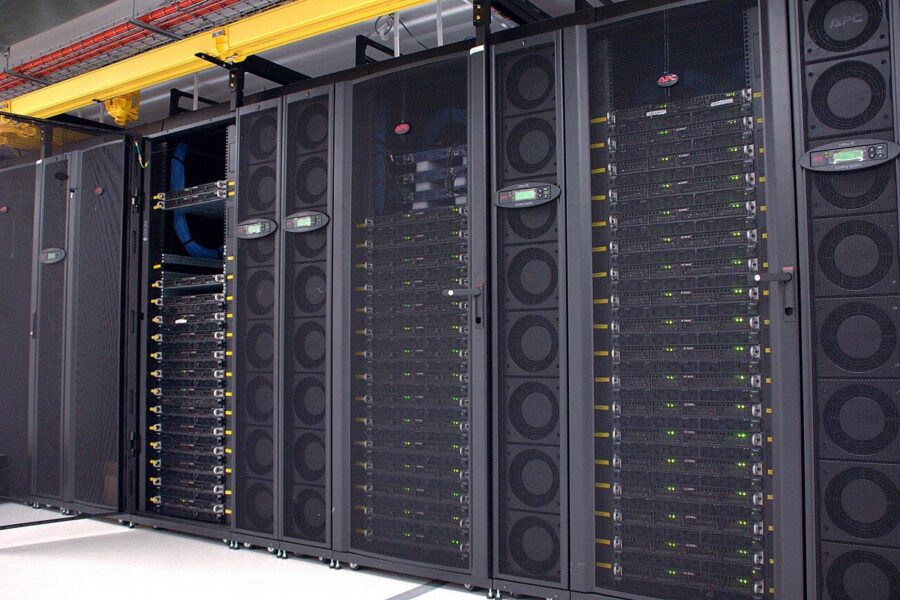
Canada’s approach starts at the opposite end of the stack. Bell’s plan covers up to 900 MW of new AI capacity towards a 1.2 GW hub in Saskatchewan, and Ottawa says it is exploring up to 6 GW more nationally. The emphasis is on jurisdiction: data and computation that sit under Canadian law, subject to Canadian courts and regulators.
For a middle power, that matters. Government workloads involving health records, tax data or security information raise questions about which country’s legal process can reach them. Compute on domestic soil, operated by a domestic company, answers some of those questions. The Canadian framing also brings electricity and community benefit into AI policy, a recognition that gigawatt-scale data centres are energy and land-use decisions as much as digital ones.
The layer no one owns at home
But location is not the same as independence. In July, Rest of World examined the Gulf’s AI build-out under the headline that “true AI sovereignty is effectively unattainable”. Saudi Arabia’s Humain and the UAE’s G42 are spending tens of billions of dollars; G42’s Stargate facility starts with 400,000 Nvidia processors. Deals with AMD, Groq and Qualcomm offer alternatives, but according to Rest of World they cover only inference, the running of trained models, rather than training. For the most demanding work, the Gulf still depends on Nvidia’s hardware, its CUDA software ecosystem and, crucially, Washington’s permission to buy them.
Sovereign AI can mean owning the building, the power and the data; it rarely means owning the chip.
That permission has recently been extended. A US rule of 14 July moved the UAE from the D:3/D:4 export-control tiers to A:5, the same tier as NATO allies, lifting prior conditions on advanced chip exports. In an analysis published on 7 August, Just Security argued that no visible security concessions were obtained in return, flagged risks of Chinese remote access to advanced compute, and pointed to Trump family business ties to G42. Supporters of the change would argue that closer integration with trusted partners is itself a security strategy, and that allies should not be treated like adversaries. Both points can be true. What is clear is that the UAE’s access to frontier compute rests on a US policy decision that a future administration could revisit.
What “sovereign AI” really buys
For governments weighing similar strategies, it helps to separate the layers of sovereignty:
| Layer | What can be secured domestically | What usually cannot |
|---|---|---|
| Data | Residency, legal jurisdiction, access controls | Protection from foreign legal reach of a vendor’s home state, in all cases |
| Facilities and power | Sites, grid connections, operators | Global supply of turbines, transformers and cooling at scale |
| Models | Fine-tuning, deployment, open-weight adoption | Frontier training without foreign accelerators |
| Chips and software | Procurement contracts, stockpiles | Design, fabrication and export licences |
| Institutions | Rules for agents, audit, accountability | Nothing; this layer is entirely within national control |
The last row is the point most often missed. A government can be dependent on imported chips and still be fully sovereign over how its agents make decisions: what they are permitted to do, how their actions are logged, who reviews their errors and how citizens appeal. Conversely, a government with domestic compute and no such rules has bought hardware, not sovereignty.
What to watch
- Definitions. Whether the UAE publishes how it measures progress towards its 50% target, and where human authority remains.
- Copycats. Other Gulf states are likely to seek the same export-control treatment as the UAE; whether they get it will show whether A:5 status becomes a reward for partnership or an exception.
- Canada’s next 6 GW. Whether further capacity comes with public-sector access terms, or remains primarily commercial.
- Agent accountability. Whether any government deploying agents in tax or procurement publishes rules for logging, review and appeal comparable to those emerging for automated decisions elsewhere.
The agentic state and the sovereign stack are often presented as a single project. They are better understood as two: one about capability, which can be bought or licensed, and one about authority, which a government must build for itself.
Sources
- The National — UAE to launch new AI-powered government model within two years
- Khaleej Times — UAE agentic AI agents for public services
- Government of Canada — Major new investment in sovereign AI infrastructure in Saskatchewan
- Rest of World — The Gulf’s AI investment and Nvidia’s grip
- Just Security — The Trump administration throws Gulf AI a lifeline
Discussion
No comments yet. Start the conversation.