The State’s Chatbot Has Opinions
Within days of launch, Washington's AI front door was reported to have changed what it said about elections and presidential terms. The real question is not who is right, but who decides, and how anyone would know.
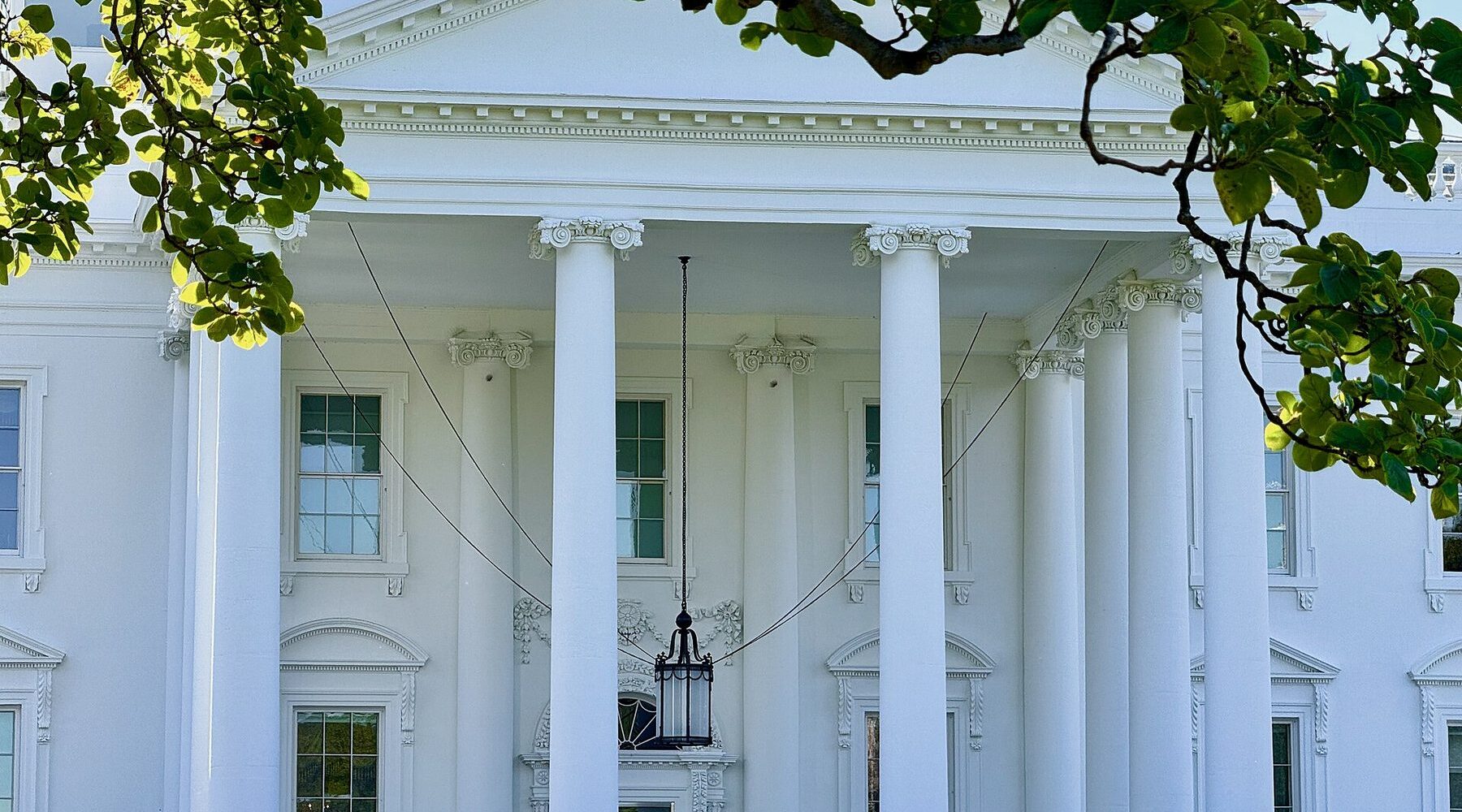
On 29 September the United States government began answering its citizens’ questions in a new voice. America.gov, launched by the White House as an AI “front door” to federal services, invites anyone, with no login, to ask about Medicare, jobs, passports and more. It draws its answers from about 29,000 federal websites, using Google’s Gemini and xAI’s Grok, in a service built by the National Design Studio and run by the General Services Administration (GSA). By the measure of reach it is, as far as the public record shows, the largest citizen-facing government deployment of a large language model anywhere.
Within days it was also at the centre of a dispute that had little to do with passports.
What was reported
According to reports at launch, the chatbot contradicted false claims about the 2020 presidential election and stated that the President is constitutionally barred from seeking a third term. A White House official responded that the system “will continue to be updated”. By 1 October, reports from AFP, carried by outlets including TechXplore, RTÉ and France 24, said the chatbot had “pulled back” from debunking such claims; France 24 headlined its account as the chatbot changing its answers. The Washington Post published its own examination of how the system handles political questions the same day.
Caution is warranted. Several of these accounts were available to us only in headline or summary form, and language models do not give identical answers to identical questions. Variation between two sessions is not, on its own, proof of a deliberate instruction. Nor does the public record yet show what, if anything, was changed, by whom, or why.
That uncertainty is precisely the point. A citizen who receives an answer from a government service on Monday and a different one on Wednesday has no way of knowing whether the change reflects a correction, a policy decision, a model update or chance. Neither, at present, does anyone else.
The question beneath the headlines
It is tempting to read the episode through a partisan lens: one side sees a state tool silenced for telling inconvenient truths, the other sees a government service that had strayed into political commentary it should never have offered. Both readings contain a legitimate concern. A public service that editorialises about live political controversies raises one set of objections; a public service whose factual statements can be quietly revised by the officials they concern raises another.
The durable issue is institutional. Every government chatbot embodies decisions about scope (which questions it will answer), sources (which documents it treats as authoritative) and posture (whether it corrects users, declines, or redirects). Traditional government websites make those decisions too, but they make them in text that can be archived, compared and cited. A generative system makes them invisibly, at the moment of each answer.
A government chatbot that can change its answers without a record of why is not a service; it is a press office that never has to issue a correction.
What governance would look like
None of what follows is exotic. Most of it is ordinary public-administration practice applied to a new medium.
A published answer policy. Governments publish style guides, accessibility standards and editorial rules for official websites. A citizen-facing chatbot needs the equivalent: a public statement of which subjects it covers, which it declines, how it handles contested or political questions, and which sources it treats as authoritative. If the policy is that the service does not discuss elections or constitutional questions at all, that is a defensible choice, but it should be stated, not inferred from shifting outputs.
Change control and logging. Any change to system prompts, retrieval sources, safety filters or underlying models should be logged, dated and attributed to an accountable official, as with changes to regulations or official guidance. Software teams already work this way; the gap is that the logs are rarely public.
A public change register. Where a change alters substantive answers, particularly on rights, benefits, elections or the constitution, a summary should be published. Statistical agencies already publish revision notes when figures change; the principle transfers directly.
Independent audit. An inspector general, auditor or legislative committee should be able to test the system against a fixed set of questions over time and report on drift. California’s new framework for independent AI auditors, created by SB 813 and AB 1405 in September, shows one model for building such third-party capacity.
Disclosure and provenance. Users should be told clearly that they are dealing with an AI system, which models it uses, and where each answer comes from, ideally with links to the underlying federal page.
How Europe would treat it
Comparisons with the EU are instructive, though not because Brussels has solved the problem. Since 2 August 2026, most of the AI Act’s Article 50 transparency duties apply, including the requirement that people be told when they are interacting with an AI system. A government chatbot operating in the EU must already disclose itself.
But the Act’s more demanding obligations for high-risk systems, those used to determine access to essential public services and benefits, have been pushed back. The EU’s “Digital Omnibus” amendment, in force since 27 July, moves the Annex III high-risk deadline to 2 December 2027. That matters for America.gov’s ambitions: its second phase, planned for early 2027, is meant to let citizens apply for benefits such as Social Security through the chatbot. In European terms, that is the step that moves a system from information service towards the high-risk category, with risk management, logging and human-oversight duties attached. Europe has given its own public bodies extra time to prepare for exactly that transition; the American service is approaching it with no equivalent statutory framework.
The economics of answering
There is a quieter structural shift underneath. On 10 September GSA announced a new OneGov agreement giving federal, state, local and tribal governments consumption-based access to OpenAI’s ChatGPT at a 50% discount for 27 months, effective 1 October, replacing earlier $1 deals that GSA says saved about $1.4bn for some 3.5m federal employees. The loss-leader phase of government AI is ending. As usage-based pricing arrives, every answer has a cost, and agencies will face pressure to decide how much answering they can afford. Those decisions, too, shape what citizens are told, and they too should be visible.
What to watch
- Phase two. Whether benefits applications through the chatbot arrive in early 2027, and with what safeguards for errors on eligibility, visas and tax, which critics have already flagged as hallucination risks.
- A published policy. Whether the White House or GSA publishes an answer policy or change log for the service.
- Oversight. Whether congressional committees or inspectors general seek records of changes made since launch.
- Imitation. Whether other governments copy the front-door model, and whether they copy the governance gap with it.
The lesson of America.gov’s first week is not about any particular answer. It is that a government which speaks through a model must be able to show its working. Without that, every revision will look like politics, whether or not it is.
Sources
- Nextgov/FCW — White House launches AI-powered America.gov digital front door
- TechCrunch — Can a chatbot fix the government maze? The White House is about to find out
- TechXplore/AFP — AI chatbot and debunking Trump
- RTÉ — US Trump AI chatbot
- France 24 — Meet America: Trump’s AI chatbot changes answers after challenging his claims
- Washington Post — The government’s new chatbot and political questions
- Raw Story — Launch-day report on America.gov answers
- GSA — GSA expands OneGov AI offerings with discounted OpenAI ChatGPT
- Nextgov/FCW — GSA unveils new token-based OneGov discount for OpenAI
- Jones Walker — Yes, 2 August still matters
- Gibson Dunn — EU AI Act omnibus agreement postpones high-risk deadlines
- Usercentrics — EU AI Act high-risk delay and Article 50 transparency
- Office of the Governor of California — First-in-the-nation AI safeguards
Discussion
No comments yet. Start the conversation.