Two Blocs, One Technology
Global AI governance is hardening into rival institutions, a US-led supply-chain bloc and a Chinese-led cooperation body. Many states are joining both, and public opinion abroad is less tilted towards the West than policymakers assume.
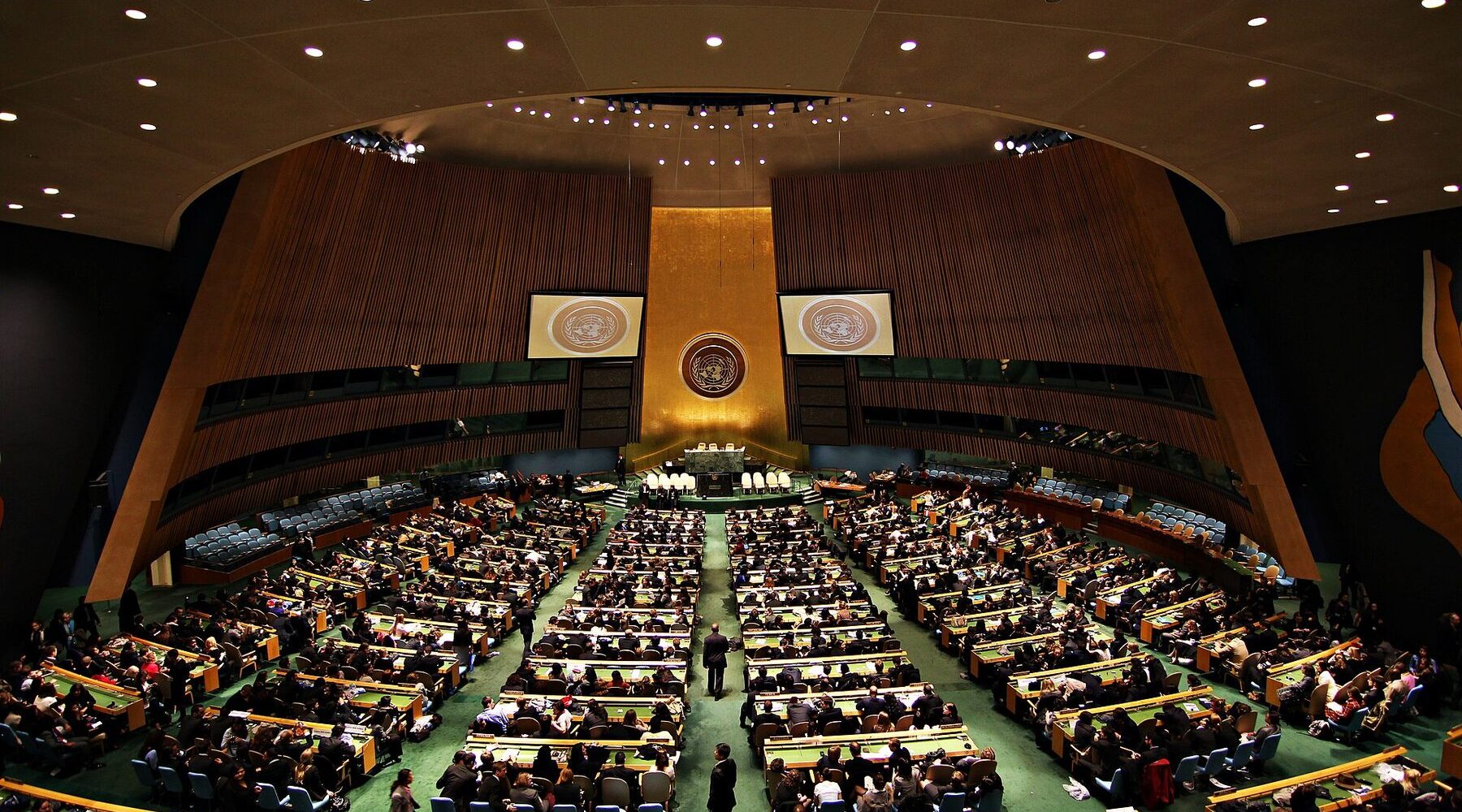
For most of the past decade, international AI governance meant summits, declarations and voluntary principles. In 2026 it acquired institutions. In June, the US-led “Pax Silica” supply-chain initiative expanded to 24 members at a summit in Washington. In July, China launched the World AI Cooperation Organization (WAICO) in Shanghai, with 29 states signing its founding agreement. Between them sits the United Nations, which convened its first Global Dialogue on AI Governance in Geneva the same month.
The resulting map is not a clean divide. It is a pair of overlapping clubs, a universal forum without binding power, and a large group of states deciding how to keep their options open.
The American bloc
Pax Silica is organised around the supply chain for advanced computing. At its second summit, on 25–26 June, ten more signatories joined, including the European Union, Germany, the Netherlands, India, Qatar, the United Arab Emirates and Kazakhstan, according to Brownstein and the US Embassy in Poland. Thirty-five nations signed a separate Joint Statement on AI Opportunity.
Washington’s tools are access and control. Under a rule dated 14 July, Washington moved the UAE from the D:3/D:4 export-control tiers to A:5, the same tier as NATO allies, lifting earlier conditions on advanced chip exports. Just Security argued in August that no visible security concessions were obtained in return, flagged risks of Chinese remote access to computing capacity, and pointed to Trump family business ties to G42, the Emirati AI company. The tier change, which should be confirmed in the Federal Register, signals that chip diplomacy is replacing chip denial for favoured partners. Other Gulf states are likely to seek the same treatment.
The Chinese bloc
WAICO is pitched differently. Its founding agreement, signed by 29 states on 16 July, is aimed mainly at countries of the Global South and promotes open-weight AI, training and access to models, according to CSIS and The Diplomat. Analysts frame it as a counterweight to Pax Silica.
Where Pax Silica offers privileged access to the most advanced chips, WAICO offers capability-building and openness. For governments without frontier labs or large compute budgets, that pitch can be attractive.
The hedgers
The most revealing fact about the two blocs is how many states refuse to choose. Kazakhstan, which joined Pax Silica in June, is cited by analysts as an example of a state hedging by joining both. The UAE has joined the American bloc and won its export upgrade even as analysts raise questions about Chinese access to Gulf computing. India, a Pax Silica signatory, pursues its own assertive domestic regime on synthetic content.
In AI governance, the rational strategy for a middle power is not to pick a side but to be indispensable to both.
Japan represents a third approach: promotion first. On 14 July its Cabinet adopted a second AI Basic Plan under the AI Promotion Act, replacing the plan of December 2025. It steers government agencies rather than imposing binding rules on the private sector. At the G7 summit in Evian on 17 June, Prime Minister Takaichi also signalled plans to host a future AI summit. Tokyo is positioning itself as a convenor rather than a bloc member.
The universal forum
The UN’s Global Dialogue on AI Governance, held in Geneva on 6–7 July, is the only forum where every state has a seat. It produces no binding outcomes. But it hosted the first assessment from the Independent International Scientific Panel on AI, a 40-member body co-chaired by Yoshua Bengio and Maria Ressa. The panel found that “science currently cannot guarantee” that AI will not cause catastrophic harm, and flagged the concentration of AI development in the United States and China, UN News reported.
That finding gives the dialogue a role the blocs cannot easily fill. It is becoming the reference point for Global South positions, a place where states outside both clubs can argue that the risks of a technology developed in two countries are borne by everyone.
The opinion gap
Western governments may assume that their regulatory models enjoy a natural advantage abroad. Survey evidence suggests otherwise. In a Pew Research Center study published on 17 September, drawing on fieldwork in February to May, a median of 43% across 12 countries said they trusted China to regulate AI, against 35% for the United States and 34% for the EU. In half the countries, people trusted their own government more than any of the three. Trust tracked overall favourability towards each power.
Those numbers matter for recruitment. Both blocs are competing for the same uncommitted states, and their publics are not predisposed to favour the American or European offer. A governance model has to be persuasive on its merits, not merely on its origin.
What to watch
- Whether WAICO’s membership grows beyond its founding signatories, and which Pax Silica members join it.
- Further export-tier upgrades for Gulf states following the UAE decision.
- Whether the UN scientific panel’s next assessment shapes positions in either bloc.
- Japan’s plans for hosting an AI summit, and whom it invites.
Sources
- Brownstein — State Department expands Pax Silica initiative at 2026 summit
- US Embassy in Poland — Outcomes of the second Pax Silica summit
- Just Security — The Trump administration throws Gulf AI a lifeline
- CSIS — The state of AI global governance and its implications for the US–China summit
- The Diplomat — China’s World AI Cooperation Organization agenda
- Cabinet Office of Japan — AI Basic Plan (English)
- Prime Minister’s Office of Japan — G7 Evian summit
- UN News — First Global Dialogue on AI Governance
- Pew Research Center — Do people trust China, the US or the EU to regulate AI?
Discussion
No comments yet. Start the conversation.