Europe’s Gigafactory Bet Buys Capacity, Not Yet Sovereignty
Brussels has opened bidding for up to seven AI gigafactories worth more than €30bn. The hardware is the easy part; whether Europe gains real control depends on budgets, chips, power and who the public sector buys from.
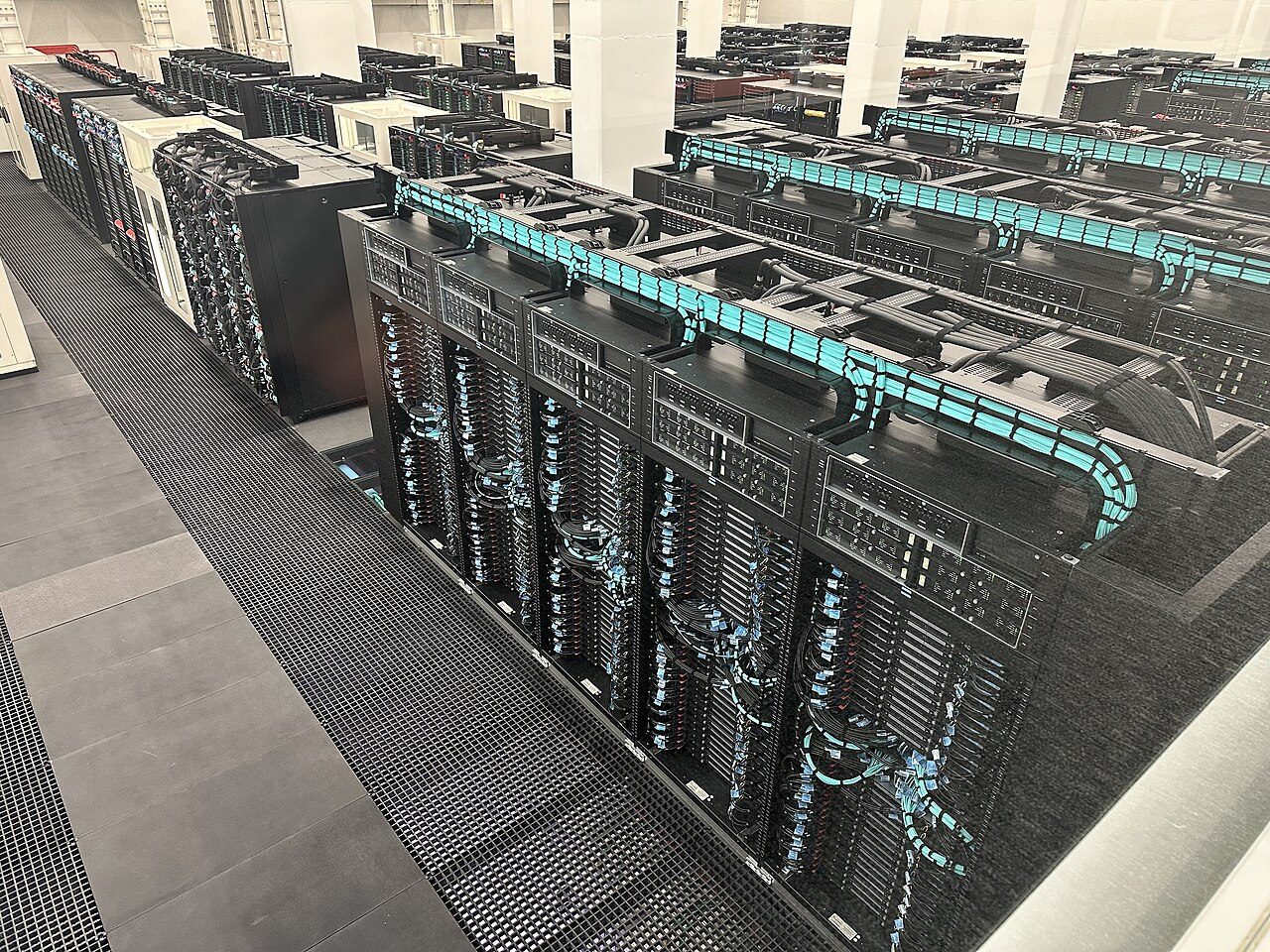
Europe has spent two years talking about AI sovereignty. On 30 July it finally put a price on it. The EuroHPC Joint Undertaking, the body that runs the EU’s shared supercomputers, opened a call for tenders for up to seven “AI gigafactories”: giant computing centres built to train and run the most advanced models, each meant to hold roughly 100,000 of the latest AI chips. The stated ambition is to mobilise more than €30bn, with up to €10bn of public money from Brussels and member states and at least €20bn from private investors.
Bids are due before the end of the year. EuroHPC’s launch announcement gave 12 November as the deadline; the joint undertaking’s call page now lists 3 December. Winners are to be chosen in early 2027, with construction starting that year and facilities operational within 18 months of contracts being signed. On that timetable, the first sites would come online around mid-2028.
For ministers, chief digital officers and boards, the useful question is not whether Europe can build big data centres. The question is whether this programme changes who controls the continent’s AI capacity, and what the public sector will be asked to do to make it work.
A procurement programme dressed as an industrial one
The legal plumbing was laid in January, when Council Regulation (EU) 2026/150 extended EuroHPC’s mandate to cover gigafactories and set rules on funding and procurement. The model is unusual. Public authorities act as an “anchor customer”, committing to buy computing time so that private consortia can raise the capital to build. The facilities are meant to serve start-ups, industry, researchers and public authorities in participating countries.
Interest is not the problem. The Commission says an informal call in 2025 drew more than 70 proposals from 16 member states, covering around 60 sites. Ten countries, including Germany, France, Italy, Poland and Spain, have been named as potential hosts. Chipmakers Nvidia, AMD and Qualcomm have signed preparatory memoranda.
The problem is money that does not yet exist. According to Euronews, only about €1bn of the EU’s share is available from the current budget. The rest depends on the EU’s next long-term budget, the Multiannual Financial Framework that begins in 2028 and is still under negotiation. “We cannot pre-empt the decisions about the next MFF,” a senior Commission official told Euronews, describing the phase-two figures as a “best estimate”. Bidders are being asked to plan multi-billion-euro builds around a budget line that is still being fought over.
Sovereignty bought on a future budget and someone else’s silicon is a lease, not a title deed.
The sovereignty gap
Critics have been quick to point at the gap between the label and the substance. In a September analysis, the Brussels think-tank Open Future argued that the tender explicitly allows hyperscalers and international partners to act as anchor customers, and that much of Europe’s data-centre expansion is already financed by American investors. It cites projections that Amazon, Microsoft and Google will account for around 65% of European data-centre demand by 2028. If the biggest tenants of a “sovereign” gigafactory are the same firms Europe is trying to depend on less, the strategic gain is thin.
The chips tell a similar story. Consortia may source processors from suppliers in Europe or in “like-minded countries”, and supplier diversity is among the assessment criteria. But the memoranda signed so far are with American firms, and no European supplier can yet fill a 100,000-chip order. Officials are frank about the trade-off. “We’re very aware that we wish to build up Europe’s capacity, but we also need to recognise that we want to do some AI right now,” a senior EU official told Euronews.
Energy is the third constraint. The call requires bidders to show adequate power capacity and to apply best practice in energy efficiency, water efficiency and circularity. In September the Commission also proposed a common EU rating scheme for data-centre energy and water performance, with a consultation on minimum standards open until 14 December. In practice, the winners are likely to be the sites that can secure grid connections fastest, which makes the map of gigafactories as much an energy-policy decision as a digital one.
Where the public sector comes in
The gigafactories do not stand alone. On 3 June the Commission proposed the Cloud and AI Development Act, which aims to triple the EU’s data-centre capacity within five to seven years and would require public bodies to carry out risk assessments before buying cloud services. It sets four assurance levels, from self-assessment up to independent audits of staff location, software supply chains and restrictions on AI training. Non-EU providers could still qualify at the higher levels if they are controlled from jurisdictions the Commission approves.
The reception has been split. The industry group CCIA Europe called the approach discriminatory against non-EU vendors; the German software firm Nextcloud said it was not ambitious enough. Parliament and Council will now amend the text before negotiations begin.
Put the two initiatives together and the logic becomes clear. The gigafactories supply capacity; the cloud act shapes demand by steering public procurement towards it. That makes government departments, health systems and regulators the first test of whether European compute finds paying users. Ursula von der Leyen’s State of the Union address on 16 September framed the aim as “moving AI from the screen to the real economy and society”, and said Europe needs AI capabilities of its own, particularly to protect national security. Sector initiatives covering health, transport, agri-food, manufacturing and defence are promised for November.
What decision-makers should watch
Three things will determine whether this is a turning point or an expensive data-centre subsidy.
First, the budget. If the next MFF negotiations trim the AI line, phase two of the larger projects becomes uncertain, and private investors will price that risk in. Bidders and host governments should treat the second tranche as contingent until the budget is settled.
Second, the tenancy rules. The selection criteria and any conditions on who may buy capacity, and on what terms, matter more than the chip count. A gigafactory whose capacity is largely rented by non-European hyperscalers would add capacity in Europe without adding much European control.
Third, public demand. Departments that will be asked to commit to European compute need realistic workloads, procurement rules that let them buy it, and budgets that do not assume the cheapest provider wins by default. The cloud act’s assurance levels will set those rules. Public-sector technology leaders who engage with the negotiations now will have more say over terms they will later have to live with.
Europe has shown it can organise a tender at continental scale. Whether that becomes lasting control over its AI infrastructure will be settled in budget talks, cloud-act negotiations and procurement offices, not on the building sites.
Sources
- The EuroHPC Joint Undertaking launches the AI Gigafactories Call — EuroHPC JU
- Call for tenders for the selection of AI Gigafactory consortia — EuroHPC JU
- AI Gigafactories — European Commission
- EU opens call for seven ‘gigafactories’ to train next-generation AI technologies — Euronews
- AI Gigafactories: the EU launches its call for tenders worth over €30 billion — European Economics
- The shaky sovereignty bet behind the EU’s AI Gigafactories — Open Future
- European Commission publishes proposal for act to reduce reliance on foreign cloud and AI — Wilson Sonsini
- EU’s Cloud and AI Development Act gets mixed reception — Euronews
- CDT Europe’s AI Bulletin: September 2026 — Center for Democracy and Technology
- Self-improving AI should slow down, von der Leyen tells EU lawmakers — Help Net Security
Discussion
No comments yet. Start the conversation.