India’s Sovereign AI Bet Meets the Price of Silicon
The IndiaAI Mission has bought its way to tens of thousands of subsidised GPUs and twenty home-grown models. Rising chip and memory prices now make utilisation, pricing and energy, not headline capacity, the numbers that matter.
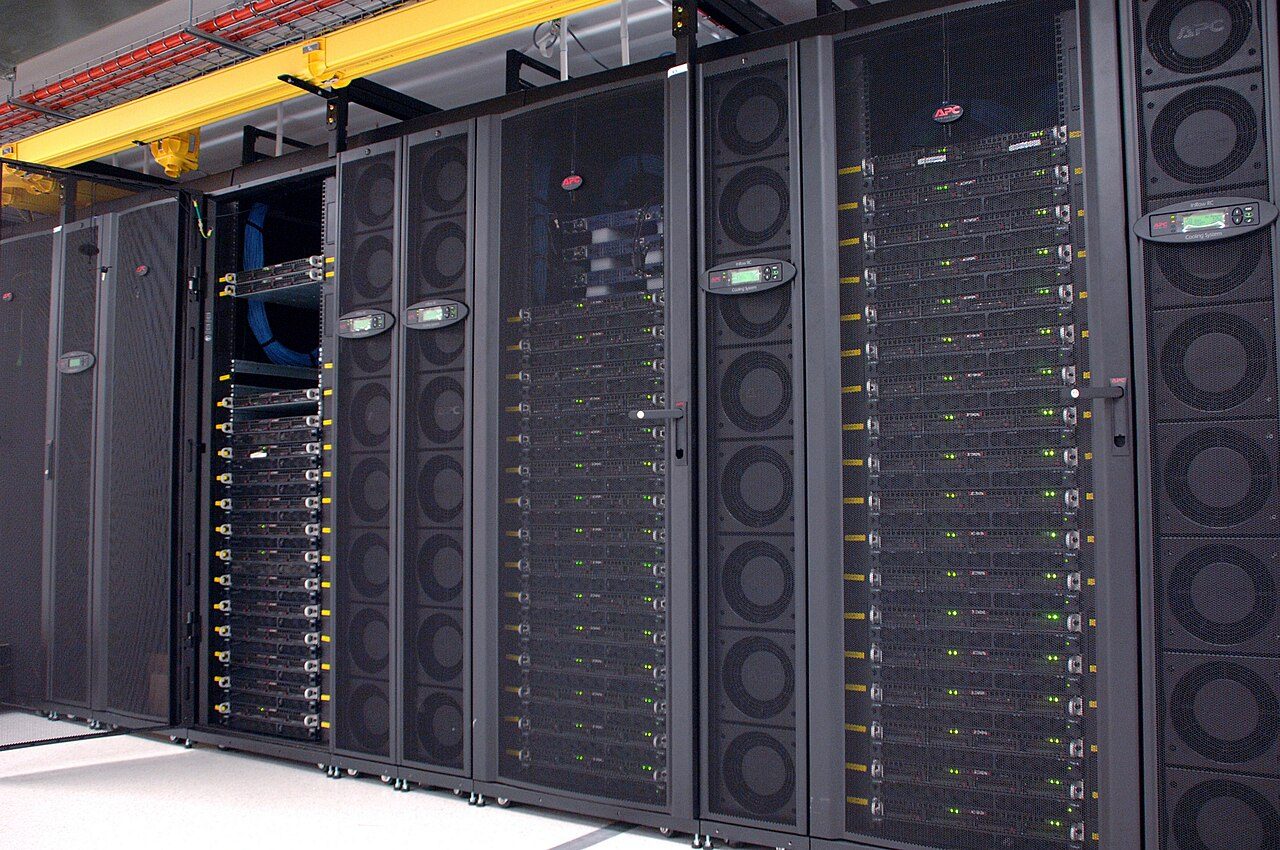
India has spent two and a half years building a public market for AI compute. The IndiaAI Mission, approved by the cabinet in March 2024 with an outlay of ₹10,371.92 crore over five years, rents graphics processors from private data-centre operators and resells the hours at subsidised rates to start-ups, researchers and government bodies. On paper, the programme is ahead of schedule. In August the Minister of State for Electronics and IT, Jitin Prasada, told the Lok Sabha that 93.18 lakh GPU hours (about 9.3m) had been sanctioned across 237 projects, that a purchase order had been issued for a 1.1-exaflop AI system to be installed at the National Informatics Centre’s data centre at Shastri Park in Delhi, and that 20 indigenous foundation models were being supported.
Yet the story has quietly changed. The hard part is no longer announcing capacity; it is paying for it, filling it and keeping it current in a hardware market that has turned against buyers. For chief executives, permanent secretaries and investors who have built plans around cheap state-backed compute, that shift matters more than any single headline figure.
Capacity on paper, capacity in use
The mission’s numbers have always come in several flavours. By December 2025, according to Business Standard, more than 38,000 GPUs had been onboarded across three bidding rounds, of which about 25,000 were operational. The government repeated the 38,000 figure in a parliamentary statement in March 2026. A report by Communications Today on 1 October set an early-deployment figure of roughly 18,000 GPUs against more than 34,000 listed on the official compute portal, and noted that some government communications cite totals above 50,000.
None of these figures is necessarily wrong. They measure different things: units contracted, units installed, units available to book. But the gap between them is the real policy variable. A GPU that is empanelled but not racked, powered and allocated produces no models and no public services. Decision-makers relying on the mission should therefore ask for utilisation and queue data, not capacity totals, before committing projects to it.
The composition of demand is also revealing. Of the 190 projects approved by March 2026, the government said, 78 came from government entities, more than from start-ups and small firms combined. The state is not only the mission’s financier; it is its largest customer. That makes the programme as much an instrument of public-sector digitisation as an industrial policy for start-ups, and it means ministries competing for the same subsidised hours as the private firms the mission was meant to nurture.
The hardware market moved faster than the tenders
The mission was designed around periodic reverse auctions that lock in a lowest price per GPU hour. In January Business Standard reported that the government was preparing a fresh round for 12,000–15,000 of Nvidia’s newer Blackwell-generation chips, with a senior official saying new bids were needed to discover prices for the latest technology. The average lowest price discovered in earlier rounds was about ₹115 per GPU hour, and roughly ₹140 for an H100.
Since then, costs have gone the wrong way. Communications Today reports double-digit increases in Blackwell prices during 2026 and a doubling of high-bandwidth memory prices in the first quarter. The government itself has conceded the economics are shifting: in March Sushil Pal, a joint secretary at the electronics ministry (MeitY), said that GPUs and other silicon account for about 70% of an AI server’s cost today, a share he expected to rise to 90–92% with newer platforms. MeitY has since signalled that it will rework its ₹17,000 crore production-linked incentive scheme for IT hardware, amid questions over whether turnover-based subsidies reward the assembly of imported parts rather than genuine domestic value. Mr Pal also flagged energy as the factor most likely to constrain the sector.
India can subsidise the price of an hour of compute; it cannot subsidise away the price of the chip behind it.
The implication is straightforward. Each new tender round will be priced against a dearer market than the last, while the mission’s budget is fixed. Either the subsidy per hour falls, the number of hours falls, or the government finds more money. Organisations that have priced projects on today’s subsidised rates should model all three.
Sovereign models, unevenly funded
The second pillar of the mission, home-grown foundation models, faces a related test. In a Lok Sabha reply reported by MediaNama in April, MeitY listed 12 organisations funded to build models. The IIT Bombay-led BharatGen consortium received ₹1,058.52 crore, more than four times the next-largest allocation; Sarvam AI received about a quarter of that. Most of the money, the ministry said, goes on compute. By July the government told the Rajya Sabha that 20 proposals had been selected, 12 large language models and eight smaller ones, with models from Sarvam and BharatGen already published on the AIKosh platform.
For public bodies, these models offer something foreign frontier systems cannot: Indian-language coverage, domestic hosting and a policy preference that will increasingly show up in procurement. But they also concentrate risk. Because the bulk of model funding is compute, the same price pressures that squeeze the subsidised GPU market squeeze the model builders. A department that standardises on a sovereign model should ask the developer how its next training run is financed, not just how the current model scores on benchmarks.
What decision-makers should do now
India’s governance posture reinforces the point that execution, not legislation, is where the action is. The AI Governance Guidelines published by MeitY in November 2025 chose a principle-based approach over a new AI law, explicitly favouring innovation over “cautionary restraint” and leaving most risks to existing statutes, a new AI Governance Group and an AI Safety Institute. Hard obligations for most organisations will continue to arrive through sector regulators, the amended IT Rules on synthetic media and data-protection rules, rather than through a single AI act.
Three practical conclusions follow. First, treat subsidised compute as a launch ramp, not a permanent cost base: plan for rates to rise as tender rounds reprice. Second, demand operational transparency from the mission and its providers, especially allocation times and actual utilisation, and build contingency capacity on commercial clouds. Third, watch energy and grid connections as closely as chip prices; the ministry’s own officials have named power as the binding constraint.
India’s sovereign AI strategy is not failing. It has created a functioning domestic compute market from almost nothing in under three years. But the next phase will be judged on how many useful hours it delivers per rupee in a year of dearer silicon, and that is a far harder number to announce.
Sources
- IndiaAI Mission sanctions 93 lakh GPU hours, orders 1.1 EFLOPS compute system — TechObserver
- IndiaAI Mission faces gap between capacity and deployed GPUs — Communications Today
- Govt likely to open bids to onboard nearly 12,000-15,000 Nvidia GPUs — Business Standard
- IndiaAI Mission Expands AI Ecosystem with Affordable Compute and Startup Support — Press Information Bureau
- India reviews AI hardware PLI amid high GPU costs — Communications Today
- India’s AI Server Subsidy Gap Sparks PLI Program Overhaul — WinBuzzer
- Govt is funding 12 AI orgs to develop indigenous models — MediaNama
- IndiaAI Mission backs 13 Responsible AI projects, 20 sovereign AI models — CXO Digitalpulse
- India AI Governance Guidelines — Press Information Bureau
Discussion
No comments yet. Start the conversation.