Chile Moves to Ditch Europe’s AI Rulebook
Santiago plans to swap its EU-style AI bill for an enabling law built on standards, sandboxes and liability for real harm. The text is late, no single supervisor is named, and the region is splitting.

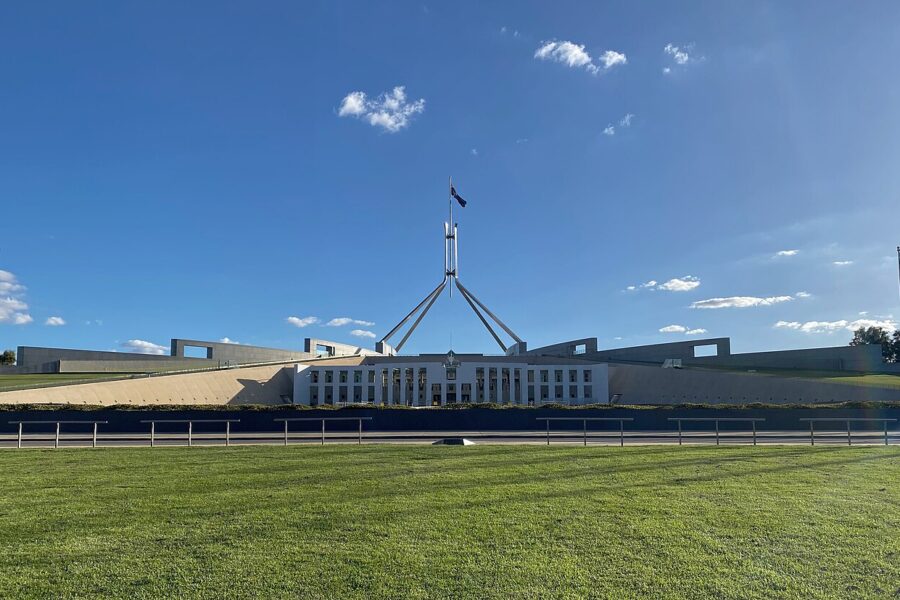
The National Congress building in Valparaíso, seat of the Chilean Senate, which is considering the country's AI bill.
Photo: Carlos Figueroa Rojas, CC BY-SA 4.0 · source
Chile is preparing to abandon the European template for governing artificial intelligence. The government of President José Antonio Kast intends to replace the AI bill now before the Senate, which sorts uses of AI into risk tiers on the European Union’s model, with a framework law built on international standards, regulatory sandboxes and penalties for harm actually caused. In an interview published by La Tercera on 4 October, science minister Ximena Lincolao argued that risk cannot be classified because the technology changes so fast, and said the substitute text had not yet been submitted; the paper reported that it would drop the original bill’s risk categories. The direction is clear; the legal detail is not. For any government or company deploying AI in Chile, the switch would change who answers for failures, when, and to whom.
A Bill Halfway Through Congress
The bill, boletín 16821-19, was sent to Congress by the previous government on 7 May 2024 and merged with an earlier parliamentary motion. The Chamber of Deputies approved it on 13 October 2025. The next day the Senate referred it to its Committee on Future Challenges, Science, Technology and Innovation, where it still awaits a first report. The record shows the current government renewing a “simple” urgency roughly monthly since May, most recently on 1 September 2026.
The case against the approved text is set out in the science ministry’s 13 July presentation to that committee. It describes four risk categories with no annex or regulation listing what falls into each, seven absolute bans on uses deemed to pose unacceptable risk, six EU-derived compliance duties for high-risk systems, and fines of up to 20,000 UTM imposed by the new Personal Data Protection Agency. In the ministry’s view, operators cannot know in advance which tier applies, and the bill duplicates data-protection, consumer, intellectual-property and environmental law.
The replacement outlined in those slides would scale obligations to context and real-world impact rather than fixed tiers; recognise technical standards that can be updated by administrative resolution; offer voluntary certification and audits that carry evidential weight with authorities; and drop AI-specific sanctions altogether, leaving each harm to be punished under the law that already covers it. Sandboxes lasting two years could temporarily suspend existing rules, alongside geographic and technological innovation zones and educational sandboxes. In May, committee chair Rojo Edwards, in the Senate’s own account, cited swapping ex ante review for ex post review as one possible change.
The timetable has slipped. Ex-Ante reported on 30 August that the substitute would run to more than 20 articles and that Lincolao had committed to deliver it in early September. A month on, the minister told La Tercera that it had not been submitted, and the Senate record shows no new filing.
Who Would Hold the Pen
The sharpest change concerns supervision. Under the approved bill, enforcement sits with the data protection agency. The ministry’s slides create no new AI supervisor. They instead divide the work among existing bodies: the national cybersecurity agency (ANCI) for security, the data agency for personal data and the public procurement directorate (DCCP) for purchasing, all coordinated by the science ministry. They also promise guidelines on public procurement and responsible use of AI by public bodies, and present sanctions based on real acts as a way to stop public servants fearing to innovate. The ministry’s May presentation to the committee went further on liability, listing strict liability and mandatory insurance among its safeguards and calling for sanctions proportionate to concrete harm rather than theoretical risk. Nothing in either deck names a single body to check compliance with the proposed standards.
In this desk’s reading, the trade cuts both ways. Companies would face lower upfront costs and no Chile-only conformity regime, since recognised standards such as ISO/IEC or NIST would count towards compliance. The price is uncertainty after the fact. Liability would be settled by sectoral regulators and courts, case by case, not by obligations known in advance. For governments, the burden shifts to the buyer: without statutory tiers, procurement guidelines become the effective rulebook for public-sector AI.
A Chilean public body buying an AI system would no longer check it against a statutory list. It would rely on guidelines, standards and its own contract.
The Critics’ Case
Experts quoted by La Tercera in September were divided: Rodrigo Durán, who manages Chile’s National Centre for Artificial Intelligence (Cenia), called the European model too heavy for Latin America but warned that costly sandboxes may mainly benefit large players; Gonzalo Álvarez of Universidad Central’s Tech-Law programme cautioned that flexibility must not become a legal vacuum, since AI harms can be massive, diffuse or irreversible; Camilo Garrido of Universidad Mayor’s cybersecurity research centre argued that high-impact systems should keep preventive duties, because a discriminatory algorithm can do damage for months before anyone notices; and Patricio Cavieres of Universidad Gabriela Mistral warned of regulatory capture by large firms.
Former science ministers Aisén Etcheverry and Aldo Valle did not respond to Ex-Ante’s requests for comment. Ahead of a legislative forum in Washington, Socialist deputy Daniel Manouchehri, who chairs the Chamber’s science committee, said any law must protect rights and hold someone responsible when an algorithm affects a person, while Republican deputy Felipe Ross favoured regulating identified rather than potential risks, La Tercera reported.
The government’s presentation points to Europe’s own retreat. The EU’s AI Omnibus, in force since 27 July 2026, pushed high-risk obligations back to 2 December 2027 and, for AI embedded in regulated products, to 2 August 2028. Colombia is heading the other way. A bill filed by legislators on 21 July revives an AI proposal drafted by Colombia’s science and ICT ministries that lapsed in the last Congress, and the first-debate report in the Chamber of Representatives proposes approving a text that classifies systems into categories including riesgo inaceptable (unacceptable risk) and alto impacto (high impact). In this desk’s judgement, firms operating in both countries should plan for divergence, not a common Latin American template.
What to Watch
The first signal is the filing of the substitute text. Three details will show how far Chile has moved: whether the seven outright bans survive, which the ministry’s published material does not settle; whether a supervisor with real powers is named; and how far sandbox participants are shielded from liability. The next is the committee calendar, and whether the government upgrades the bill’s urgency.
Companies should map their AI uses now against the laws that would do the policing — data protection, consumer, cybersecurity and intellectual property — and be ready to evidence conformity with international standards. Public bodies should expect procurement guidance from the DCCP to matter more than the statute. Regional counsel should track the first debate in the Sixth Committee of Colombia’s lower house alongside Europe’s December 2027 date. Chile is no longer copying the European model; what it builds instead is still unwritten.
Sources
- Ximena Lincolao: “El dilema entre innovación y seguridad en la IA es un falso dilema” — La Tercera — 4 October 2026; (in Spanish; translation by AI & GPP) (metered paywall)
- Boletín 16821-19, Regula los sistemas de inteligencia artificial: tramitación (legislative record) — Senado de Chile — live record, latest entry 1 September 2026; (in Spanish)
- IA como Infraestructura Estratégica para Chile: Indicación Sustitutiva al Proyecto de Ley de Inteligencia Artificial — Ministerio de Ciencia, Tecnología, Conocimiento e Innovación (presentation to the Senate committee, via the Senate legislative record) — 13 July 2026 (date listed in the Senate record); (PDF) (in Spanish; translation by AI & GPP)
- Senadores conocen propuesta del Ejecutivo para ley marco de IA — Senado de Chile — 26 May 2026; (in Spanish; translation by AI & GPP)
- El radical cambio que prepara Kast al proyecto de ley sobre Inteligencia Artificial de Boric — Ex-Ante — 30 August 2026; (in Spanish; translation by AI & GPP)
- Ley Marco de Inteligencia Artificial para la Innovación, la Productividad y la Competitividad — Ministerio de Ciencia, Tecnología, Conocimiento e Innovación (presentation to the Senate committee, via the Senate legislative record) — 18 May 2026 (date listed in the Senate record); (PDF) (in Spanish; translation by AI & GPP)
- Las advertencias que asoman con el giro del gobierno en la ley de IA — La Tercera — 5 September 2026; (in Spanish; translation by AI & GPP) (metered paywall)
- Ministra Lincolao y parlamentarios buscan argumentos en Washington frente al debate sobre ley marco de IA — La Tercera — 22 September 2026; (in Spanish; translation by AI & GPP) (metered paywall)
- AI Omnibus enters into force — European Commission, Shaping Europe’s digital future — 27 July 2026 (last update 31 July 2026)
- Informe de ponencia para primer debate en la Cámara de Representantes al Proyecto de Ley No. 025 de 2026 Cámara — Cámara de Representantes de Colombia — undated on the document; uploaded September 2026 per URL path; references a 15 September 2026 technical session; (PDF) (in Spanish; translation by AI & GPP)
Discussion
No comments yet. Start the conversation.