Permits, Not Chips: Finland Tells Google to Pause Its Groundwork
Finland's national permit agency has asked a Google subsidiary to stop clearing two data-centre sites until environmental assessments are finished. Brussels' own fast-track plan for data centres points the other way: assess first, then build quickly.
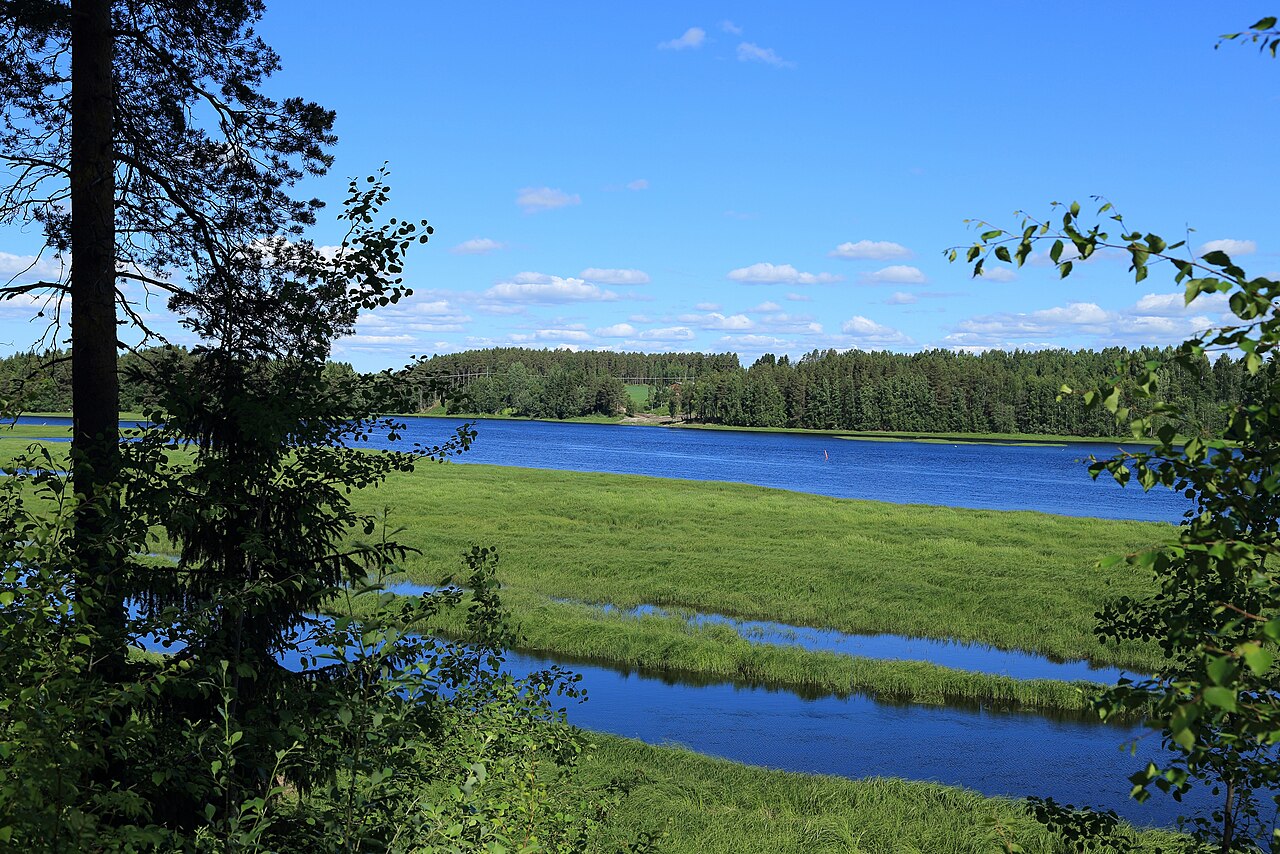
The Oulujoki river at Muhos, northern Finland, the municipality where Google's subsidiary cleared a planned data-centre site (illustrative; photographed in July 2017).
Photo: Estormiz, CC0 1.0 Universal Public Domain Dedication — http://creativecommons.org/publicdomain/zero/1.0/deed.en · source
Finland’s national permit agency has asked Tuike Finland Oy, a Google subsidiary, to suspend earthworks at its planned data centres in Muhos and Kajaani until the environmental impact assessments (EIAs) for both are complete. The agency’s press release of 6 October 2026 gives the company until 14 October to explain itself and asks it to stop immediately, by 23 October at the latest; non-compliance could bring coercive measures backed by a conditional fine. For governments courting AI infrastructure, the binding constraint is often land and law, not chips.
What the Agency Asked For, and Under Which Law
The Finnish Supervisory Agency (Lupa- ja valvontavirasto, LVV), which began work on 1 January 2026, acted under section 32(2) of the Environmental Impact Assessment Act (252/2017). Its letter on Muhos (LVV-U/37128/2026) covers felling, topsoil stripping, excavation, blasting, crushing, ditching and site roads; surveys and planning may continue. A matching letter covers Kajaani-Otanmäki (LVV-U/22159/2026).
Tuike’s reply to the agency of 25 September put the cleared area at about 330 hectares in Muhos and slightly under 200 in Kajaani. The 571-hectare Muhos site is planned for nine data-centre buildings with more than 300MW of backup generation.
Why a Municipal Green Light Did Not Settle It
Tuike said it relied on section 109 of the Building Act (751/2023), which allows groundwork such as felling and excavation before construction, and on forest-use notifications. Muhos building control said in writing on 5 June that such works were possible; Kajaani’s saw no reason to intervene. Neither had granted a building permit.
The agency replies that construction-law clearance does not discharge the EIA duty. Citing the EU Court of Justice in Case C-215/06, it argued that a project cannot be split into stages that hollow out the assessment, and that the Muhos clearance alone required one. Sari Myllyoja, head of the agency’s communities and infrastructure unit, told Yle the step was highly unusual.
Google spokesman Sondre Ronander said in a statement to AFP, reported by Euronews: “We understand the concerns and have fallen short of our own high standards in this instance,” adding that Google would follow the agency’s guidance; Google says it acted in good faith and will plant trees across 130 hectares at Muhos. Yle News reported, citing Iltalehti, that police had opened a preliminary inquiry into the Muhos works after a private individual’s request of 2 October. Environment and Climate Minister Sari Multala told MTV Uutiset that every company operating in Finland must obey the law.
How the Dispute Unfolded
The timeline below is built from the agency’s two letters and Yle’s reporting.
| Date | Event |
|---|---|
| Summer 2025 | EIA procedures open for both sites |
| 31 March 2026 | Tuike applies to Muhos for an earthworks permit (maisematyölupa) |
| Late April 2026 | Google asks the agency whether Muhos needs an EIA at all (Yle) |
| 17 May 2026 | Kajaani building permit application cites section 109 groundwork |
| 18 May 2026 | Agency tells Muhos building control no permit may precede the EIA’s conclusion |
| 5 June 2026 | Muhos building control says section 109 works are possible |
| 9 September 2026 | Google announces a €13bn Finnish investment (Yle) |
| 18 September 2026 | Agency requests explanations from Tuike and both municipalities |
| 6 October 2026 | Suspension requests issued |
| 14 October 2026 | Deadline for Tuike’s explanation |
| 23 October 2026 | Deadline for works to stop |
| End of 2026 | EIA reports expected |
Brussels’ Fast Track Assumes the Assessment Comes First
The Commission’s proposed Cloud and AI Development Act, COM(2026) 502 of 3 June 2026, aims to triple EU data-centre capacity in five to seven years. Article 10 obliges each member state where capacity is being built to name at least one “data centre acceleration zone”, weighing a preference for brownfield over greenfield land. Article 13 offers a zone-wide baseline permit and a 12-month cap on permit-granting, but only once the state has assessed the zone’s environmental effects.
Europe’s fast track buys speed by assessing early and once, not by clearing first and assessing later.
In this desk’s reading, Muhos inverts that design. The French firm Sesterce offers a contrast: it plans to invest more than €10bn at the former Kaipola paper mill in Jämsä, a brownfield site, starting a 200MW liquid-cooled first phase before the end of 2026, Yle News reported. Yet Jämsä’s town manager, Jori Reijula, told Yle “there are still many permit processes”.
What Governments Courting Data Centres Should Watch
First, Tuike’s reply, due by 14 October, and whether the agency escalates. Second, whether CADA’s zone model, still a proposal, survives Parliament and Council. Third, whether governments assess sites before courting hyperscalers, as in Cape Town’s Data Centre Fight Puts a Price on AI’s Thirst and Canada’s Data-Centre Rush Is Outpacing Ottawa. Capacity pledges, including Europe’s gigafactory programme, mean little if the ground beneath them is contested.
Sources
- Lupa- ja valvontavirasto kehottaa Tuike Finland Oy:tä keskeyttämään Muhoksen ja Kajaanin datakeskushankkeiden valmistelutoimet — Lupa- ja valvontavirasto (via STT Info) — 6 October 2026; official press release (in Finnish; translation by AI & GPP)
- Kehotus toiminnan keskeyttämiseksi Muhoksen palvelinkeskushankkeessa ja asianosaisen kuuleminen, LVV-U/37128/2026 — Lupa- ja valvontavirasto — 6 October 2026; (PDF) (in Finnish; translation by AI & GPP)
- Kehotus toiminnan keskeyttämiseksi Kajaanin-Otanmäen palvelinkeskushankkeessa ja asianosaisen kuuleminen, LVV-U/22159/2026 — Lupa- ja valvontavirasto — 6 October 2026; (PDF) (in Finnish; translation by AI & GPP)
- Finland orders pause on Google AI data centres over environmental concerns — Euronews — 7 October 2026
- Google halts work on data centres as Finnish police probe suspected illegal logging — Yle News — 8 October 2026
- French AI infrastructure firm Sesterce plans €10bn data centre project in Central Finland — Yle News — 8 October 2026
- Google: “Emme yltäneet tavoitteisiin” – viranomainen laittoi datakeskustyömaat jäihin Muhoksella ja Kajaanissa — Yle — 6 October 2026; (in Finnish; translation by AI & GPP)
- Ympäristöministeri Multala Googlen laittomista hakkuista: “Datakeskusalan pitää lunastaa suomalaisten luottamus” — MTV Uutiset — 6 October 2026; (in Finnish; translation by AI & GPP)
- Proposal for the Cloud and AI Development Act (CADA), COM(2026) 502 — European Commission — 3 June 2026
- Miten Google pääsi toimimaan Suomessa näin? — Yle — 8 October 2026; (in Finnish; translation by AI & GPP)
Discussion
No comments yet. Start the conversation.