Africa’s Ballot-Box AI Rules Meet Their First Tests
Morocco's rights council reportedly found that more than a quarter of the election material it reviewed was made or altered with AI, while its regulator's ban covered only broadcasters. South Africa's new code reaches online content, but only through parties and candidates.
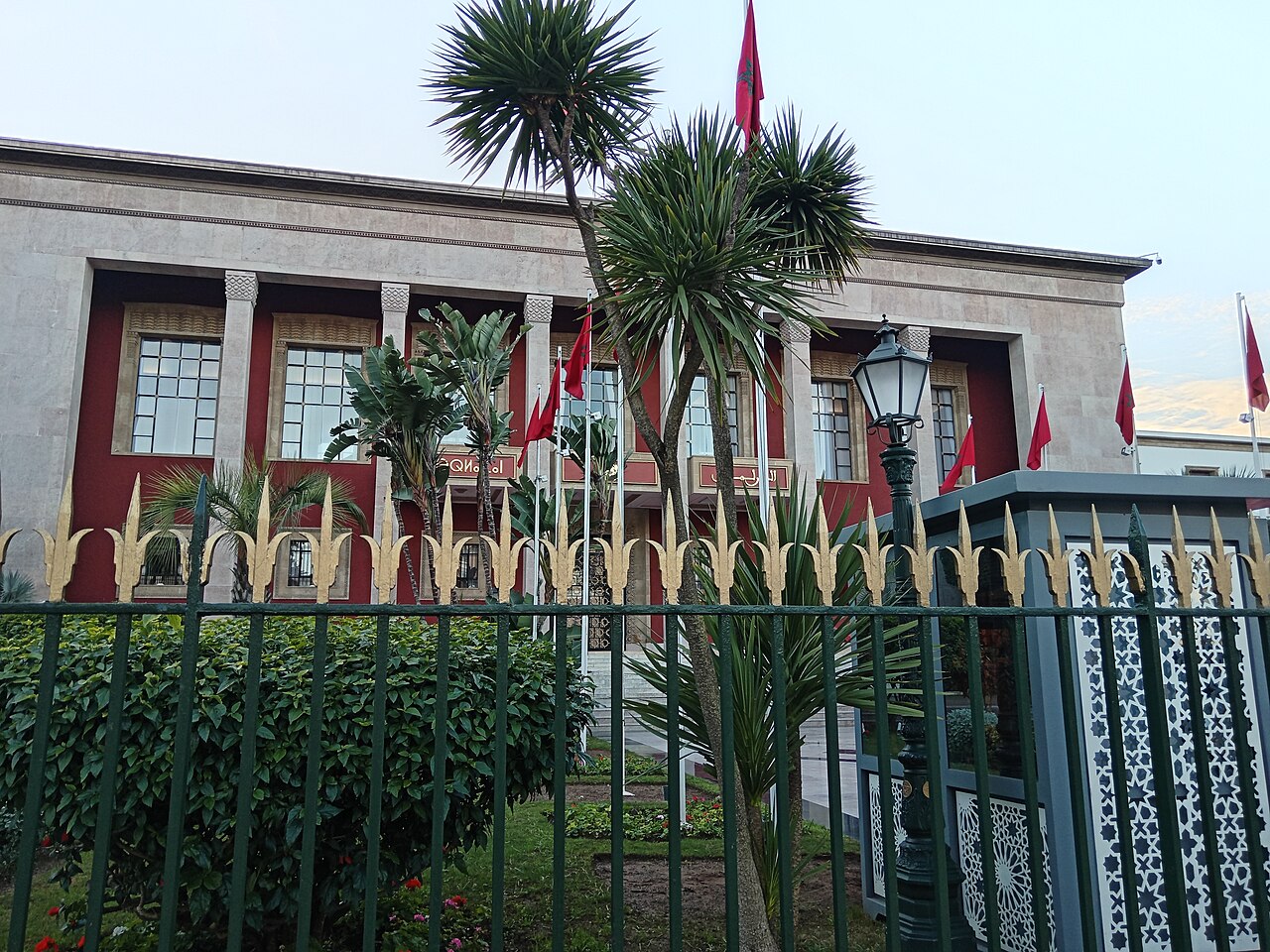
The Parliament of Morocco in Rabat, where the House of Representatives elected on 23 September 2026 sits.
Photo: CAPTAIN RAJU, CC0 1.0 Universal Public Domain Dedication · source
Key points
- Morocco’s National Human Rights Council (CNDH) found that 116 of 421 images, videos and audio recordings it examined from the 2026 election period, or 27.5 per cent, had been generated or modified with AI, according to Hespress.
- Morocco’s audiovisual regulator, HACA, barred misleading AI electoral content on radio and television in June, and its own study published on 5 October calls for regulation to look beyond airtime in traditional media.
- South Africa’s Disinformation Code, gazetted on 4 September 2026, requires parties and candidates to label AI content as “synthetic content” and to report online disinformation within 36 hours, with Electoral Court fines of up to R200,000 available.
Two African electoral systems have now put rules on AI-generated campaign content in front of voters, and the early evidence exposes opposite blind spots. Morocco, which elected its lower house on 23 September 2026, had a binding AI rule for broadcasters, yet its human rights council, according to one press report, counted AI-made or AI-altered material at more than one in four of the items it reviewed. South Africa, which holds municipal elections on 4 November, has a code that covers online content but binds only parties and candidates; on 7 October a government department said it would refer a disinformation campaign under it. The table below, built from the two countries’ instruments and reporting on their first weeks in force, sets out what each rule reaches and what it misses.
What Morocco’s Rights Council Counted After the Vote
Hespress English reported on 5 October that the Conseil national des droits de l’Homme (CNDH) examined 421 pieces of image, video and audio content from the election period and found 116 had been produced or changed with AI. The material spanned candidates, parties, manifestos, boycott calls, voting information and satire, and some showed invented events involving candidates. The council found such content was not consistently identified as artificial, and that parties themselves had used chatbots and AI tools to make campaign media.
The figure rests on one outlet. This desk could not find the CNDH’s report or statement on the council’s website, and the reporting does not say how the 421 items were chosen. The 27.5 per cent describes the council’s sample, not Morocco’s information space.
The result itself was clear. Le Matin reported (in French) that final figures announced by the Interior Minister on 25 September gave the Authenticity and Modernity Party (PAM) 97 of 395 seats, the National Rally of Independents (RNI) 66, Istiqlal 65 and the Justice and Development Party (PJD) 54. Two civil-society observer groups flagged deepfakes and fake accounts, TelQuel reported (in French), noting that prosecutors had logged September complaints involving AI-generated content, without giving a number.
Morocco’s Binding Rule Was Written for Radio and Television
The Haute Autorité de la Communication Audiovisuelle (HACA) acted early. Yabiladi reported on 24 June that the regulator had barred broadcasters from airing AI-generated or manipulated election content capable of misleading voters, while permitting explanatory AI material that carried a clear, permanent disclosure. Broadcast Media Africa identified the instrument as HACA Decision 50-26. Every reported measure is addressed to audiovisual services, and no sanction amount appears in the coverage.
HACA’s own research makes the gap explicit. Its study “Les réseaux sociaux et la communication politique : entre opportunités d’influence et risques de désinformation”, announced in a HACA communiqué relayed by the government portal Maroc.ma (in French) on 5 October, analysed 2,651 Facebook posts, 925 TikTok videos, 507 YouTube videos and 1,012 posts on X from parliamentary parties between January and May 2026. According to Fès News Media’s account of the study, HACA estimates that about 99 per cent of Moroccan internet users were on social networks in 2024 and recommends that political-media regulation be “not limited to monitoring presence and airtime in traditional media”. The study also cites election-law provisions punishing AI-falsified content meant to defame candidates or discredit the vote with prison and fines.
A rule that governs the transmitter cannot govern the timeline.
The claim tested here is that a broadcast-only rule leaves most AI election content outside its reach. The regulator’s own evidence supports it: HACA measured campaigning across four social platforms, puts nearly all internet users on social networks and asks for powers beyond airtime. The caveat is that the CNDH count, as reported, does not say where the 116 items circulated. In this desk’s judgement the evidence still points one way. The criminal provisions do reach online content, but only where intent to defame or undermine the vote can be shown, a far higher bar than a labelling duty.
South Africa Covers Every Channel, but Only Through Parties
South Africa took the other route. The Electoral Code of Conduct Countering Disinformation in Local Government Elections, Notice 4138 in Government Gazette No. 55341 of 4 September 2026, issued under section 88 of the Local Government: Municipal Electoral Act 27 of 2000, defines synthetic content as AI-generated audio, image, video or text. Clause 12 commits every party and candidate to mark it as “synthetic content” before distribution and to report suspected online disinformation to Real411, the commission’s designated mechanism, within 36 hours. Clauses 6 and 8 add a 36-hour duty to correct falsehoods. The code binds until results are declared and, according to the Electoral Commission’s statement of 8 September, covers communication online or offline, paid or unpaid.
Section 78(2) of the Municipal Electoral Act lets the Electoral Court impose a warning, fines reaching R200,000, forfeiture of a deposit, campaign restrictions and, at the extreme, disqualification or deregistration; IOL’s voter guide set out the same menu for the code. The design closes Morocco’s channel gap but opens another: anonymous networks and platforms are not parties to the code.
The Home Affairs Referral Tests Who the Code Can Reach
In a statement of 7 October, the Department of Home Affairs said a campaign was spreading false claims about the Constitutional Court’s 7 July 2026 judgment in what it called the Scalabrini of Cape Town matter, on the processing of asylum applications, and that “the matter will be referred to the Independent Electoral Commission for further action”. The department said it had issued an operational directive only to implement the binding judgment, and denied that the ruling confers citizenship. Two days later that directive was gone: the department’s Director-General withdrew it on 9 October, the government’s news agency reported, saying it had gone to Refugee Reception Offices on 28 September without the Minister’s knowledge and had within days overwhelmed those offices, endangered officials and created public-order threats. The department plans a fresh process to comply with the court order; its withdrawal statement does not mention the referral. These are the department’s characterisations; it names no person, party or account as responsible, and by 11 October this desk had found no published response from the commission. The withdrawal changes the policy the campaign targeted but leaves the referral with the commission. Unless the commission can tie the campaign to a party or candidate, the code’s duties have no one to attach to.
What Decision-Makers Should Watch Before 4 November
The table sets the instruments side by side.
| Country | Instrument | Scope | Labelling duty | Reporting window | Sanction | First test |
|---|---|---|---|---|---|---|
| Morocco | HACA Decision 50-26 (June 2026) | Radio and television | Misleading AI content barred; explanatory AI disclosed | None reported | Not stated in coverage | 23 Sep election; CNDH: 116 of 421 items AI-made (per Hespress; sampling unknown) |
| Morocco | Election-law provisions cited by HACA | All media, with intent to defame or undermine | None | None | Prison and fines | September complaints (number unknown) |
| South Africa | Disinformation Code, GG 55341 | Parties, candidates and agents, online and offline | “Synthetic content” label | 36 hours (Real411) | Fine up to R200,000, up to deregistration | Home Affairs referral, 7 Oct |
The lesson for electoral bodies drafting now is that a rule tied to a medium misses the move to platforms, and a rule tied to campaign actors misses anonymous networks. This publication’s analysis of Africa’s AI rules being written at three levels at once found similar gaps, the review of AI campaign advertising in 2026 shows how fast such content scales, and Brazil’s electoral court is moving from bans to disclosure. Watch whether the CNDH publishes its method, whether HACA seeks powers over platforms, and whether South Africa’s commission acts on the referral before the code lapses.
Questions this answers
How much AI-generated content circulated in Morocco’s 2026 election?
The CNDH found 116 of 421 items it examined, or 27.5 per cent, were AI-generated or modified, according to Hespress. The council’s report could not be located and its sampling method is unknown.
What does South Africa’s election disinformation code require on AI content?
Parties and candidates must label AI material “synthetic content” before distribution and report online disinformation to Real411 within 36 hours, under Government Gazette No. 55341. The Electoral Court may fine breaches up to R200,000.
Do broadcast-only AI rules work for elections?
Not on their own, on Morocco’s evidence: HACA’s ban covered radio and television, while its own study, as reported by Fès News Media, placed nearly all internet users on social networks and called for regulation beyond airtime.
Sources
- Moroccans turn to AI for political satire and criticism after 2026 elections — Hespress English — 5 October 2026; sole source for CNDH figures
- Morocco bans AI-generated election content ahead of 2026 vote — Yabiladi — 24 June 2026
- Morocco, Egypt Discuss Electoral Media Regulation And AI-Generated Content — Broadcast Media Africa — 1 October 2026
- Morocco’s 2026 Elections.. « HACA » Warns Against Deepfakes and AI Manipulation — Fès News Media — 6 October 2026
- HACA : publication d’une étude sur « Les réseaux sociaux et la communication politique : entre opportunités d’influence et risques de désinformation » — Maroc.ma — 5 October 2026; (in French; translation by AI & GPP)
- Achat de voix, deepfakes et abstention : ce que révèle l’observation des législatives 2026 — TelQuel — 25 September 2026; (in French; translation by AI & GPP)
- Élections 2026 : les résultats définitifs confirment le classement provisoire, avec le PAM en tête — Le Matin — 25 September 2026; (in French; translation by AI & GPP)
- Electoral Code of Conduct Countering Disinformation in Local Government Elections, Notice 4138, Government Gazette No. 55341 — Electoral Commission of South Africa — 4 September 2026; (PDF)
- Electoral Commission introduces new Disinformation Code ahead of 2026 Local Government Elections — South African Government (gov.za) — 8 September 2026
- Local Government: Municipal Electoral Act 27 of 2000 — Government Gazette No. 21367 (Polity.org.za) — 11 July 2000; (PDF)
- How to spot election disinformation and AI fakes ahead of 2026 polls — IOL — 21 September 2026
- Home Affairs takes action against disinformation campaign on Constitutional Court judgment — Department of Home Affairs (gov.za) — 7 October 2026
- Home Affairs withdraws directive on intake of asylum-seeker applications — SAnews (South African Government News Agency) — 9 October 2026
Discussion
No comments yet. Start the conversation.