Carney’s AI Council: Advice at the Centre, Power in the Departments
Canada's new National Council on Artificial Intelligence is the prime minister's own body, supported by a small Privy Council Office team. It has no published chair, timetable or deliverables, and ministers keep the accountability. What the design tells officials and suppliers.

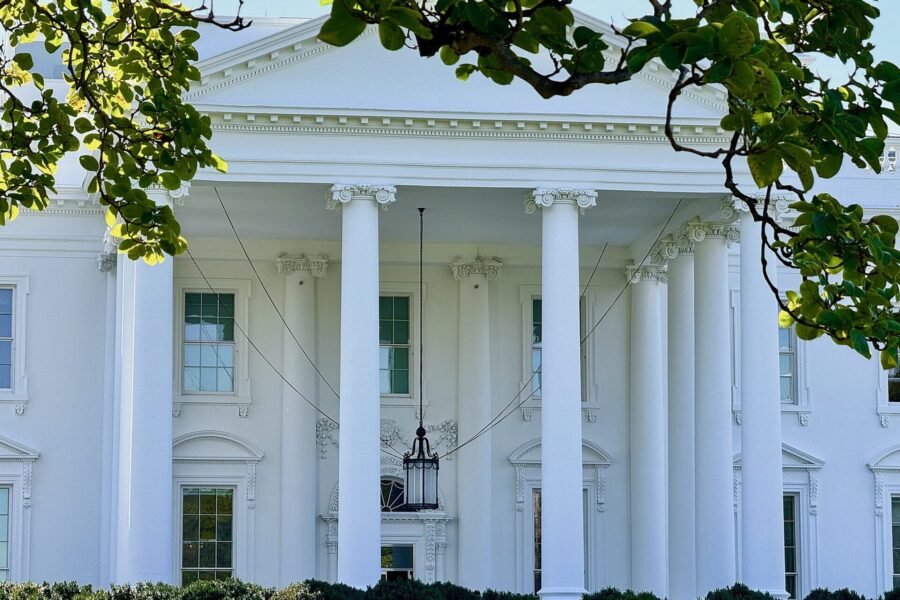
The Office of the Prime Minister and Privy Council building on Wellington Street, Ottawa, photographed in 2016.
Photo: Ken Lund from Reno, Nevada, USA, CC BY-SA 2.0 · source
On 2 October Mark Carney named the Prime Minister’s National Council on Artificial Intelligence, which, according to the Prime Minister’s Office release, will give “independent, practical, and timely expert advice” on the country’s AI transformation. It is at least the fourth AI advisory council the Liberal government has appointed, The Canadian Press reported. What sets it apart is where it sits. Advice on AI now runs to the centre of government, while responsibility for acting on it stays with ministers.
What the Council Is, and Is Not
Its brief is wide: the evolution of AI for All, June’s national strategy, plus adoption, “national champions”, sovereign infrastructure, safety, democracy and government transformation. The release says the council will be “supported by a small team within the Privy Council Office, while responsible ministers and departments will remain accountable for policy decisions and implementation.”
Eleven members are named, plus Patrick Pichette ex officio: Yoshua Bengio, Mila’s Valérie Pisano, Gillian Hadfield (Johns Hopkins), Sanja Fidler and Ajay Agrawal (Toronto), Jordan Jacobs (Radical Ventures), Michelle Zatlyn (Cloudflare), the ex-banker Louis Vachon, Eric Lamarre, the former national security adviser Jody Thomas and Senator Thomas Pitfield. Mr Pichette is chief executive of Digital Transformation Canada, the new body meant to use federal buying power for Canadian digital and AI firms. The Logic reported a 13-person council that also included John Graham, chief executive of CPP Investments, and CBC News said more than a dozen members were named. Mr Graham does not appear on the release as last modified on 5 October.
No chair, terms, meeting schedule or publication commitment is given.
Why the Centre, Not a Department
The Privy Council Office exists to advise and support the prime minister and cabinet, so placing the support team there signals authority. The Prime Minister’s Office said in a statement, reported by The Canadian Press, that Mr Carney “will play an active role in setting the council’s agenda, with particular attention devoted to areas under which mandates between departments overlap.” A spokesperson said the existing council, housed at Innovation Canada, concentrates on technical advice to the minister.
The overlaps are real. The release does not mention Evan Solomon, the AI minister; Digital Transformation Canada answers to Joël Lightbound; and the strategy promises to expand the Canadian AI Safety Institute’s model evaluations. Contrast the Advisory Council on Artificial Intelligence created in 2019, supported by the innovation department. According to The Logic, its refreshed version met once, in June 2025, and a Bengio-chaired Safe and Secure AI Advisory Group has no record of meeting; neither appears disbanded.
Advice moves to the centre; accountability stays with ministers. The council will be judged by what they do with it.
Who Is at the Table
The Logic noted that the domestic members are concentrated in Ontario and Quebec, and that Mila is the only one of the three national AI institutes with a seat. Labour has its own forum: a union-heavy AI and labour council, including Unifor and the Canadian Union of Public Employees, first met Mr Solomon on 5 October, The Canadian Press reported. No union figure sits on the national council.
Some members have close political ties. Mr Pitfield was one of Mr Carney’s top advisers before being appointed to the Senate in July, CBC News reported. When Mr Pichette was appointed to lead the agency in September, the Conservative shadow minister Leslyn Lewis said in a statement that he had made the maximum allowable donation to Mr Carney’s leadership campaign (the 2025 limit was $1,750), and accused the Liberals of “rewarding their well-connected friends”. The government describes the council’s advice as independent.
What to Watch
Officials should look for terms of reference, a chair and a meeting cadence, and for whether the older innovation-department bodies are wound up. Suppliers should watch Mr Pichette’s seat, which ties the council’s advice to the organisation doing the buying, on which, in this desk’s reading, the strategy’s goal of lifting AI adoption from just over 12 per cent to 60 per cent by 2034 partly depends. If the council’s advice is never published, the most consequential AI advice in Ottawa will also be the hardest for outsiders to follow.
Sources
- Prime Minister Carney launches new National Council on Artificial Intelligence — Prime Minister of Canada — October 2, 2026 (modified 5 October 2026)
- Prime Minister Mark Carney to take ‘active role’ in new AI advisory council — The Canadian Press, via CTV News — October 05, 2026 (“This report by The Canadian Press was first published Oct. 5, 2026”)
- Prime Minister Carney launches AI for All: Canada’s new national artificial intelligence strategy — Prime Minister of Canada — June 4, 2026
- Prime Minister Carney launches Digital Transformation Canada to deliver better, faster, more reliable government services to Canadians — Prime Minister of Canada — September 3, 2026
- Carney picks big-name researchers and investors for new AI advisory council — The Logic — October 2, 2026 (paywall)
- Raison d’être, mandate and role: who we are and what we do — Privy Council Office — date modified 2019-04-03
- Government of Canada creates Advisory Council on Artificial Intelligence — Innovation, Science and Economic Development Canada — May 14, 2019
- Ottawa launches new national AI council to advise on safety, deployment — CBC News — Oct 02, 2026
- Another Liberal Insider for Another Liberal Bureaucracy — Conservative Party of Canada — September 4, 2026 (party statement)
- Annual Limits on Contributions – 2025 — Elections Canada — date modified January 13, 2026
Discussion
No comments yet. Start the conversation.