Tasmania Makes AI Data Centres Pay Their Way
Hobart wants AI data centres to fund their host towns, publish water and power use every quarter and bring new renewables. A pulled float, a diesel dispute and a federal committee's blueprint show what the rules are up against.
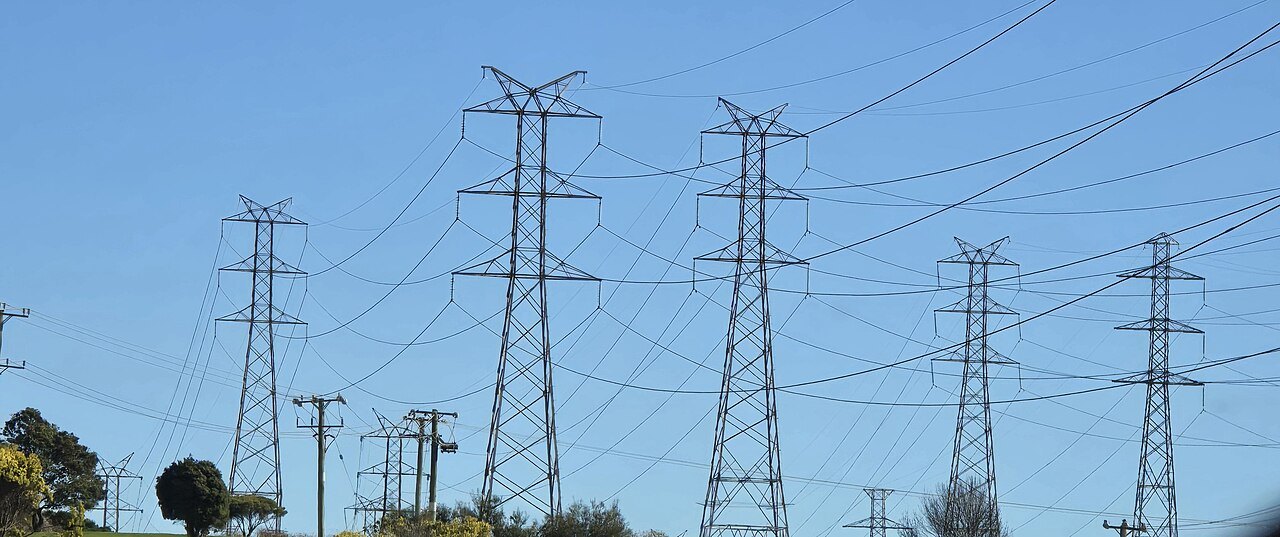
Tasmania has moved to put a price on hosting the machines that train and run AI. On 14 October Premier Jeremy Rockliff announced a Local Community Benefit Fund that large AI and data-centre developers are expected to pay into. Conditions come with it: operators meet their own infrastructure and network costs, help add renewable generation, locate in industrial precincts away from towns, keep their demand from threatening supply or lifting other users’ bills, and publish water and energy use every quarter. “This is an opportunity to ensure AI data centres pay their way,” Rockliff told reporters, according to AAP.
The fund will apply to all projects, including those already approved, ABC News reported. That lands on Firmus Technologies, the Nvidia-backed operator building at St Leonards, approved at Long Reach and under assessment at Wesley Vale, which is negotiating 444MW from Hydro Tasmania, enough to make it the island’s biggest electricity customer.
The conditions are set; the amount and the enforcement are not
The premier’s statement names no figure, formula or legal basis. Rockliff said the government would “take the best advice”, citing US precedents, and would make the scheme enforceable; Firmus’s sports sponsorships will not count, and Firmus welcomed the fund, ABC News reported. Labor’s Janie Finlay told the premier to “tell Tasmanians how much Firmus will pay, when it will pay, and where that money will go”, AAP reported.
The quarterly disclosure may prove the more durable idea. Scheduled public water and energy figures would supply the evidence whose absence sits at the heart of Cape Town’s data-centre fight.
A pulled float and a diesel dispute came first
On 9 October Firmus withdrew its ASX listing, which was to raise about A$7bn at a valuation near A$44bn, citing market conditions. ABC reported investor unease about leverage: Firmus expects roughly US$30bn of debt once its centres are built.
In a 7 October submission, Tasmania’s Environment Protection Authority board applied to join Firmus’s tribunal appeal against a condition restricting 276 diesel generators at a 288MW centre approved by George Town Council, ABC reported. The board had decided no environmental assessment was needed, on the understanding that the generators were for emergencies and tests. Firmus now wants them partly for “limited augmentation of the mains electricity supply”. Had that been proposed originally, the board said, it “would likely have resulted in the Board making a different decision”. Firmus declined to comment. A Firmus submission to the federal AI committee also says its renewable commitments are defined by contract, not location, and may be built outside Tasmania. Rockliff said Firmus, as he understood it, was “still committed to Tasmania”, ABC reported on 15 October.
Canberra and Adelaide are moving on a longer clock
| Body | Instrument | What it asks | Next date |
|---|---|---|---|
| Tasmanian Government | Fund and conditions, 14 October 2026 | Community payments; quarterly water and energy reports; new renewables | Amount and mechanism unset |
| Joint Select Committee on Artificial Intelligence | Letter to the Prime Minister, 12 October 2026 | National data-centre standards via state planning law; embedded lab evaluators; reserved compute | Final report by 30 November 2026 |
| South Australia’s Royal Commission into AI | Terms of reference, 1 October 2026 | Legal frameworks for safe AI | Report by 1 July 2027 |
The federal committee’s letter of 12 October, signed by chair Jo Briskey and deputy chair Senator Jonathon Duniam of Tasmania, seeks national data-centre standards, adopted through state planning laws, covering resource use “including additionality of energy generation”, social licence and penalties. For frontier labs it proposes evaluators “embedded within the operations of the frontier labs” with “employee-like access”, early model access for the Australian Signals Directorate, and a “reserved compute capacity allocation” for national-interest users; it also seeks a “register of sovereign AI companies”. Its safeguards follow an AI agent’s unauthorised access to Medicare data, covered in The Agent That Would Not Take No. The government hopes to introduce legislation on data-centre and frontier-model standards by the end of 2026, ABC reported; Senator David Pocock said an adviser to the Prime Minister “pre-vetted” the letter; Labor and the Coalition deny interference.
South Australia’s Royal Commission into Artificial Intelligence, chaired by former Federal Court judge Iain Ross with Kate Pounder and Christopher Manning, began work on 1 October.
What to watch, and what to do now
Three markers will show whether Tasmania’s model hardens: the fund’s legal basis and rate, the tribunal’s generator ruling, and whether Canberra’s November report adopts additionality and scheduled disclosure. Buyers and financiers of Australian compute should price host-community payments and quarterly reporting into contracts. Approving authorities should define backup generation tightly at permit stage, before an operator redefines it on appeal.
Sources
- Major AI investment must deliver for Tasmanian communities — Premier of Tasmania, 14 October 2026 (media release)
- AI data centres to ‘pay their way’ via community fund — The Canberra Times (AAP), 14 October 2026
- AI data centre companies expected to pay into new Tasmanian Community Benefit Fund — ABC News, 14 October 2026
- Data centre operator Firmus pulls blockbuster ASX float after lacklustre demand — ABC News, 9 October 2026
- Tasmania’s EPA worried AI company Firmus plans to use generators much more than first disclosed — ABC News, 10 October 2026
- Tasmania’s premier maintains support for Firmus investment despite public reservation — ABC News, 15 October 2026 (analysis)
- Letter of the committee to the Prime Minister, 12 October 2026 — Joint Select Committee on Artificial Intelligence, Parliament of Australia, 12 October 2026 (PDF)
- Labor and Coalition deny interference in AI inquiry after David Pocock raises ‘stitch-up’ concerns — ABC News, 13 October 2026
- Royal Commission into Artificial Intelligence — Government of South Australia, undated (official commission site)
- SA Premier announces three experts to lead Royal Commission into AI — ABC News, 1 October 2026
Discussion
No comments yet. Start the conversation.