Beijing Polices AI-Faked Soldiers Faster Than It Writes Standards
A joint cyberspace-and-military campaign makes AI-fabricated army content an enforcement target this autumn, while TC260's draft guide for building AI agents stays unfinished and 13 new AI standards run to 2027. Seoul, meanwhile, moves to pool state-funded training data.
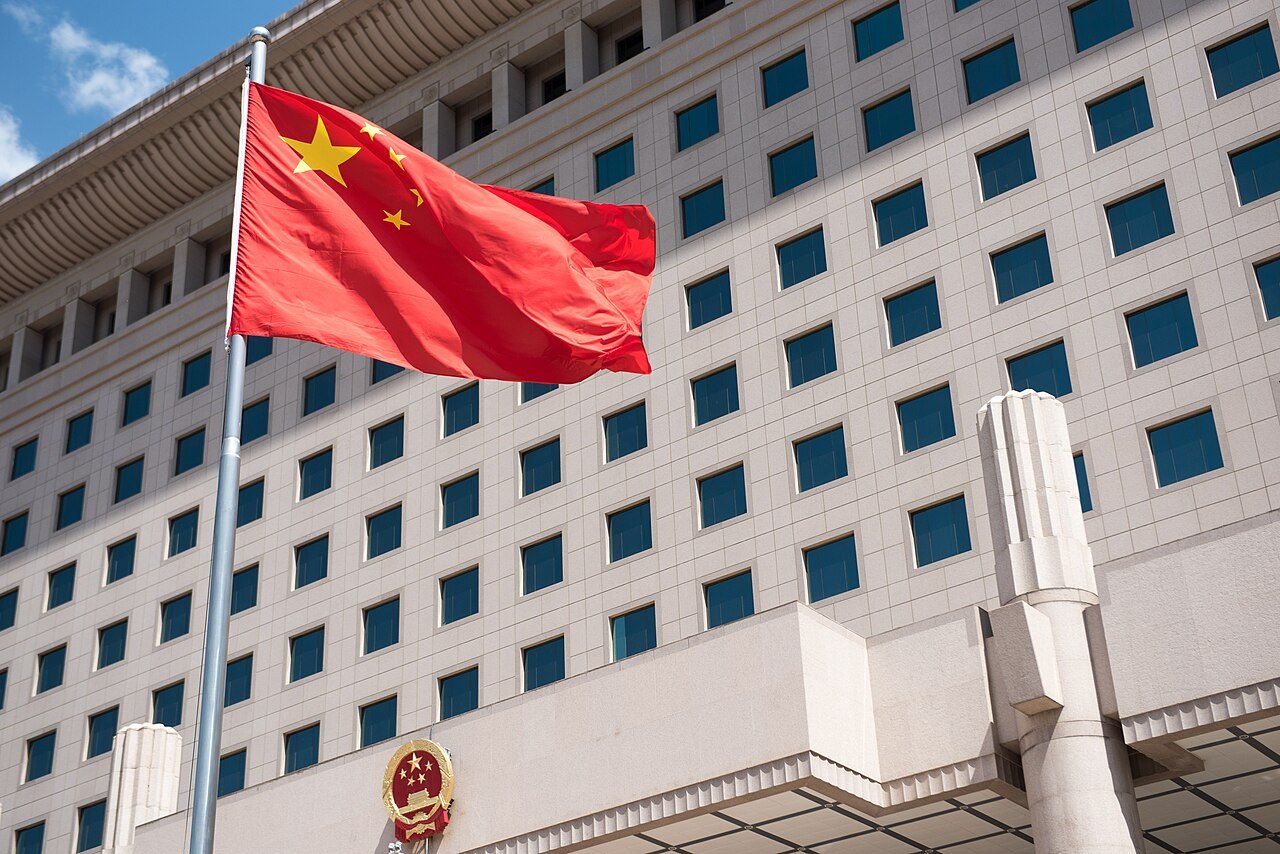
China’s internet regulator now has the armed forces as co-signatories to its content policing. A notice published on the Cyberspace Administration of China’s website on 15 October 2026, dated 12 October, opens a two-month special rectification campaign (专项整治) against military-themed marketing and hype online, beginning in October. It is signed by the Office of the Central Cyberspace Affairs Commission, the Ministry of Veterans Affairs and two organs of the Central Military Commission (CMC): its Political Work Department and its Political and Legal Affairs Commission. AI generation is named explicitly as a means of fabrication. The same week showed Beijing’s slower machinery: its cybersecurity standards body took on new AI standards due in 2027, while its guide to building AI agents remains a draft.
What the military-content campaign targets, and who must act
The notice lists ten categories of accounts to be screened. The sixth covers content that uses AI generation (利用AI技术生成), or splicing, grafting and editing, to invent military wish-fulfilment dramas, tragic stories or spoof videos. Others cover fake recruitment offers, livestream selling by invented service-member personas, impersonating soldiers for fraud, and using veteran or family identities to disclose unit designations, camp locations, training or equipment.
The obligations fall on platforms. Local cyberspace and veterans-affairs departments must press sites to set up review mechanisms for military-related content and clear offending material; the campaign will also publicise typical cases. Tip-offs go to the regulator’s reporting centre and to a reporting and rumour-rebuttal channel inside the military’s China Military Number (中国军号) app. It runs beside the regulator’s civilian drive against fake personas hiding behind AI disclaimers, but here synthetic imagery is framed as a question of the armed forces’ reputation and operational security, not only of labelling.
Why the agent guide is still not final
On 13 October the secretariat of TC260, the National Cybersecurity Standardization Technical Committee, assigned 25 recommended national standards issued by the Standardization Administration of China to its working groups. The attached project list dates the plans 30 September 2026 (most due by 31 December 2027). By AI & GPP’s count, 13 of the 25 concern AI directly. They include a foundation-model security testing method, AI guardrail requirements, a guide to detecting AI-generated content (led by Alibaba Cloud), security requirements for agents’ data processing, and a personal-information guide for AI users led by the regulator’s Data and Technology Support Centre.
The near-term document is the draft agent-system development security guide, a non-binding practice guide (实践指南) whose comment period closed on 2 October. The draft text covers software agents built on large models through preparation, design, implementation, testing and release, and names risks from prompt injection and goal deviation to memory contamination and cascading failure. Its drafters include China Mobile, ZTE, iFlytek and Ant Group. As of 19 October TC260’s site lists no final version, so readers of Beijing Spells Out How AI Agents Should Behave should treat the development stage as open.
Above both sits the CPC Central Committee and State Council Opinion on Developing New Quality Productive Forces, released by Xinhua on 9 October. Its clause 10, on the “AI+” action, ends by ordering systems for technology monitoring, risk early warning and emergency response, so that AI stays safe, reliable and controllable. It names no body to run that system and does not mention agents.
Korea’s training-data mandate has cleared parliament and awaits promulgation
The Ministry of Science and ICT (MSIT) said on 13 October that amendments to the Basic Act on the Development of AI and Establishment of Trust (the AI Basic Act) and the Data Industry Act had passed the Cabinet. The AI Basic Act change obliges government-funded projects to link the AI training data they produce to AI Hub, MSIT’s open data platform, with exceptions such as trade secrets, personal data and copyright. Newspim reported that the exceptions, which also cover national security, will be set by presidential decree, that AI Hub held 945 government-built datasets at the end of 2025 and that the One-Window data-location service linked 88 platforms as of August.
Parliament had voted first: the amendment began as Democratic Party lawmaker Kim Hyun’s bill, which an Assembly subcommittee passed on 15 September, Bloter reported. Energy Daily reported that the National Assembly plenary passed it, with amendments, on 1 October, and Newsworks reported on 12 October that the Data Industry Act amendment passed the same day and that only presidential promulgation remained. Money Today reported an April 2027 start, six months after promulgation.
What decision-makers should watch
First, the cases the regulator publishes when the military campaign ends, which will show whether AI-made content is a headline target or a footnote; platforms serving Chinese users should act now. Second, the final TC260 agent-development guide and the first public drafts of the 13 AI national standards, all due for submission by the end of 2027. Third, promulgation in Seoul and the still-unwritten decree setting the exceptions: contractors on Korean public AI projects should plan to provide training data from April 2027.
Sources
- 关于开展网络涉军不当营销和炒作信息专项整治的通知 (Notice on a special rectification of improper military-related marketing and hype online) — Cyberspace Administration of China, 15 October 2026 (notice dated 12 October 2026; in Chinese; translation by AI & GPP)
- 关于下达25项网络安全推荐性国家标准计划的通知 (Notice on 25 recommended national cybersecurity standard plans) — TC260 Secretariat, 13 October 2026 (in Chinese; translation by AI & GPP)
- 网安秘字〔2026〕121号 attachment: 25项网络安全推荐性国家标准计划项目清单 (project list) — TC260 Secretariat, 13 October 2026 (PDF; in Chinese; AI count by AI & GPP)
- 关于对《网络安全标准实践指南——智能体系统开发安全指南(征求意见稿)》公开征求意见的通知 (Notice seeking comment on the draft agent-system development security guide) — TC260 Secretariat, 18 September 2026 (in Chinese; translation by AI & GPP)
- 网络安全标准实践指南——智能体系统开发安全指南(征求意见稿 v1.0-202609) (draft guide) — TC260 Secretariat, September 2026 (PDF; in Chinese; translation by AI & GPP)
- 受权发布丨中共中央 国务院关于发展新质生产力的意见 (Opinion on Developing New Quality Productive Forces) — Xinhua, 9 October 2026 (authorised release; in Chinese; translation by AI & GPP)
- 국가 AI 데이터의 체계적 관리·활용을 위한 「AI기본법」, 「데이터산업법」 개정안 국무회의 통과 — Ministry of Science and ICT, via KDI Economic Information and Education Center, 13 October 2026 (government press release; in Korean; translation by AI & GPP)
- 과기부, AI기본법 개정안 통과…데이터 연계·개방 의무화 — Newspim, 13 October 2026 (in Korean; translation by AI & GPP)
- 국가가 만든 AI학습데이터 접근 쉬워진다…새 AI기본법 국무회의 통과 — Money Today, 13 October 2026 (in Korean; translation by AI & GPP)
- 정부 지원 AI 데이터 한곳으로…AI 기본법 개정안, 과방위 소위 통과 — Bloter, 15 September 2026 (in Korean; translation by AI & GPP)
- 정부사업 AI 학습데이터, 통합 연계 추진…기관별 분산 해소 기대 — Energy Daily, 1 October 2026 (in Korean; translation by AI & GPP)
- 세금으로 만든 AI 학습데이터 의무 제공…인공지능 기본법 개정안 국무회의 통과 — Newsworks, 12 October 2026 (in Korean; translation by AI & GPP)
Discussion
No comments yet. Start the conversation.