Seoul Folds 243 Local Governments Into 16 Systems
South Korea's first joint session of its science and economic ministers approved a rebuild of the administrative systems of all 243 local governments on 16 regional platforms, and waived fiscal review for a KRW600bn AI data centre in Pohang. The tender comes by year-end.
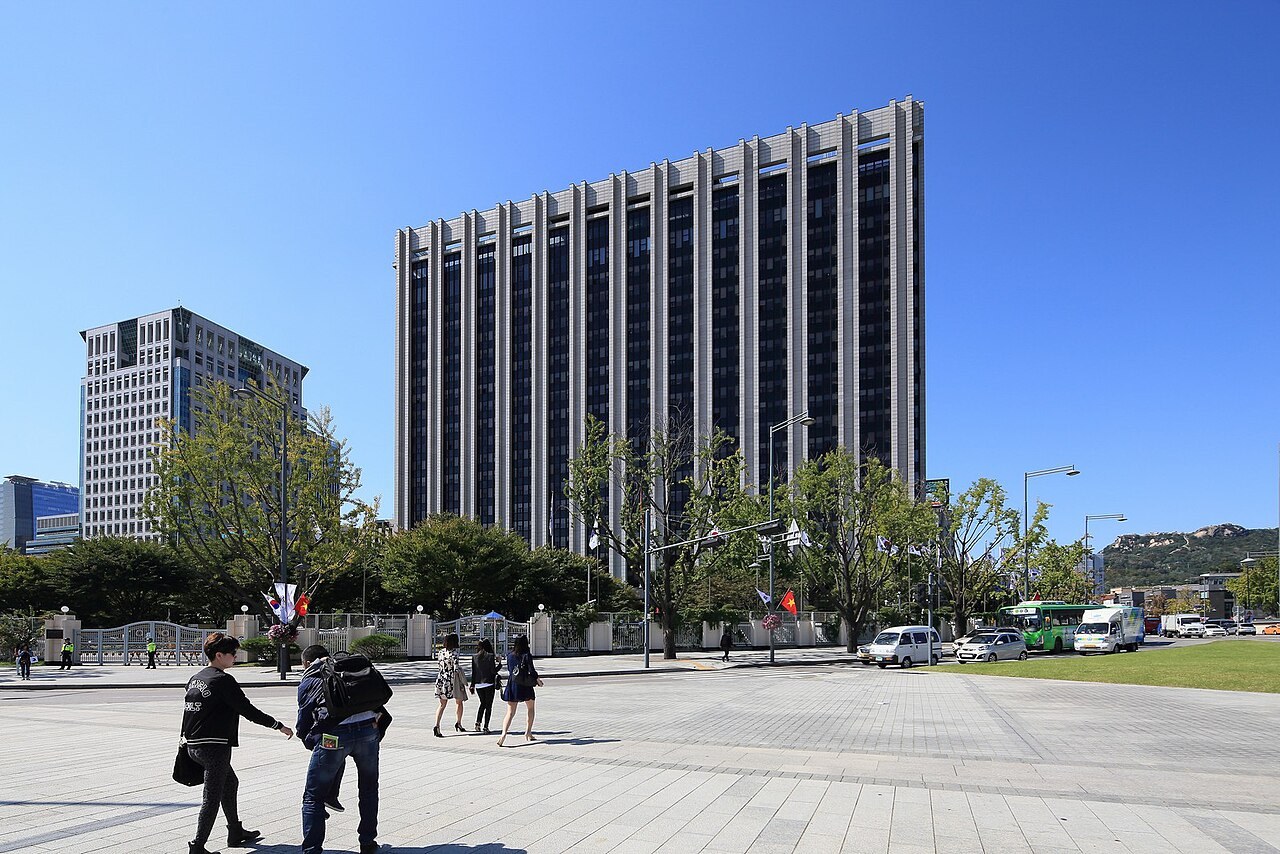
On 28 October 2026 South Korea’s deputy prime ministers for the economy and for science held the first joint session of their two ministerial councils and took two decisions that will shape the local state for a decade. One rebuilds the ageing administrative systems of every city, county, district and province on 16 shared regional platforms, to be let by year-end. The other clears a fiscal gate for a 40MW AI data centre in Pohang.
What a joint session of two ministerial councils decided
The session paired the Science and Technology Ministers’ Meeting, created in November 2025, with the Economic Ministers’ Meeting. It was co-chaired at Government Complex Seoul by Deputy Prime Minister Bae Kyunghoon, Minister of Science and ICT, and Deputy Prime Minister Lee Hyoung Il, Minister of Finance and Economy, according to the Ministry of Science and ICT’s account.
Two of the eight items concerned the machine state: the “next-generation local administration common system” and the ninth project of the Regional Revitalisation Investment Fund.
Why 243 local governments get 16 platforms, and what the count hides
Korean local officials use two systems that went live in the early 2000s, the provincial “Sido” system and the “Saeol” system of cities, counties and districts, ET News reported in July. The joint release says systems scattered over 243 local governments are to be merged into cloud environments run at the level of the 16 cities and provinces, with data standardised into forms “suitable for AI use” (translation by AI & GPP) and the contract let at the end of 2026 and opened in stages from 2028 to end-2029. In opening remarks published with the Ministry of Finance and Economy’s release, Bae called it a change of constitution for local administration, not a swap of old kit.
The count is new. When the Korea Local Information Research and Development Institute presented the plan in January, ET News reported 245 systems folding into 17 regional units by 2029. The release does not explain the change. One reason, inferred by this desk rather than stated by the ministries: Jeollanam-do and Gwangju merged into one special city on 1 July 2026, the Seoul Shinmun reported, leaving one regional government fewer.
The money is less settled. The same July report said the project passed feasibility review at about KRW600bn, that cloud migration pushed industry estimates to around KRW700bn, and that it will be a turnkey contract with commercial software bought separately; it named Samsung SDS, which wrote the master plan, among expected bidders. None of those figures appears in the release.
The motive is not only AI. On 17 November 2023 Saeol and the Government24 portal failed for what The Korea Times called 56 hours of paralysis, traced to a router. On 26 September 2025 a fire at the Daejeon site of the National Information Resources Service halted 647 government systems, the Korea JoongAng Daily reported. The second is the awkward precedent: fewer, larger platforms concentrate risk as well as cost. The release says nothing about disaster recovery; ET News’s July account promised an upgraded recovery system, unpriced.
Sixteen platforms are easier to patch than 243. They are also sixteen places where everything can stop at once.
What the Pohang exemption actually waives
The ninth fund project is an AI data centre in Pohang’s Gwangmyeong industrial complex: 40MW of grid supply and 32MW of IT load, leased to AI operators, costing KRW600bn (KRW150bn equity, KRW450bn loans), according to the project plan attached to the release. Construction was 7.66 per cent complete at the end of September; completion is due in November 2027 and operation in January 2028. The Seoul Economic Daily puts the sum at about $420m.
What the ministers waived is narrow. North Gyeongsang province must put KRW4bn into the project company by the end of March 2027, and local-government equity normally needs a fiscal investment review first. An “exemption track” replaces it: a resolution of the Economic Ministers’ Meeting, a specialist review, then an exemption notified by the Ministry of the Interior and Safety, as ZDNet Korea reported. The attachment’s KRW1.2tn of induced output and 4,000 jobs are the government’s estimates; the operator is not named. Where Beijing has just put a jobs test inside AI project review, Seoul is removing a review to speed an AI build.
What to watch before the end of December
The contract notice, promised for the end of 2026, will show whether the KRW700bn estimate and the turnkey structure survive. Against Tokyo’s request for nearly six times more AI money, the method differs: Japan budgets for AI through its ministries; Korea re-platforms the state that would use it. The question the release does not answer is the one procurement officers should ask first: who carries the outage when sixteen platforms replace 243.
Sources
- “과학기술·경제·산업정책 한 몸”…7대 SEED·AI 전환 가속화 — Ministry of Science and ICT, via Korea Policy Briefing (korea.kr), 28 October 2026 (in Korean; translation by AI & GPP)
- 대한민국 미래성장과 국민의 삶 개선을 위해 과학기술 정책과 경제·산업 정책의 역량을 결집 — Ministry of Science and ICT and Ministry of Finance and Economy joint press release, with attachment 「지역활성화 투자 펀드」 9호 프로젝트 신속 추진 방안, via korea.kr, 28 October 2026 (in Korean; HWPX/ODT attachments; translation by AI & GPP)
- 경제관계장관회의 – 과학기술관계장관회의 연석회의 개최 — Ministry of Finance and Economy press release, with the two deputy prime ministers’ opening remarks and the 9호 프로젝트 plan attached, via korea.kr, 28 October 2026 (in Korean; PDF attachments; translation by AI & GPP)
- 지방행정시스템 2029년까지 클라우드 대전환…245개 시스템 17개로 통합 — ET News, 9 January 2026 (in Korean; translation by AI & GPP)
- 대한민국 첫 광역행정통합 ‘전남광주통합특별시’ 공식 출범 — Seoul Shinmun, 1 July 2026 (in Korean; translation by AI & GPP)
- 7000억 규모 ‘공공 IT 대어’ 뜬다…차세대 지방행정시스템 수주전 하반기 돌입 — ET News, 9 July 2026 (in Korean; translation by AI & GPP)
- Network failure dents Korea’s digital reputation — The Korea Times, 26 November 2023
- Operations remain halted for 647 government systems after data center fire — Korea JoongAng Daily, 27 September 2025
- Korea Fast-Tracks 600 Billion Won AI Data Center in Pohang — Seoul Economic Daily, 28 October 2026
- 포항 AI 전용 데이터센터 구축에 투자심사 면제 트랙 적용 — ZDNet Korea, 28 October 2026 (in Korean; translation by AI & GPP)
Discussion
No comments yet. Start the conversation.