No Register, No Rollout: Peru’s Health Ministry Sets Its AI Terms
A ministerial resolution bars Peru's health ministry from buying or deploying any AI system it has not registered, risk-rated and authorised. Elsewhere in Latin America, a Mexican electoral institute and Ecuador's legislature have just declined to write AI rules of their own.
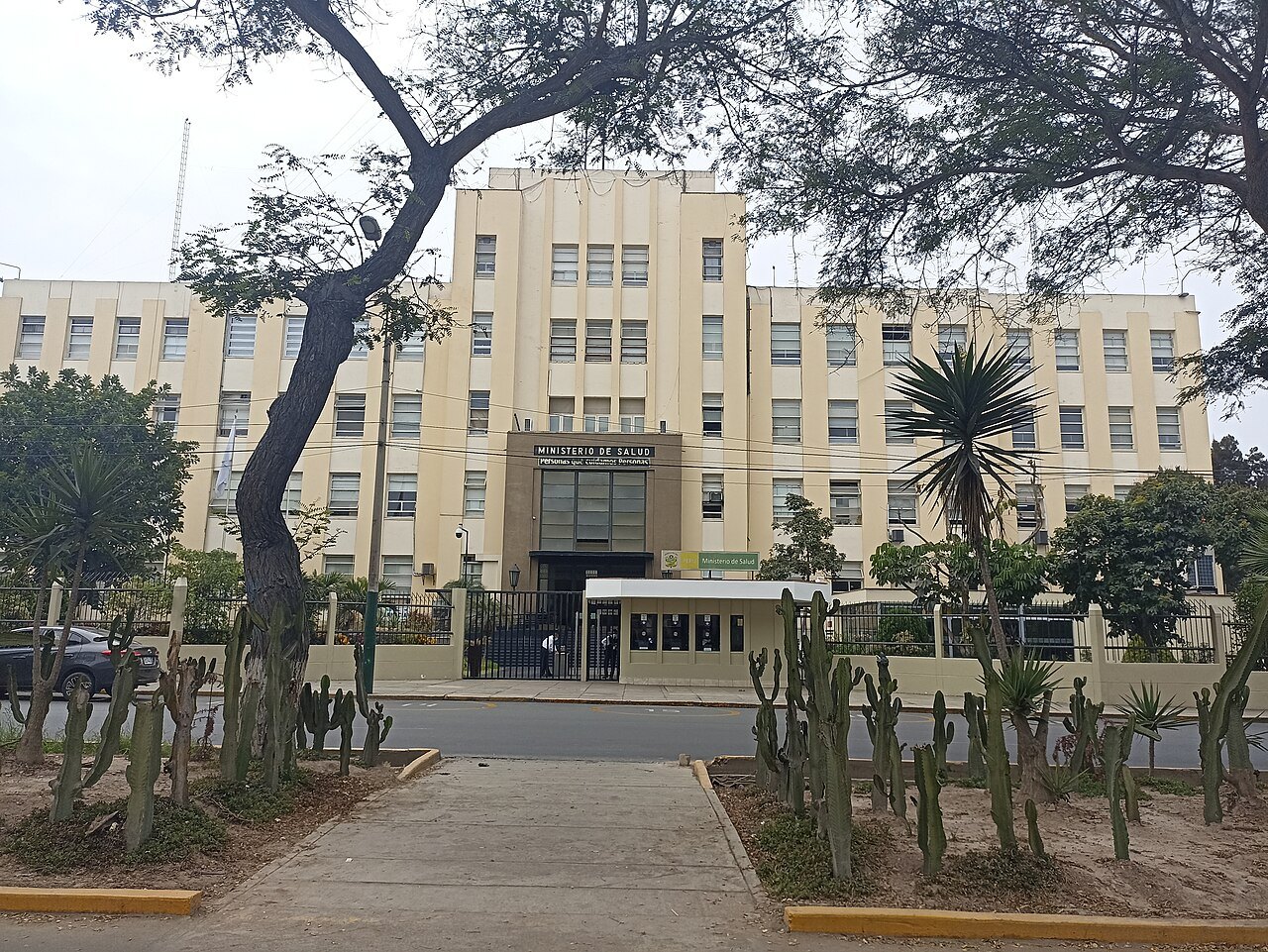
Peru’s Ministry of Health (Minsa) has made registration the price of entry for artificial intelligence. Under Resolución Ministerial Nº 903-2026/MINSA, signed by Health Minister Luis Williams Dyer Fernández on 2 October and published in El Peruano on 6 October 2026, the ministry may not acquire, contract, develop, test or deploy an AI system unless its Oficina General de Tecnologías de la Información (OGTI) has first registered, evaluated and authorised it. Peru’s AI statute, Ley Nº 31814 of July 2023, promotes the technology; the binding detail is arriving through executive instruments. Elsewhere in the region, a Mexican electoral institute and Ecuador’s legislature have just declined to write rules of their own.
What the resolution requires of anyone building or buying AI for Minsa
The technical annex on the ministry’s gob.pe page sorts every system into three tiers taken from the national regulation: prohibited misuse, high risk and acceptable risk. In health, high risk covers systems that decide access to services, guide screening, diagnosis, treatment or emergency triage, or assess sensitive data in clinical records. These need a prior impact assessment, named human supervisors empowered to correct, override or halt outputs, and reinforced security controls.
Each initiative passes seven control gates, from registration (G1) to retirement (G7). Going live needs the process owner’s acceptance, OGTI’s technical clearance and opinions from four officers covering data governance, digital security, personal data and AI. Staff may use only approved generative AI tools and are barred from pasting clinical records, patient data, credentials, non-public source code or confidential documents into public or unapproved services. People must be told when AI plays a part in a decision that may affect them, and must be able to request human review.
Suppliers face the sharpest changes. They must document models, data, metrics, limitations, tests, incidents, subcontractors and where processing happens. The ministry reserves rights of audit, portability, reversibility and termination, and will refuse systems whose providers claim ownership of the personal-data banks they process. Code for publicly funded AI systems is to be released under an open licence on Peru’s public-software platform, minus confidential material.
Who is bound, and by when
The annex binds Minsa’s own bodies and its contractors; providers (IPRESS) and insurers (IAFAS) are covered only for systems Minsa supplies to them, as the gazette’s news report notes. The legal hook is Article 28.1 of Decreto Supremo Nº 115-2025-PCM, the Ley 31814 regulation published on 9 September 2025, which obliges public entities to adopt such a policy. It gave executive-branch bodies one year from the day after publication, so Minsa arrived about three weeks late. EsSalud, regional governments and public universities have two years; larger local governments three. The annex’s AI officer comes from the Estrategia Nacional de Inteligencia Artificial 2026–2030. One hospital moved first: a Hospital de Lima Este–Vitarte directive signed off in February 2026 has health professionals review and validate clinical AI outputs.
Why ministries are moving while assemblies stall
In Mexico, El Imparcial reported on 14 October that the Instituto Estatal Electoral de Baja California (IEEBC), while approving its 2026–2027 electoral guidelines, rejected by two votes to five councillor Vera Juárez Figueroa’s proposal to label AI-made or AI-altered pre-campaign images, audio and video. Critics questioned whether the institute could impose new duties on parties without an express legal basis, a pattern traced in Mexico Wants One AI Law. Its States Got There First.
In Ecuador, the National Assembly’s plenary archived the Proyecto de Ley Orgánica de Regulación y Promoción de Inteligencia Artificial with 88 votes on 15 September. The education commission’s report said it did not sufficiently include adaptive governance instruments, among them sectoral regulations and impact assessments for high-risk systems: much of what Minsa has now adopted. Twelve AI bills have been filed and four admitted, according to El Diario.
| Peru (Minsa) | Baja California (IEEBC) | Ecuador (Assembly) | |
|---|---|---|---|
| Instrument | RM 903-2026/MINSA, 2 Oct 2026 | Electoral guidelines, reported 14 Oct 2026 | Framework bill, archived 15 Sep 2026 |
| Power to act | Art. 28.1, DS 115-2025-PCM | Disputed | Twelve bills filed |
| Result | Inventory, risk tiers, seven gates | Labelling rejected 2–5 | No framework law |
On this evidence, bodies that already hold rule-making powers are acting; those that first need a statute are not. For the statutory route, see Chile Moves to Ditch Europe’s AI Rulebook.
What decision-makers should watch
Vendors selling to Peruvian public health should prepare model documentation, data-location statements and audit clauses now, because the annex writes them into terms of reference. Nothing in it requires the AI inventory to be published; officials designing one can compare What an AI Register Should Actually Record. Next come OGTI’s six-monthly reports to the ministry’s digital-governance committee and EsSalud’s own policy, due by September 2027. In Ecuador, El Diario reports a 35-article bill from Cecilia Baltazar, the education commission’s chair, awaiting admission; watch which commission receives it.
Sources
- Resolución Ministerial Nº 903-2026/MINSA — Diario Oficial El Peruano, 6 October 2026 (in Spanish; translation by AI & GPP)
- Ley N.° 31814, Ley que promueve el uso de la inteligencia artificial en favor del desarrollo económico y social del país — Congreso de la República, gob.pe, 5 July 2023 (in Spanish)
- Resolución Ministerial N.° 903-2026-MINSA, with annex “Lineamientos de Política Institucional para el uso seguro, responsable y ético de los sistemas basados en inteligencia artificial” — Ministerio de Salud, gob.pe, 6 October 2026 (PDF; scanned; in Spanish; translation by AI & GPP)
- Minsa aprueba lineamientos para el uso seguro y ético de la IA en el sector salud — El Peruano, 6 October 2026 (in Spanish)
- Decreto Supremo Nº 115-2025-PCM, Reglamento de la Ley Nº 31814 — Diario Oficial El Peruano, 9 September 2025 (in Spanish; translation by AI & GPP)
- Resolución Ministerial N° 152-2026-PCM, Estrategia Nacional de Inteligencia Artificial 2026–2030 — Diario Oficial El Peruano, 1 May 2026 (in Spanish)
- Directiva Administrativa N° 001-OETI-HLEV-2026 para la adecuada implementación y uso de los sistemas de inteligencia artificial — Hospital de Lima Este–Vitarte, gob.pe, approved February 2026 (PDF; in Spanish)
- IEEBC rechaza exigir etiquetas para propaganda de precampaña creada con IA — El Imparcial, 14 October 2026 (in Spanish)
- Pleno archiva Proyecto de Ley de Inteligencia Artificial — Asamblea Nacional del Ecuador, 15 September 2026 (in Spanish)
- Ecuador busca definir reglas para el uso de la inteligencia artificial: estas son las propuestas de ley — El Diario, 11 October 2026 (in Spanish)
Discussion
No comments yet. Start the conversation.