The Briefing: Code Fenced In, Chatbots Kept Even, a Grid Plan Cut
Beijing moves to treat hosting its models abroad as an export, Brazil's election court holds Meta's AI to parity, America's grid regulator splits a data-centre plan and Singapore puts AI on cyber defence. The week in ten items.
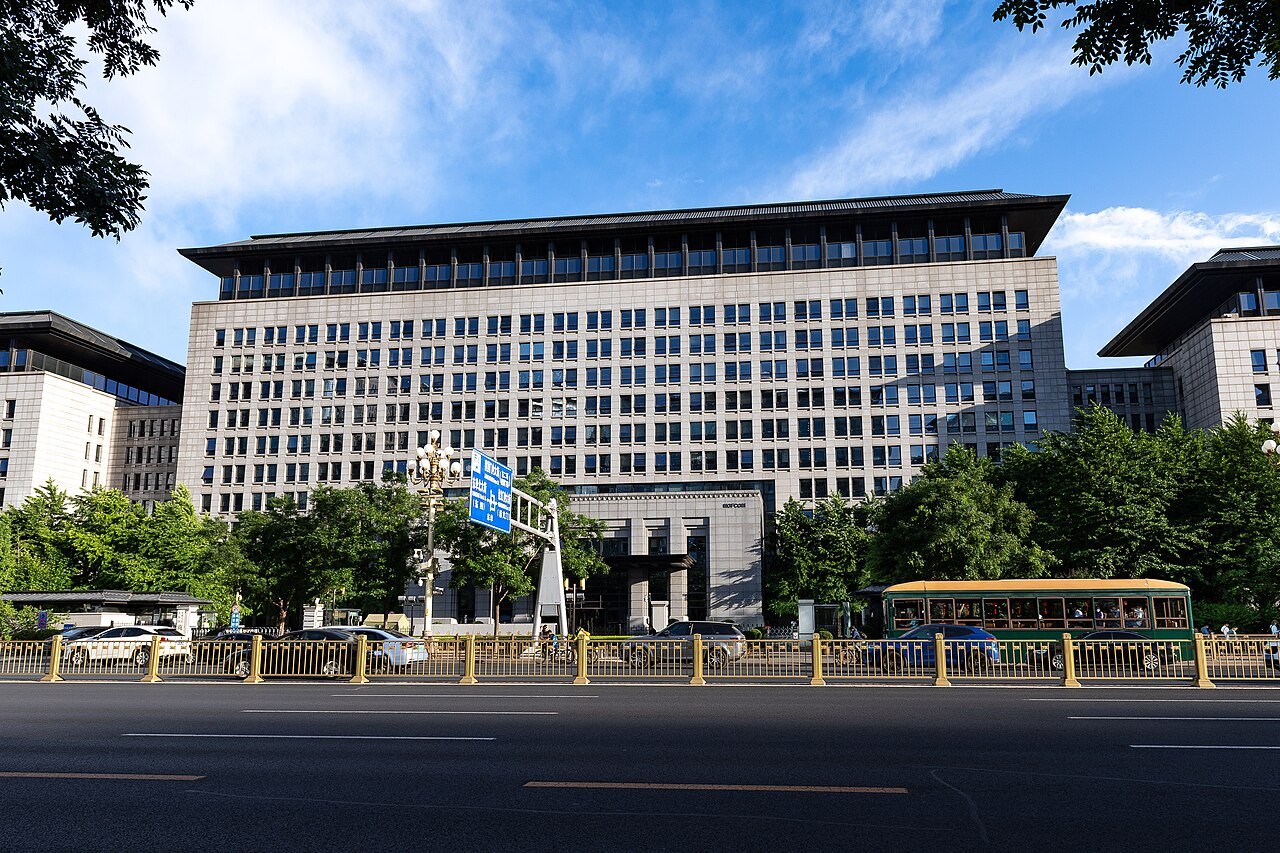
Running a Chinese model abroad could become an export. On 16 October China’s Ministry of Commerce and Ministry of Science and Technology published Announcement No. 48 of 2026, a draft that would put 23 AI technologies on the national list of technologies barred or restricted from export; comments close on 15 November, but registration before any export already applies. In the commerce ministry spokesperson’s Q&A, installing a restricted model on servers outside China counts as a technology export, while reaching it through an API does not. Why it matters: once the catalogue takes effect, a government that hosts restricted Chinese weights, other than those already released as open source, in its own sovereign cloud would need a licence from Beijing as well as the chips. Our cover story: China Turns Model Weights Into a Controlled Export.
The IMF’s steering committee finds a third word for AI. The Chair’s Statement of the Fifty-fourth Meeting of the IMFC, issued on 17 October, never says “artificial intelligence”; it speaks of “advanced intelligence technologies”, whose uncertain impact, together with rising bond yields, “could amplify macro-financial vulnerabilities”. The United States had pressed members to adopt “super intelligence”, a senior US Treasury official told Reuters, in a report carried by ThePrint, and two days earlier the Financial Stability Board finalised 12 sound practices for AI adoption by financial firms. Why it matters: finance ministries and central banks are now treating AI as a stability risk to supervise, whatever label Washington prefers. Analysis: The IMF Finds a Third Word for AI.
Eight states sue OpenAI without waiting for Congress. Arizona, Arkansas, Idaho, Iowa, Kansas, Montana, Nebraska and West Virginia each sued OpenAI in their own courts on 14 October, accusing it of deceiving parents about ChatGPT’s safety, NBC News reported; OpenAI defends its safeguards and none of the claims has been tested. A week earlier Pennsylvania’s House passed Senate Bill 806, on disclosing AI-generated content in advertising, by 163 votes to 40, sending it to Governor Josh Shapiro. Why it matters: public bodies that buy or deploy chatbots are exposed to state consumer law now, whatever becomes of federal preemption. Analysis: The States Sue Where Congress Won’t.
GSA’s AI contract clause applies from today. Under the General Services Administration’s class-deviation memo RGO-2026-01, clause 552.239-7001 goes into new GSA solicitations and contracts for chatbots, agentic systems and other LLM tools that handle government data from 19 October. Vendors must report incidents within 72 hours, may not train any model on government data, and must expose a summary of the steps an agent recorded. Why it matters: these terms now bind AI suppliers on GSA’s own contracts just as the Army moves to buy agents that act on its own networks, under terms the Army writes itself. Explainer: GSA’s AI Clause Goes Live as Washington Moves to Buy Agents.
FERC lets PJM count data centres but not curtail them first. In an order of 9 October (Docket ER26-3515) the Federal Energy Regulatory Commission accepted PJM Interconnection’s definition of a Large Load and a registry to track such customers, but rejected its interim resource-adequacy service and its “bring your own new capacity” rules, finding them either outside its authority or insufficiently justified, the American Public Power Association reported. A Large Load is 50MW or more at one site, or at affiliated sites within a mile, and PJM forecasts 32GW of load growth from 2024 to 2030, 30GW of it from data centres, according to The Dominion Post, which quotes Commissioner David Rosner: “in an emergency, data centers not serving critical functions should be shut off before ordinary customers”. Why it matters: with PJM’s curtailment framework rejected, Rosner wants state regulators across its 13-state region to set clear rules on which customers lose power first, and PJM’s December capacity auction approaches without the rejected rules.
Brazil’s election court holds Meta’s AI to parity. On 16 October the Superior Electoral Court (TSE) unanimously upheld substitute minister Marco Aurélio Bellizze’s order barring Meta from restricting the distribution of either presidential candidate’s posts, according to DW, republished by O Povo; the order followed a complaint that Meta AI would make images of Flávio Bolsonaro but not of Lula, and carries a R$500,000 daily fine, Agência Brasil reported. The same day the court added Articles 33-E to 33-G to Resolution 23.610/2019, six indicators of when a messaging channel belongs to a campaign. Why it matters: six days before the 25 October run-off, an election authority is regulating how platforms rank and generate political content, not only what candidates publish. Analysis: Brazil Orders Meta’s AI to Treat Both Candidates Alike.
Two national AI Act enforcers open for business. Italy’s Legislative Decree No. 179 of 7 October 2026 takes effect on 23 October and names the national cybersecurity agency (ACN) first among its market surveillance authorities. Poland’s Act of 3 July 2026 on artificial intelligence systems brings its complaints and penalty chapters into force on 28 October, policed by a regulator, KRiBSI, whose team numbers six, Wprost reported. Why it matters: suppliers to Italian and Polish ministries face a named enforcer this month, and early complaints will show how thinly staffed national enforcement is. Explainer: Six Staff, One Complaints Form; for the summit that ignored AI, see Brussels Said Nothing About AI. That Was the Message.
Abu Dhabi puts its government app up for export. Abu Dhabi’s Department of Government Enablement has created TAMM Global to license the TAMM public-services platform to other governments, the Abu Dhabi Media Office announced on 16 October. The pitch, a 94.5 per cent satisfaction score (78 per cent in 2022) and a 30 per cent cut in service costs, rests on the department’s own figures, and the release states no price or contract terms. Why it matters: a licensing government must establish data control, hosting and real outcomes for itself before it signs. Analysis: Abu Dhabi Puts Its Government Platform Up for Licence.
Morocco gives AI a ministry; Kenya’s Senate committee rejects an AI Bill. Ahmed Rahhou became Minister of Artificial Intelligence, Digital Transformation and Administrative Reform in the El Mansouri government on 16 October, at a ceremony presided over by King Mohammed VI, Finances News Hebdo reported. In Nairobi the Senate’s ICT committee turned down the Artificial Intelligence Bill, 2026, stalling it at committee stage and leaving Kenya with no dedicated AI law for now, Techweez reported. Why it matters: on both routes, rules for public-sector AI will come from ministers and policy papers before any statute. Analysis: Rabat, Nairobi, Pretoria: Three Routes to an AI Rulebook.
Singapore puts AI on its own cyber front line. Senior Minister K Shanmugam launched Singapore’s Cybersecurity Strategy 2026 on 13 October, with a pillar on AI and quantum. His opening speech at Singapore International Cyber Week said the government “will progressively deploy AI across our national cyber defence operations” and will invest in “AI harness engineering” rather than build its own model for every task; a day later the Cyber Security Agency set out a quantum-safe timeline: critical information infrastructure to migrate by 2031, and other exposed organisations advised to plan by 2027 and finish by 2035. Why it matters: a dated, buy-and-integrate doctrine for defensive AI gives other governments a model to test against their own procurement rules.
Region watch, South Asia: bids for India’s sovereign compute open on 22 October and close on 29 October under C-DAC’s Request for Empanelment C-DAC/GPU/01/2026 (our Analysis), while a Delhi High Court order of 8 October gives two ministries 72 hours to have deepfake sites blocked (our Explainer).
Sources
- 商务部 科技部公告2026年第48号 (MOFCOM/MOST Announcement No. 48 of 2026) — Ministry of Commerce of the People’s Republic of China, 16 October 2026 (in Chinese; translation by AI & GPP)
- 商务部新闻发言人就修订《中国禁止出口限制出口技术目录》答记者问 (Spokesperson’s Q&A on the catalogue revision) — Ministry of Commerce of the People’s Republic of China, 16 October 2026 (in Chinese; translation by AI & GPP)
- Chair’s Statement of the Fifty-fourth Meeting of the International Monetary and Financial Committee (IMFC), Press Release No. 26/340 — International Monetary Fund, 17 October 2026
- IMF members call for more support amid war shocks, ‘advanced intelligence’ risks — ThePrint (Reuters), 17 October 2026
- FSB finalises sound practices for the responsible adoption of artificial intelligence (AI) — Financial Stability Board, 15 October 2026
- Eight states sue OpenAI over ChatGPT’s alleged harms to users — NBC News, 14 October 2026
- Senate Bill 806 Information, 2025–2026 Regular Session — Pennsylvania General Assembly, last action 7 October 2026
- RGO-2026-01, GSAR Class Deviations in Response to Executive Order 14275 (incl. clause 552.239-7001) — General Services Administration, effective 19 October 2026 (PDF)
- FERC Accepts Elements of PJM Proposal Tied to Large Loads, Rejects Others — American Public Power Association, 13 October 2026
- FERC OKs part of PJM’s data center plan, rejects the rest — The Dominion Post, 13 October 2026
- TSE mantém ordem para Meta garantir isonomia a Lula e Flávio nas plataformas — O Povo (DW), 18 October 2026 (DW live report republished by O Povo; in Portuguese; translation by AI & GPP)
- TSE determina isonomia após IA da Meta barrar imagens de Lula — Agência Brasil, 15 October 2026 (in Portuguese; translation by AI & GPP)
- TSE define critérios para caracterizar canais de mensagens que devem ou não ser registrados pelas campanhas — Tribunal Superior Eleitoral, 16 October 2026 (in Portuguese; translation by AI & GPP)
- Decreto legislativo 7 ottobre 2026, n. 179 — Gazzetta Ufficiale della Repubblica Italiana, 8 October 2026 (in Italian; translation by AI & GPP)
- Ustawa z dnia 3 lipca 2026 r. o systemach sztucznej inteligencji (Dz.U. 2026 poz. 1003) — Dziennik Ustaw / ELI, published 27 July 2026 (in Polish; translation by AI & GPP)
- Organ stojący na straży polskiego AI ma 6 osób. „Nie boimy się zalewu spraw” — Wprost, 9 October 2026 (in Polish; translation by AI & GPP)
- Under the directives of Khaled bin Mohamed bin Zayed, Department of Government Enablement announces establishment of TAMM Global company to expand TAMM platform’s global reach — Abu Dhabi Media Office, 16 October 2026 (official release)
- Gouvernement El Mansouri : le Roi préside la cérémonie de nomination des ministres — Finances News Hebdo, 16 October 2026 (in French; translation by AI & GPP)
- Senate Committee Rejects AI Bill, Sending It Back to the Drawing Board — Techweez, 16 October 2026
- Singapore Launches Cybersecurity Strategy 2026 to Strengthen National Cyber Resilience — Cyber Security Agency of Singapore, 13 October 2026
- Singapore International Cyber Week – Opening address by Mr K Shanmugam, Senior Minister, Coordinating Minister for National Security, and Minister for Home Affairs — Ministry of Home Affairs, Singapore, 13 October 2026
- CSA Sets Out Quantum-Safe Migration Timeline for Organisations and Launches New Grant — Cyber Security Agency of Singapore, 14 October 2026
- Request for Empanelment (RFE) of AI Service Providers (ASP) for Provisioning of AI Compute Capacity, RFE Ref. C-DAC/GPU/01/2026 — Centre for Development of Advanced Computing, 7 October 2026 (tender page; PDF documents)
- Kangana Ranaut v Meta Platforms Inc and Ors, CS(COMM) 1100/2026, order of 8 October 2026 — Delhi High Court, via MediaNama, 8 October 2026 (PDF)
The Briefing desk · 19 October 2026
Discussion
No comments yet. Start the conversation.