Explain the Algorithm: Brazil Sets a Six-Hour Clock
Three orders in forty-eight hours turned algorithmic reach into a reportable duty with a deadline attached. Brazil's electoral court now wants distribution data every six hours — and has platform staff sitting inside the courthouse.

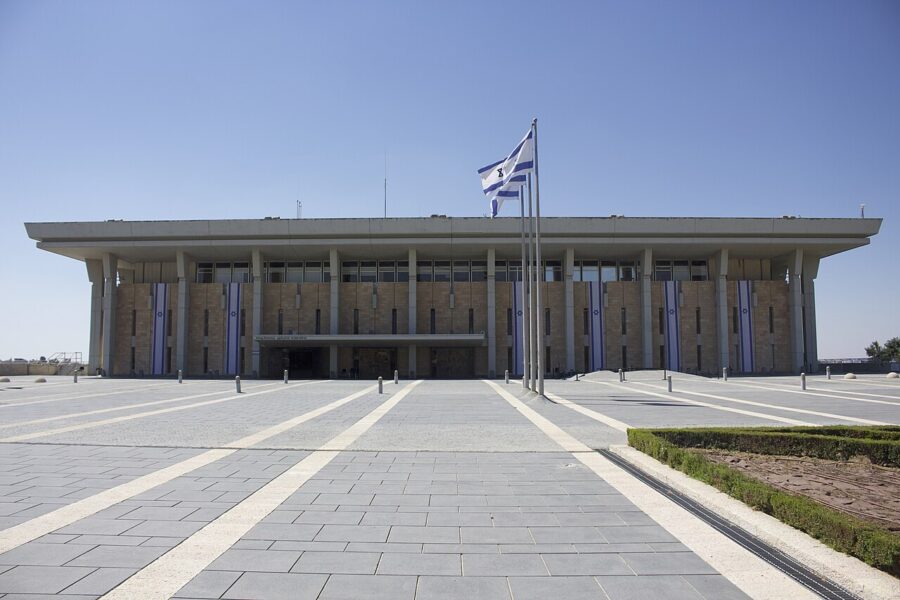
The headquarters of Brazil’s Superior Electoral Court in Brasília, inaugurated in December 2011, where representatives of the main digital platforms are working inside the court’s digital risk room until 4 November 2026.
Photo: Alexandresena, CC BY-SA 4.0 · source
Key points
- Between 22 and 23 October 2026 Brazil’s Electoral Inspector-General ordered Meta and X to report the reach of two named accounts every six hours, to explain their distribution criteria within 24 hours — including how X’s Grok tool works — and to file a final reach report within six hours of the close of voting, on pain of R$500,000 fines.
- From 00:00 on 24 October Meta was ordered to stop automatically recommending to non-followers any posts by federal deputy Nikolas Ferreira and candidate Pablo Marçal that mention candidates, parties or the election on Instagram, Facebook and Threads, while leaving them visible to followers.
- Representatives of the main digital platforms are working inside the Superior Electoral Court’s digital risk room in Brasília from 24 October to 4 November 2026, replacing the telephone coordination used at previous elections.
Brazil’s platform-algorithm law is not being written in Congress. In the 48 hours before Brazilians voted on 25 October 2026, the Electoral Inspector-General (Corregedor-Geral Eleitoral), Minister Ricardo Villas Bôas Cueva, issued three orders that did something no Brazilian statute does: they turned the way a recommender system distributes political content into a duty that must be reported, on a clock, with a fine attached.
It is the fourth consecutive week in which the Superior Electoral Court (Tribunal Superior Eleitoral, TSE) has set the terms for artificial intelligence in a Brazilian election. Three weeks ago it was arguing about labels on synthetic content, when AI & GPP reported how it traded bans for disclosure; it then moved to parity before Minister Marco Aurélio Bellizze.
From removing posts to auditing distribution
The 22 October order came in an electoral investigation, AIJE nº 0603276-73.2026.6.00.0000, brought by Lula’s coalition, Brasil Pronto pra Mais, against Flávio Bolsonaro and his running mate Alfredo Gaspar de Mendonça Neto, alleging abuse of economic power and improper use of the media through platform favouritism. Cueva gave Meta and X 24 hours to explain their criteria for distributing content and any differences in treatment between the candidacies, the TSE said; X was additionally required to explain how Grok, its AI tool, works. Meta was told to put the removal from Instagram of the Lula campaign video “Flavinho de Papai”, taken down on AI grounds, through human review if it had not already, and report the result.
A day later Cueva went further in a second investigation, AIJE nº 0603123-40.2026.6.00.0000. Meta and X were ordered to file reports every six hours on the reach of posts by the federal deputy Nikolas Ferreira and the influencer-candidate Pablo Marçal: views, where the audience came from, and the recommendation mechanisms involved. They were to keep a priority channel open with the Electoral Justice, refrain from any intervention artificially expanding the profiles’ reach, and file a final report within six hours of the close of voting. From midnight on Saturday 24 October, the court said, Meta had to stop automatically recommending to non-followers any post by the two men mentioning candidates, parties or the election, across Instagram, Facebook and Threads. Followers were unaffected.
That is a remedy with no obvious precedent in Brazil: a bounded suspension of algorithmic amplification, leaving the speech in place for the audience that asked for it. Cueva was explicit that the evidence established no wrongdoing by the systems — the data, he said, does not prove “favorecimento irregular pelos algoritmos” (irregular favouritism by the algorithms; translation by AI & GPP) — but was insufficient to explain how the posts had been distributed.
A takedown order ends an argument. A disclosure order with a six-hour clock starts one.
On 23 October Cueva ordered removal within two hours of service of an audio clip posted at 11:43 that day on the “Tropa do Flávio” WhatsApp channel, with more than 2.1 million followers. The audio is attributed to the federal deputy Gustavo Gayer and claims poll workers, especially in the north-east, were voting in place of absent electors to benefit Lula. Cueva said the accusation offered no concrete evidence and reproduced information already shown to be false by the Electoral Justice; it is a false clip attributed to a named politician, and the court does not call it synthetic. By 14:16 it had been forwarded roughly 25,000 times. The Presidency was notified to consider protection for poll workers.
The duties, the clocks and the fines
| Duty | Instrument, date | Clock | Penalty | Status |
|---|---|---|---|---|
| Meta: explain distribution criteria, differential treatment, AI use, automatic translations, GIF and hashtag search, political ads, removals. X: distribution criteria, removals and how Grok works | AIJE 0603276-73, 22 Oct | 24 hours | R$500,000 per day, per company | Defence from both investigated candidates due in five days |
| Meta: human review of the Instagram removal of “Flavinho de Papai”, and report the outcome | AIJE 0603276-73, 22 Oct | With the 24-hour reply | As above | Rulings on automatic translations, on barring privileged treatment of profiles and on restoring reach deferred until the reports arrive |
| Meta and X: reach reports on posts by Nikolas Ferreira and Pablo Marçal — views, audience origin, recommendation mechanisms | AIJE 0603123-40, 23 Oct | Every six hours | R$500,000 per company, per proven violation | To Plenary referendum |
| Meta and X: priority channel open with the Electoral Justice | AIJE 0603123-40, 23 Oct | 24–25 Oct | As above | To Plenary referendum |
| Meta: stop recommending the two accounts’ election-related posts to non-followers (Instagram, Facebook, Threads) | AIJE 0603123-40, 23 Oct | From 00:00, 24 Oct | As above | To Plenary referendum |
| Meta and X: final reach report | AIJE 0603123-40, 23 Oct | Within six hours of polls closing | As above | To Plenary referendum |
| Nikolas Ferreira and Pablo Marçal: no posts breaching rules on disinformation, image manipulation or irregular AI use | AIJE 0603123-40, 23 Oct | — | R$100,000 per post, after judicial verification | To Plenary referendum |
| Remove the false audio attributed to deputy Gustavo Gayer from the “Tropa do Flávio” channel | AIJE 0603360-74, 23 Oct | Two hours from service | R$100,000 per hour late; R$100,000 per republication | To Plenary referendum; channel suspension available for repeat breaches |
| Meta: answer Minister Marco Aurélio Bellizze on equal treatment of the two candidacies | Parity case, fine raised 19 Oct | 24 hours | R$1m per day, doubled from R$500,000 | Answered the night of 19 Oct |
| Right-of-reply requests for president and vice-president: merits decided by the Plenary itself | Presidency portaria, 7 Oct | 72 hours from filing, per the Elections Law | — | In force to 25 Oct |
| Main digital platforms’ representatives inside the TSE’s digital risk room | Portaria-TSE nº 668/2026 | 24 Oct to 4 Nov | — | In force |
Two entries are not Cueva’s. A portaria signed on 7 October by the TSE president, Minister Kassio Nunes Marques, moved presidential right-of-reply merits to the full Plenary until 25 October, and records that a rapporteur’s provisional relief in those cases goes immediately to Plenary referendum; the TSE says the same of Cueva’s own 23 October orders, which is why they are not yet settled law. The other is physical: under Portaria-TSE nº 668/2026, representatives of the main digital platforms sit inside the TSE’s Sala de Atenção a Riscos Digitais in Brasília from 24 October to 4 November, where at previous elections, the court says, coordination happened by telephone. Meta, X, Google, TikTok and Kwai sent representatives to the meeting with the court’s president and four other ministers on 23 October at which the room’s operation was discussed; the same meeting handed them a compliance guide setting out the restrictions on publishing new AI-generated synthetic content.
What the court refused, and why the refusals matter
Cueva turned down more than he granted. He refused to make prior human review compulsory for all removals and reach restrictions affecting journalistic and opinion content about the presidential candidacies, calling it excessively broad. He refused to strip Nikolas Ferreira and Marçal out of recommendation systems altogether, since lawful expression would be caught; to pre-restrict a video Marçal had announced; and to suspend the “Tropa do Flávio” channel until the result was certified.
Three weeks ago AI & GPP described the court as having become Brazil’s de facto AI regulator; this is a different theory of enforcement. The only quantified account of AI-rule enforcement in this election came from a platform, not a regulator: in its filing to Bellizze on the night of 19 October, reported by BP Money, Meta said it had audited 1,204 posts reported for inadequate AI labelling, removed 720, found 270 already correctly labelled and classed 214 as non-electoral — a removal rate of roughly 60 per cent on AI & GPP’s own arithmetic, disclosed voluntarily and unaudited. Meta denied favouring either candidacy, supplied a technical annex but no reach data, and leaned on Bellizze’s own formulation that electoral equality is one of “regras e de critérios, e não de resultados” (of rules and criteria, not of results; translation by AI & GPP). It had already changed Meta AI to reject prompts containing either candidate’s first name, after reports the tool made images supporting Flávio Bolsonaro but refused equivalent requests about Lula — the episode behind the parity order.
Nothing the platforms have filed is public. A court that has made reach reportable has not made it readable: as AI & GPP has argued, reach is not the same thing as risk, and view counts handed to a judge in confidence settle nothing. On 24 October Nikolas Ferreira posted a video asking supporters to share his material, telling them, in Portuguese, “quem dá o meu engajamento não é a Meta, são vocês” — his engagement comes from them, not from Meta — as Poder360 reported.
Three other countries vote within ten days. None is doing this.
Israel votes on 27 October for the 26th Knesset, as Al Jazeera set out. The only state action on AI content reported in-window came from the security service, not the election authority: on 22 October the Shin Bet announced it had removed social-media accounts it said were trying to interfere with the election, the Jerusalem Post reported, without giving a number, a platform or a state behind it.
South Africa, voting on 4 November, has taken the cooperative route. On 20 October its Electoral Commission announced a partnership with Google, Meta, Microsoft, TikTok and non-profit Moxii Africa, following a similar 2024 framework; chief electoral officer Sy Mamabolo said it gave the commission “direct access to the platforms” and “a real fighting chance against disinformation”, according to SAnews. He also put disinformation complaints above 700, IOL reported.
The United States votes on 3 November with its regulator moving the other way. The Federal Communications Commission has taken comment on a Club for Growth petition to waive the rules barring artificial and prerecorded voices in unsolicited mobile calls; replies closed on 19 October and it could rule as soon as late October, the Associated Press reported. AI & GPP covered it alongside Colorado’s parody carve-out.
What decision-makers should watch once the count is in
By 9:32 pm Brasília on 25 October 2026, with 498,692 of 499,248 polling stations counted (99.89 per cent), the Superior Electoral Court’s published totals, as carried by Agência Brasil, gave Luiz Inácio Lula da Silva 64,162,245 valid votes (51.77 per cent) and Flávio Bolsonaro 59,784,442 (48.23 per cent). The count had started late: under a decision of Supreme Court Justice Cristiano Zanin, voting continued until 7:00 pm where it had not closed at 5:00 pm, and the court resumed receiving ballot-box bulletins and totalising only after 7:00 pm, the TSE said — which moves the platforms’ final reach report, due within six hours of the close of voting, into the small hours of 26 October.
Three things settle whether this survives the election. The first is the Plenary: the TSE’s notices of both 23 October orders state that they will go to the full court for referendum, and as of 25 October the TSE had announced no referendum of the 19 or 23 October decisions. Endorsement would give Brazil a precedent that a court may compel disclosure of recommender behaviour six-hourly; narrowing them leaves a fortnight’s improvisation.
The second is publication. Nothing requires the reports’ release, and whether parties or Brazilian researchers ever see distribution data filed under threat of R$500,000 fines decides whether this was a transparency measure or a confidential one.
The third is contagion. Any regulator can now point to a dated order requiring a company to explain how its recommender and its AI assistant behave, under a named deadline, and to a room where its staff sat while it did so. Boards should assume the demand is portable even where the Brazilian legal basis is not. The engineering question — can you produce, within six hours, an accounting of who was shown what and why — is the same everywhere, and mostly unasked.
Questions this answers
What exactly must Meta and X now disclose to Brazil’s electoral court, and how often?
Under the 23 October order in AIJE nº 0603123-40.2026.6.00.0000, both companies must file reports every six hours on the reach of posts by Nikolas Ferreira and Pablo Marçal, covering views, the origin of the audience and the recommendation mechanisms involved, plus a final report within six hours of the close of voting. A separate order of 22 October gave them 24 hours to explain their general distribution criteria and any differential treatment of the candidacies, with X required to explain how its Grok tool works. Unjustified non-compliance carries R$500,000 per company.
Is any of this settled Brazilian law?
No. The 23 October orders are provisional relief issued by a single rapporteur, and the TSE says each will be submitted to the Plenary for referendum. As of 25 October the TSE had announced no referendum of the 19 or 23 October decisions, so the precedent value of the reach-reporting duty remains open.
Has any regulator published comparable data on AI-rule enforcement in this election?
Not yet. The only quantified figures come from Meta’s own filing of 19 October, which said it had audited 1,204 posts reported for inadequate AI labelling and removed 720 of them, as BP Money reported. The six-hourly reach reports filed with Cueva are not public, so the court holds distribution data that no one outside it can read.
Sources
- Corregedor do TSE dá 24 horas para Meta e X explicarem possível tratamento desigual de candidaturas nas redes — Tribunal Superior Eleitoral, 23 October 2026 (decision of 22 October 2026; in Portuguese; translation by AI & GPP)
- Corregedor do TSE determina que Meta e X apresentem relatórios a cada seis horas sobre publicações de Nikolas e Marçal — Tribunal Superior Eleitoral, 24 October 2026 (decision of 23 October 2026; in Portuguese; translation by AI & GPP)
- Corregedor-geral eleitoral determina retirada de áudio falso sobre mesários do canal de WhatsApp “Tropa do Flávio” — Tribunal Superior Eleitoral, 23 October 2026 (in Portuguese; translation by AI & GPP)
- TSE e plataformas digitais alinham medidas para o 2º turno das Eleições 2026 — Tribunal Superior Eleitoral, 23 October 2026 (in Portuguese; translation by AI & GPP)
- Plenário do TSE julgará diretamente pedidos de direito de resposta no 2º turno presidencial — Tribunal Superior Eleitoral, 7 October 2026 (portaria signed 7 October 2026; in Portuguese; translation by AI & GPP)
- Nikolas pede compartilhamentos após decisão do TSE sobre seus posts — Poder360, 24 October 2026 (in Portuguese; translation by AI & GPP)
- Meta nega ao TSE favorecimento a candidatura no segundo turno presidencial — BP Money, 20 October 2026 (in Portuguese; translation by AI & GPP)
- Shin Bet removes social media accounts to block foreign interference in upcoming election — The Jerusalem Post, 22 October 2026
- Israel’s elections 2026 explained in maps and charts — Al Jazeera, 20 October 2026
- IEC enters into partnership to counter disinformation — SAnews (South African Government News Agency), 20 October 2026
- IEC receives more than 700 complaints over election disinformation ahead of polls — IOL, 20 October 2026
- FCC considers allowing more political robocalls before midterms, including those created with AI — Associated Press, via WCAX, 7 October 2026
- Resultados — Tribunal Superior Eleitoral (2º Turno, Eleição Geral, 25/10/2026), accessed 9:32 pm Brasília, 25 October 2026 (in Portuguese)
- Eleições 2026 — Resultado da apuração para Presidente no 2º turno (TSE data) — Agência Brasil, accessed 9:32 pm Brasília, 25 October 2026 (in Portuguese)
- Esclarecimento sobre prorrogação da votação — Tribunal Superior Eleitoral, 25 October 2026 (in Portuguese; translation by AI & GPP)
Discussion
No comments yet. Start the conversation.